
Animal Symbolism: Why a Unicorn Guards the Royal Arms
A lion and a chained unicorn on the royal arms, a black cat that brings luck in Britain, a dog that waited ten years: where animal symbolism comes from, fact and belief.
Take a close look at the royal coat of arms of the United Kingdom. Two animals hold up the shield: a crowned lion on one side, a chained unicorn on the other. One is a real animal. The other has never existed at all. Yet both have stood there, side by side, since 1603.
Animal symbolism is the meaning a culture gives to an animal. It grows out of what people observe, what they tell each other and what they make with their hands, which is why it shifts from one country to the next and from one century to another. The same animal can even stand for opposite ideas: in Britain, a black cat is often seen as a good omen, while medieval Europe tied it to bad luck. Let’s trace those roots, then look at the animals people most like to wear.
Why a lion and a unicorn guard the royal arms
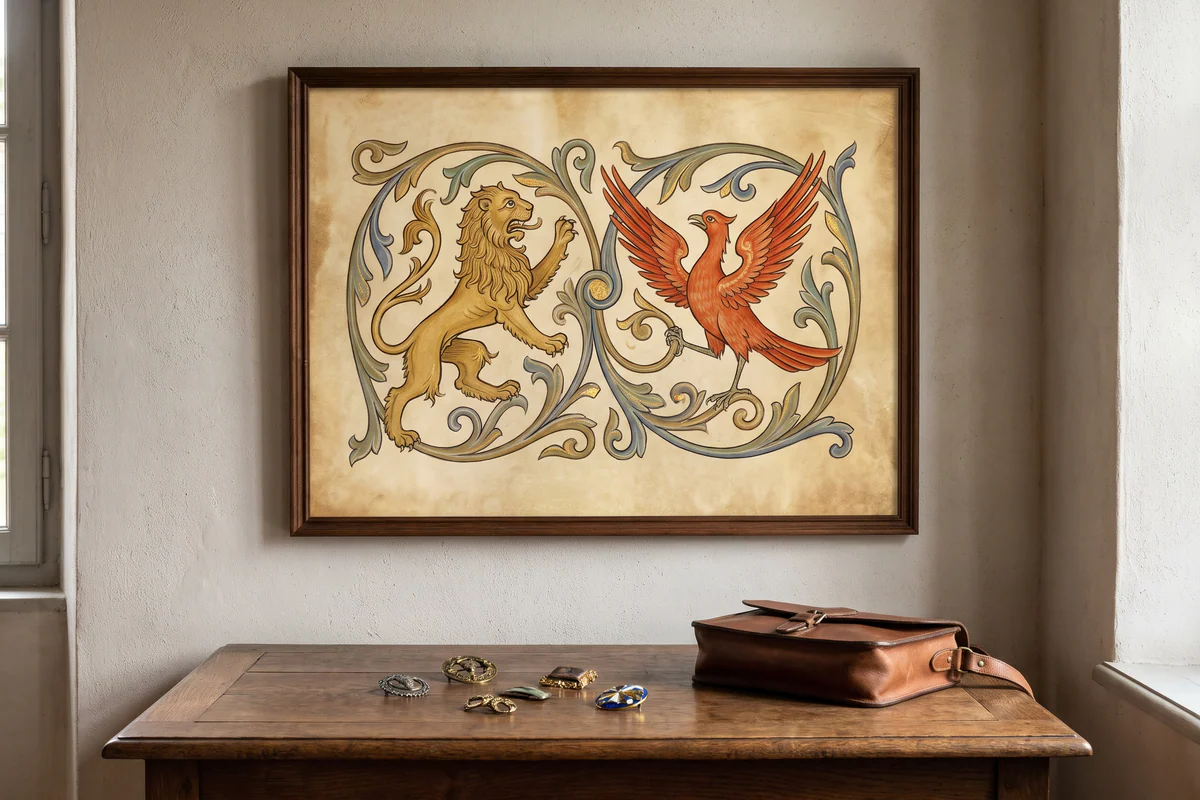
The lion stands for England, the unicorn for Scotland. When James VI of Scotland inherited the English and Irish thrones in 1603, the arms were rearranged to mark the Union of the Crowns. According to the Wikipedia page on the royal coat of arms, the supporters became “a crowned English lion” and “a chained Scottish unicorn”.
Neither choice was random. For centuries, Europe had read animals as messages. The lion was the strong one, the king of beasts. The unicorn, as the French-language Wikipedia article on bestiaries puts it, was “the most important imaginary animal of the Middle Ages, and the most often mentioned”. Putting them on a royal shield was a way of borrowing their reputation.
Where an animal’s meaning comes from
Before you ask what an animal means, ask where that meaning came from. Almost every symbol starts in one of three places:
- observation: a behaviour catches the eye, like a snake shedding its skin, a tortoise taking its time or a guard dog that never falls asleep on the job;
- story: a myth, a sacred text or a fable ties a tale to the animal, and the tale sticks;
- use: an amulet, a figurine or a lucky charm carries that meaning into everyday life.
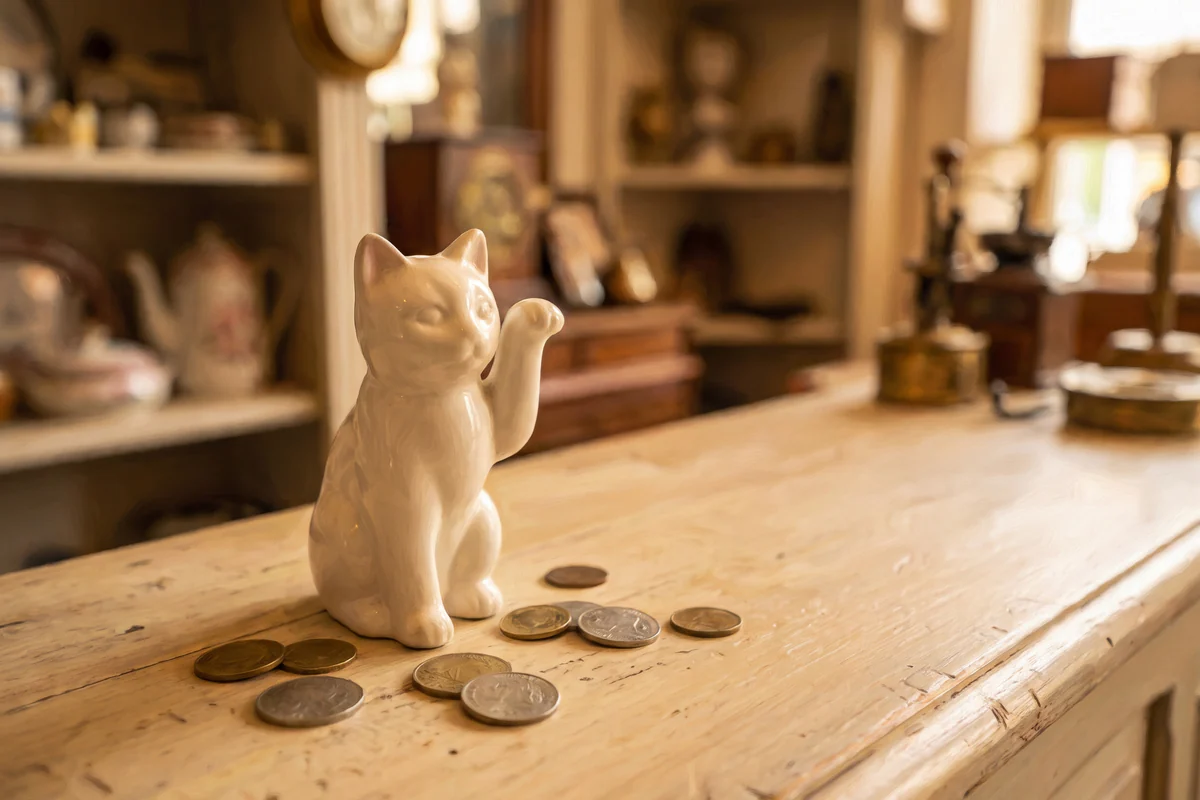
The Japanese maneki-neko brings all three together. Its name means “beckoning cat”. A legend from the Edo period links it to the Gotoku-ji temple in Tokyo, and the figurine with its raised paw became an object of good fortune. We tell the full story in our article on the lucky cat. When a story gives birth to an object, and the object becomes a habit, the symbol takes root.
The medieval bestiary: a lesson in every beast
A small Greek book with a long reach
To understand how Europeans learned to “read” animals, go back to a short text written in Greek: the Physiologus. It was probably composed in Egypt, around Alexandria, some time between the 2nd and 4th centuries. Its 48 or 49 chapters each deal with one animal, real or imaginary. What makes it unusual is that the moral takes up far more room than the description of the creature.
Translated into many languages, it shaped the bestiaries of the Middle Ages: manuscripts, as the same French article describes them, “bringing together fables and morals about beasts”. Writers such as Philippe de Thaon, Guillaume le Clerc de Normandie, Pierre de Beauvais and Richard de Fournival each produced their own.
Good against evil, in pictures
For these authors, an animal was part of God’s creation, and so a message to decode. Every beast hid a spiritual or moral meaning. The French National Library (BnF) explains that bestiaries built “a complex symbolism” around the animals of the Bible, “in which animals often embody the struggle between good and evil”. Written to instruct Christian readers, they gave animals personalities and feelings much like our own.
The sides were clearly drawn. The lion, the eagle, the stag and the panther could stand for Christ. The wolf, the fox, the ape and the dragon were on the devil’s side. And the phoenix, reborn from its own ashes, became “the very symbol of resurrection”. These images were carved into church walls, painted into manuscripts and woven into tapestries. The phrase has survived, too: we still say a project has risen from the ashes.
The Aberdeen Bestiary, a Scottish treasure
Britain holds one of the finest examples. The Aberdeen Bestiary dates from the early 13th century and is kept today at Aberdeen University Library. Its hundred or so folios, on some of the finest parchment of the period, are decorated with large miniatures painted in the best pigments of the day. It was first listed in 1542, in the inventory of the Old Royal Library at the Palace of Westminster, and still bears the shelf stamp of Henry VIII. Under James I, as James VI was known in England, the very king who brought the unicorn onto the royal arms, the manuscript moved north to Marischal College in Aberdeen.
Fables: animals that talk about people
The second great source of animal symbols is the fable. When Jean de La Fontaine published his first collection in 1668, he dedicated it to the Dauphin, then seven years old. He set out his aim in the opening pages: “I use animals to teach men.”
La Fontaine did not start from scratch. He drew on Aesop and Phaedrus, from the ancient world, and even on the Panchatantra, a collection from India. Each animal plays a part everyone recognises:
- the fox stands for cunning;
- the lion for strength;
- the lamb for innocence;
- the tortoise for perseverance.
None of these roles says anything about how a real fox lives. They show what people chose to load onto it. The tortoise in The Hare and the Tortoise is a good example: its moral, roughly “running is no use, you have to set off at the right time”, a French cousin of “slow and steady wins the race”, turned a slow animal into a picture of steadiness. You will find its other faces, from India to Japan, in our article on turtle symbolism.
Spirit animal meaning: what “totem” first meant
Today, people talk about a spirit animal as a personal guide, a creature they feel close to. The idea borrows from an older word with a much more precise history: totem.
The word comes from ototeman, in Ojibwe, an Algonquian language of North America. In 1791, John Long used it for “a kindly spirit that protects people”. For anthropologists, a totem is first and foremost a matter for the group. The Wikipedia article on the totem defines it as a spirit being, sacred object or symbol that “serves as an emblem of a group of people, such as a family, clan, lineage, or tribe”. The French anthropologist Anne Stamm went further: the totem can be an animal, a plant or even a man-made object, seen as the group’s protector, and as its “father, patron or brother”.
Totemism, then, is a way of organising a clan or tribe around that bond. Émile Durkheim studied Australian totemism in 1912. In 1962, Claude Lévi-Strauss saw in it nothing more than “an artificial unity”, and in 2005 Philippe Descola redefined it.
The modern spirit animal belongs to another world. The same Wikipedia article notes that New Age and other contemporary movements use totem vocabulary for a personal bond with a guardian spirit. If an animal has been with you since childhood, you are free to give it that role. Just remember that the choice is yours alone: it does not make you a member of a clan.
Six animals people love to wear, and what they stand for
Here are six animals you often see on jewellery, with the best-documented meaning of each. Every one has its own article on the blog if you want to go further.
The cat: lucky or unlucky, depending on where you live
In ancient Egypt, the cat was linked to Bastet, protective goddess of the home. In medieval Europe, the black cat was tied to witchcraft and bad luck. In Britain, by contrast, a black cat is often seen as a good omen. In Japan, the maneki-neko invites luck inside. The cat changes sides so often that no single label will stick.
The dog: loyal to the very end
In the Odyssey, the dog Argos recognises Odysseus after twenty years away. In Japan, Hachikō waited for his master at Shibuya station from 1925 to 1935. Dogs also guard thresholds: in Egypt, Anubis is lord of the necropolis, and for the Greeks, Cerberus guards the gates of the Underworld. Loyalty, protection and passage: dog symbolism comes down to those three words.
The owl: wisdom or a bad omen
In Athens, the little owl was the companion of Athena, goddess of wisdom, and appeared on the city’s coins. In Rome and in the Middle Ages, its cry was more likely to announce a death. In Japan, its reputation even depends on the species. This night bird carries two reputations at once, which we explore in our article on the owl’s spiritual meaning.
The elephant: memory and obstacles removed
In Hinduism, Ganesh, the elephant-headed god, is the one who removes obstacles. In the Buddhist story, Queen Maya dreams of a white elephant, which announces the birth of the Buddha. And that famous memory? It has actually been observed. During a drought in Tanzania in 1993, researchers saw the oldest matriarchs lead their herds better, and linked this to an earlier drought these females had already lived through. We tell the story of that study in our piece on elephant symbolism.
The turtle and the tortoise: the long view
Slow, sheltered under its shell, the tortoise speaks of time. In India, Kurma, the second avatar of Vishnu, takes the form of a turtle to hold up Mount Mandara. In Japan, a saying goes that “the crane lives a thousand years, the tortoise ten thousand”. Whatever the continent, its meanings keep coming back to long life, patience and stability.
The snake: a skin made new
A snake sheds its skin several times a year and slides out of the old one: that is where its link with rebirth comes from. It is tied to healing as well. The rod of Asclepius, with a single snake coiled around it, is the emblem of medicine, not to be confused with the caduceus of Hermes, which has two snakes and wings. In Genesis, though, the snake is the tempter. An animal with two sides, which we explore in our article on snake symbolism.
Smaller creatures have their stories too: the bee, from hard work to power, in the meaning of the bee, and the butterfly in butterfly symbolism.
Fact or folklore: three questions to ask
When you come across an animal meaning online, three questions will help you sort it out:
- Who says so, and since when? An old text, a dated fable or a surviving manuscript carries more weight than an anonymous list.
- In which culture? A black cat is unlucky in one place and lucky in another: no meaning is universal.
- Is it a fact or a reading? Anyone can watch a snake shed its skin. That it heralds a fresh start in your life is an interpretation.
What is documented and what is belief are not enemies, though. The bestiaries themselves mixed observation and morals, and the unicorn on the royal arms is no less loved for never having lived. A symbol does not need proof to move someone. Knowing where it comes from simply lets you choose it with your eyes open.
An animal that means something, as a gift
An animal brooch is more fun to wear when you know its story. A few ideas, depending on who it is for:
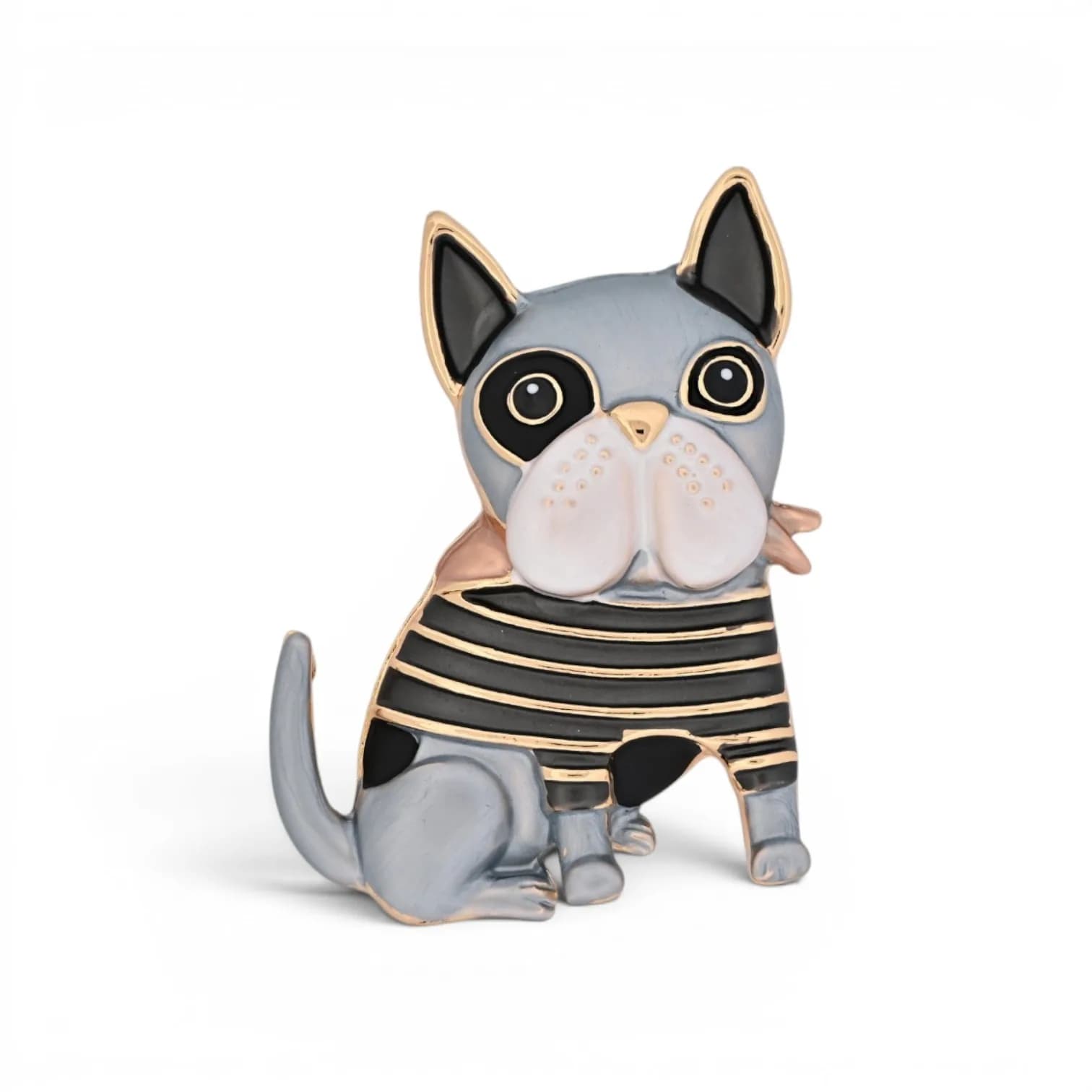
- a dog for a loyal friendship, or for someone devoted to their four-legged companion;
- an owl for someone who studies, teaches or simply loves to learn;
- an elephant for a fresh start, as a nod to Ganesh, remover of obstacles;
- a tortoise for a milestone birthday, in honour of its long life;
- a cat to wish someone luck, with a note saying which tradition you have in mind.
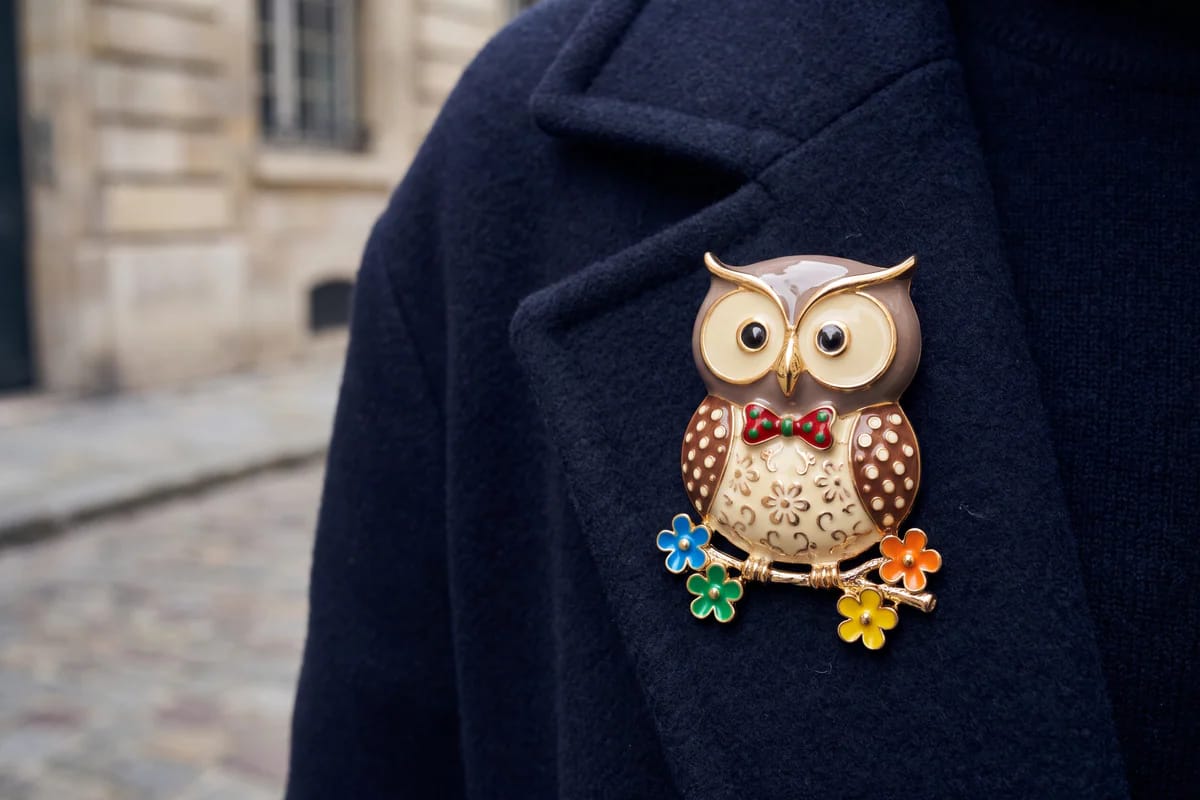
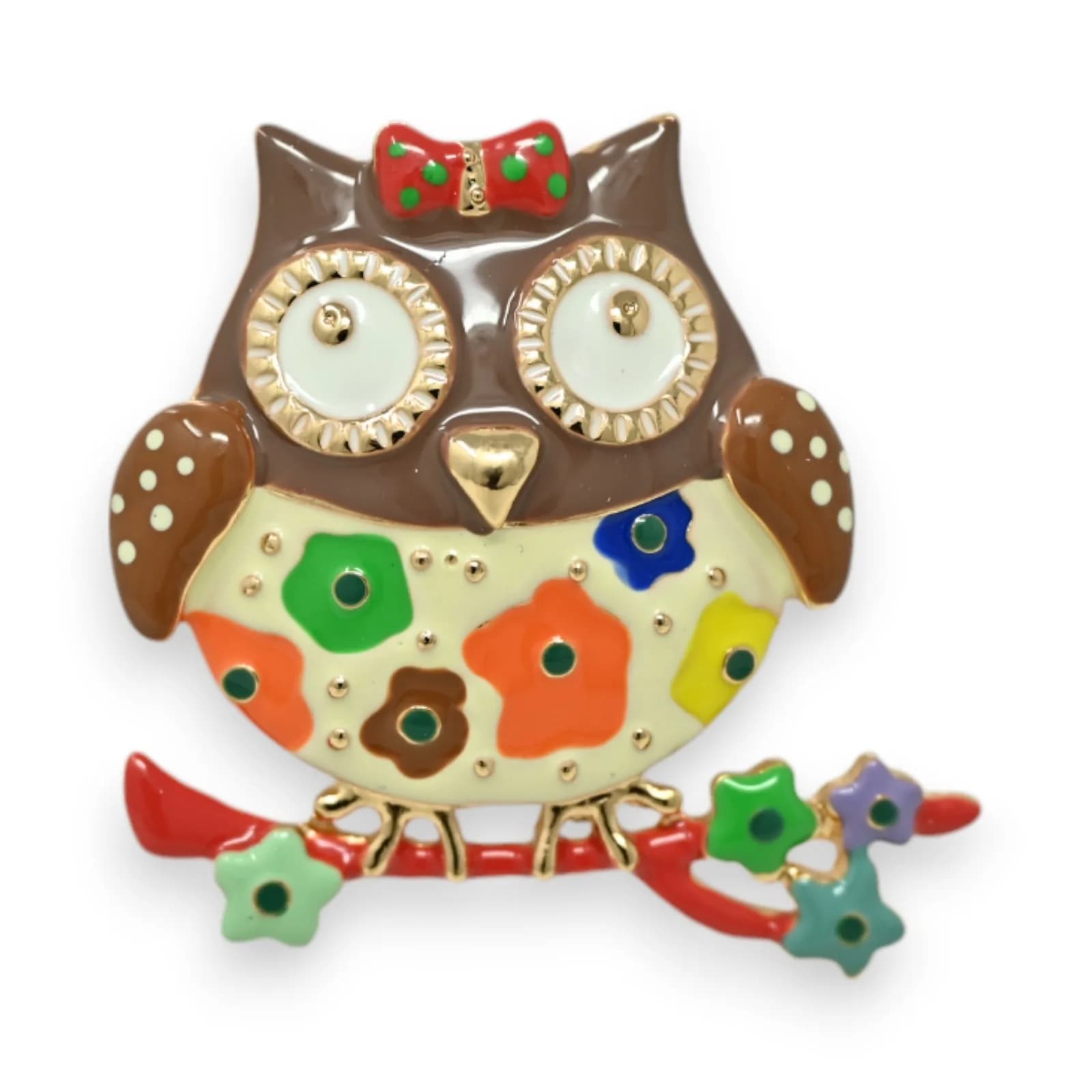
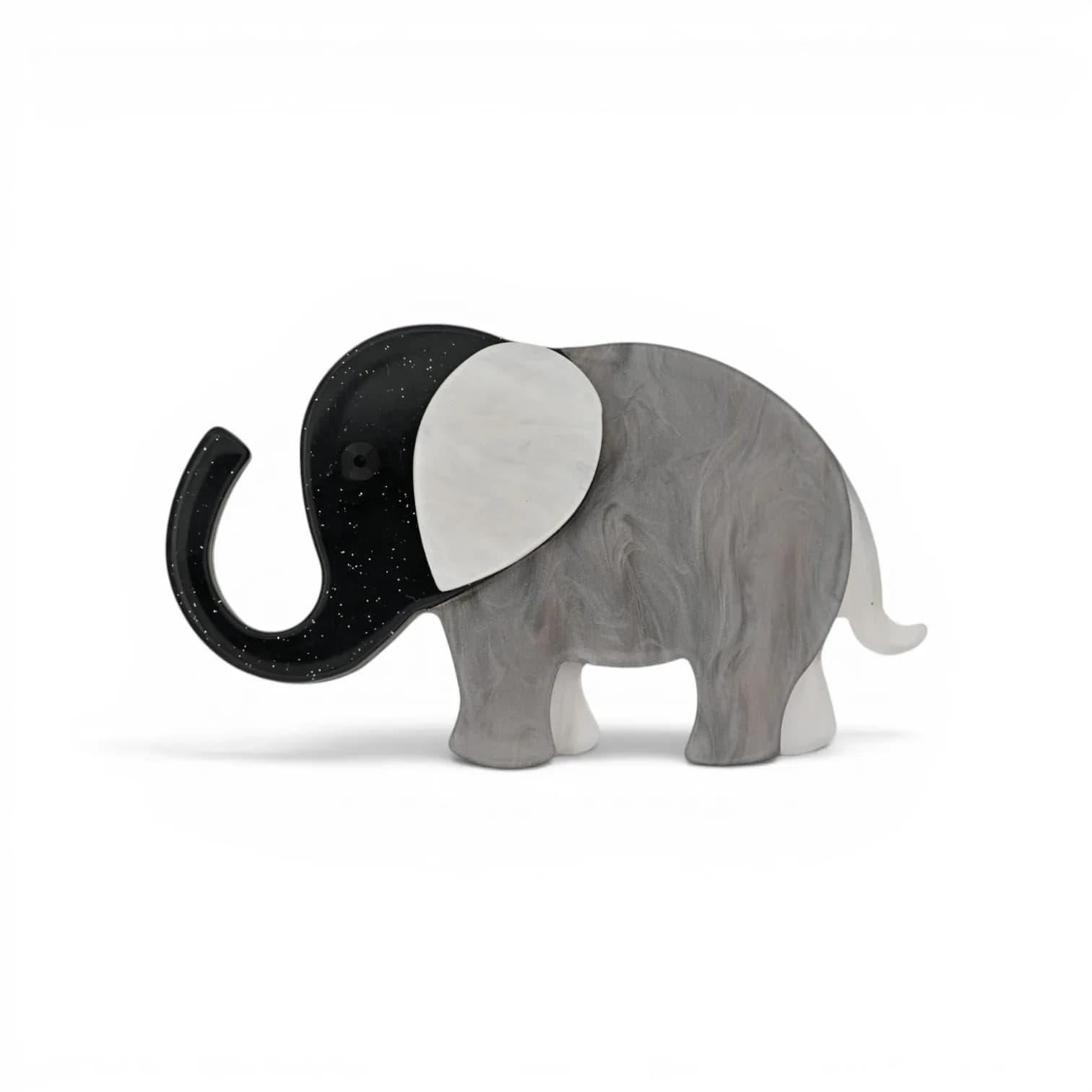
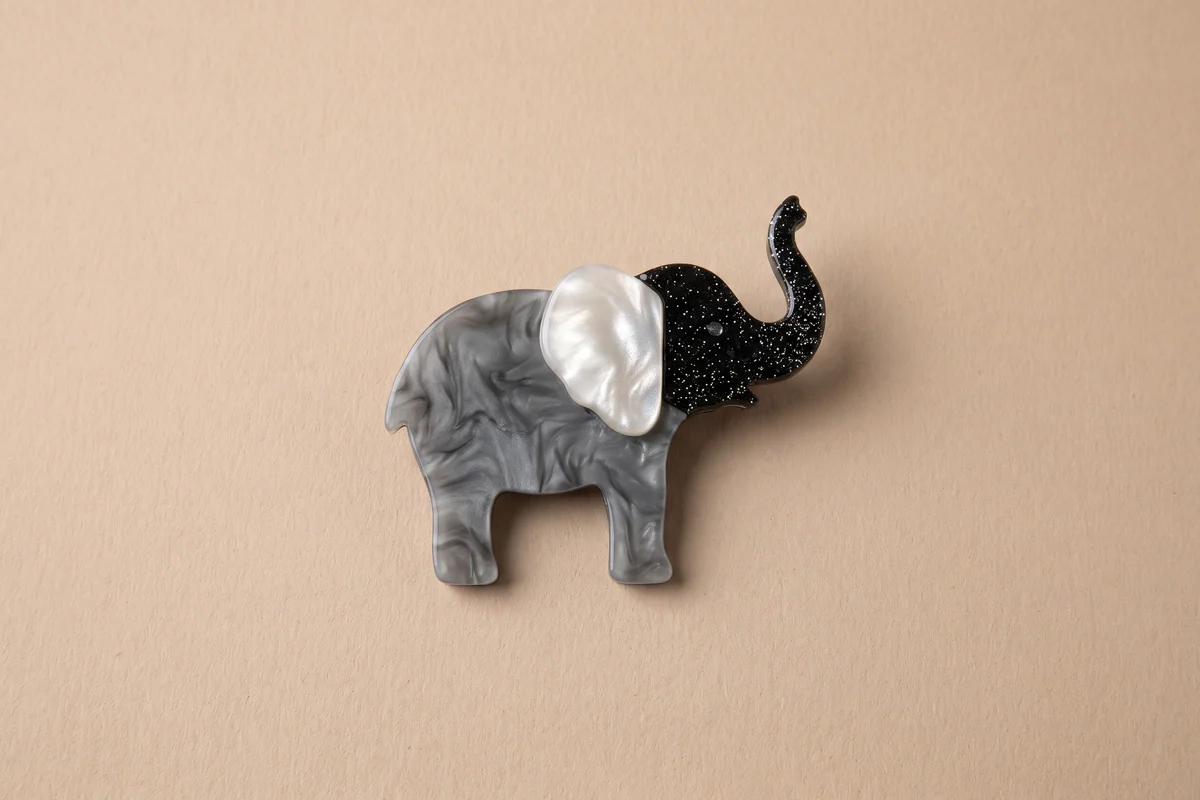
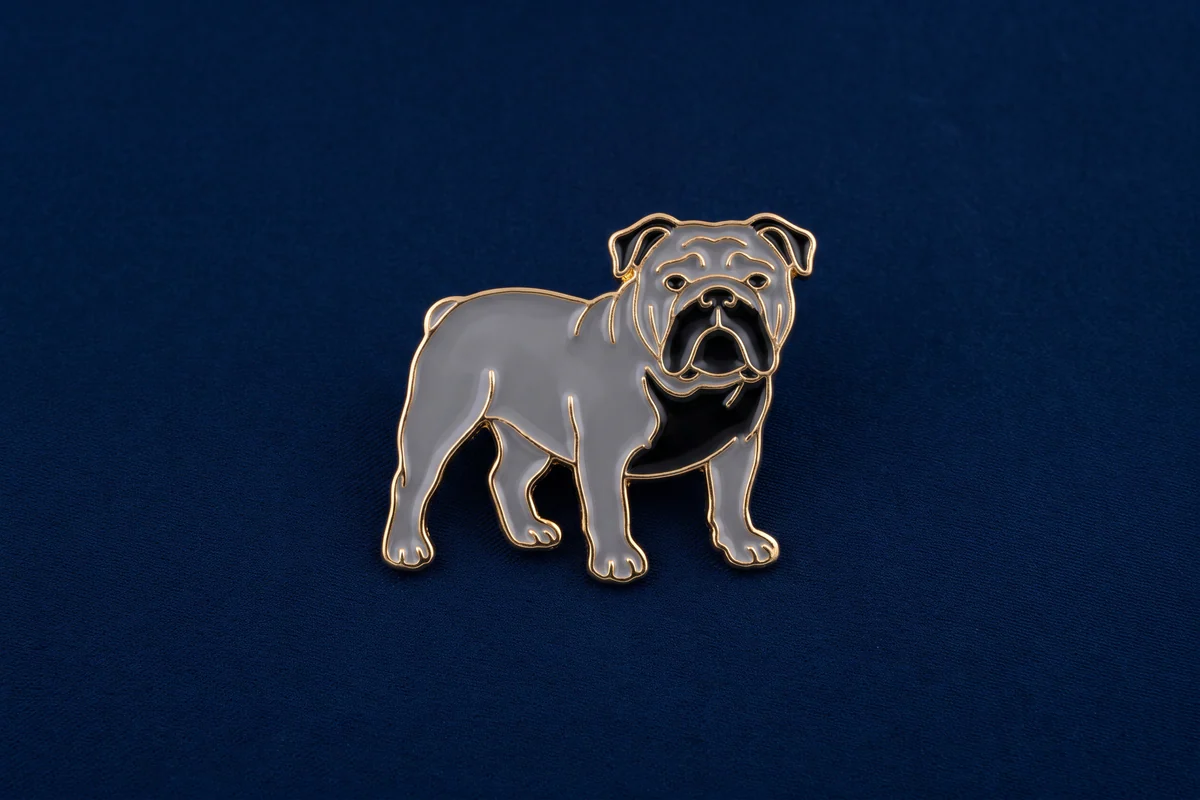
Among our animal-themed brooches, three designs bring this guide to life. The floral owl, in gold-coloured steel, mixes brown, cream, red, green and blue enamel. The resin elephant has a marbled grey body, a glittery black head and trunk, and a white ear with a pearly finish. The stylised dog pairs grey and black with gold-coloured steel. All three use a magnetic fastening. And if you are looking for another motif, browse all our original brooches.
Animal symbolism at a glance
From one animal to the next, here is what to remember:
| Animal | Best-documented meaning | Where it comes from | Type of information |
|---|---|---|---|
| Lion and unicorn | England and Scotland united | Royal coat of arms, 1603 | Historical fact (heraldry) |
| Cat | Good or bad luck, depending on the country | Bastet, maneki-neko, European superstitions | Stories and customs, varying by culture |
| Dog | Loyalty, protection, passage | Argos, Hachikō, Anubis, Cerberus | Ancient stories and a historical fact |
| Owl | Wisdom, or a bad omen | Athena, Roman and medieval beliefs | Stories and old beliefs |
| Elephant | Obstacles removed, memory | Ganesh, Maya’s dream, a study of elephants in a drought (Tanzania, 1993) | Religious stories and a scientific study |
| Turtle and tortoise | Long life, perseverance | Kurma, a Japanese saying, La Fontaine | Stories and a fable |
| Snake | Rebirth, healing, temptation | Shedding, rod of Asclepius, Genesis | Observation and stories |
| Phoenix | Resurrection | Medieval bestiaries | Medieval religious symbol |
| Personal spirit animal | A private guide | Modern usage | Personal belief |
An animal never says just one thing. It carries what centuries of stories have left on it, and whatever you decide to add.
Frequently asked questions
Which animal opens the Physiologus?▾
The lion. Presented as the king of the animals, it is the first creature described in the Physiologus, the Greek text that inspired the medieval bestiaries.
Why did the pelican stand for Christ in the Middle Ages?▾
People believed the pelican pierced its own breast to bring its young back to life with its blood. The bestiaries turned it into an image of Christ.
Can you see the Aberdeen Bestiary online?▾
Yes. The manuscript has been digitised, and the University of Aberdeen runs an online project, the Aberdeen Bestiary Project, that gives access to its pages.
How many fables did Jean de La Fontaine write?▾
He wrote 243 fables, published in three collections: the first in 1668, the second in 1678 and 1679, and the last in 1694.
Where can you see medieval bestiaries in Paris?▾
The French National Library (BnF) is holding an exhibition, “Histoires d’animaux”, on images of animals from the Middle Ages to the present day, in the Mazarin gallery of its Richelieu site. Manuscripts, prints and drawings are on show. Check the dates on the BnF website before you travel.