
Dog Symbolism and the Dogs Who Never Left
A terrier by a grave in Edinburgh, an akita at a Tokyo station, Anubis and Cerberus at the gates of the dead: what the dog symbolises, from one culture to the next.
Edinburgh, the Old Town, 1858. In Greyfriars Kirkyard, a small terrier lies down beside his master’s grave. The master was John Gray, a nightwatchman with the city police. The dog, the story goes, kept coming back to that grave for fourteen years. Edinburgh called him Greyfriars Bobby, and his tale already says a great deal about dog symbolism.
So what does a dog symbolise? First, loyalty, from Homer’s Odyssey to a railway station in Tokyo. Then protection: the dog guards the house, and the Romans even put a warning on their doorsteps. Finally, in several mythologies, the dog is a guide between two worlds: Anubis in Egypt, Cerberus in Greece and Xolotl among the Aztecs all watch over the passage of the dead. The companion of the living keeps watch over the dead as well.
For each story, we’ll separate the tale as it is told from what people have read into it.
Loyalty that outlives the master
Of all the meanings of the dog, loyalty is one of the best known in literature, and perhaps the most moving. Britain has its own champion.
Greyfriars Bobby, Edinburgh’s kirkyard terrier
Bobby was a Skye terrier, or possibly a Dandie Dinmont. His master, John Gray, had come to Edinburgh as a gardener before joining the city police as a nightwatchman. Gray reportedly died of tuberculosis on 15 February 1858. Bobby is said to have sat by his grave in Greyfriars Kirkyard for the rest of his life, until he died on 14 January 1872, aged 16.
The city took the little dog to heart. In 1867, Sir William Chambers paid for Bobby’s licence and gave him a collar. A year after his death, a drinking fountain topped with a statue by the sculptor William Brodie, paid for by Baroness Burdett-Coutts, was put up at the junction of George IV Bridge and Candlemaker Row. His headstone carries a simple line: “Let his loyalty and devotion be a lesson to us all.”
Is it all true? Not everyone thinks so. The author Jan Bondeson argues that the central claims about the dog and his loyalty are untrue, and even suggests that the first Bobby died and was replaced by a younger dog. The Wikipedia article on Greyfriars Bobby sets out both the legend and the doubts. Either way, Edinburgh chose to remember a faithful dog, and that choice is itself a piece of symbolism.
Argos, twenty years of waiting
Bobby has a very old ancestor. In Book 17 of the Odyssey, Odysseus finally comes home after twenty years away, disguised as a beggar. By the palace door, an old dog lies on a heap of manure, covered in fleas: since his master left, the servants have stopped caring for him. This is Argos.
The dog is not fooled by the disguise. Too weak to get up, he drops his ears and wags his tail, a greeting from a distance. Then he dies. He held on just long enough to see his master again. The Wikipedia article on Argos notes that he has been described as a symbol of faithfulness.
Hachikō, the akita of Shibuya station
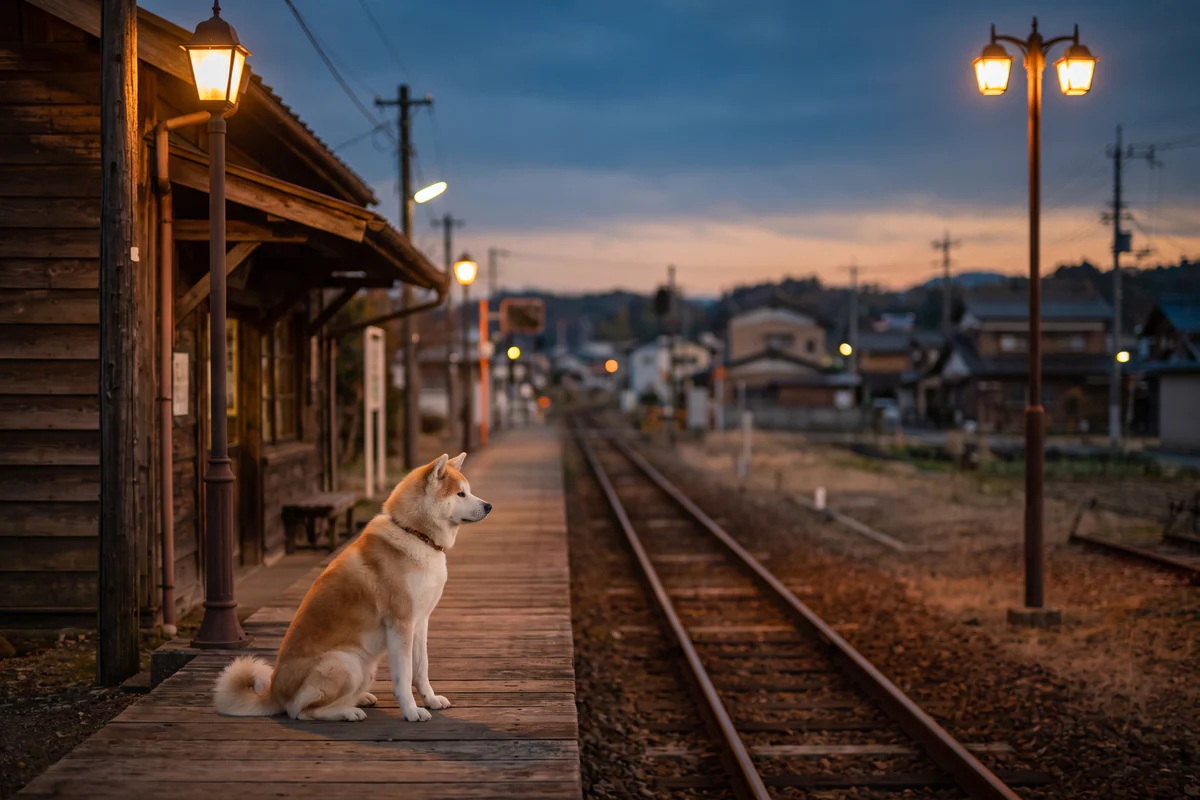
Japan has its own Bobby. In 1924, the akita Hachikō was taken in by Hidesaburō Ueno, an agriculture professor at Tokyo Imperial University. Every day, the dog walked with him to Shibuya station, then returned to the station each evening to meet him. On 21 May 1925, Ueno died suddenly. Hachikō went on waiting at the station for almost ten years, until his own death in 1935.
In 1932, the newspaper Asahi Shimbun told his story, and it reached readers across Japan. People called him chūken, “the faithful dog”. In April 1934, a bronze statue was unveiled at the station, with the dog himself in attendance. The Wikipedia article on Hachikō gives all these dates.
A little dog at the National Gallery
Painters have made the dog a sign of loyalty too. In 1434, Jan van Eyck painted The Arnolfini Portrait, which now hangs in the National Gallery in London. In the foreground stands a little dog. It is read as a symbol of marital fidelity: the couple promise each other what the dog gives without being asked. Next time you are there, look for him at the couple’s feet.
Beware of the dog: the guardian at the door
A faithful dog also protects what it loves, and the Romans turned that into a warning.
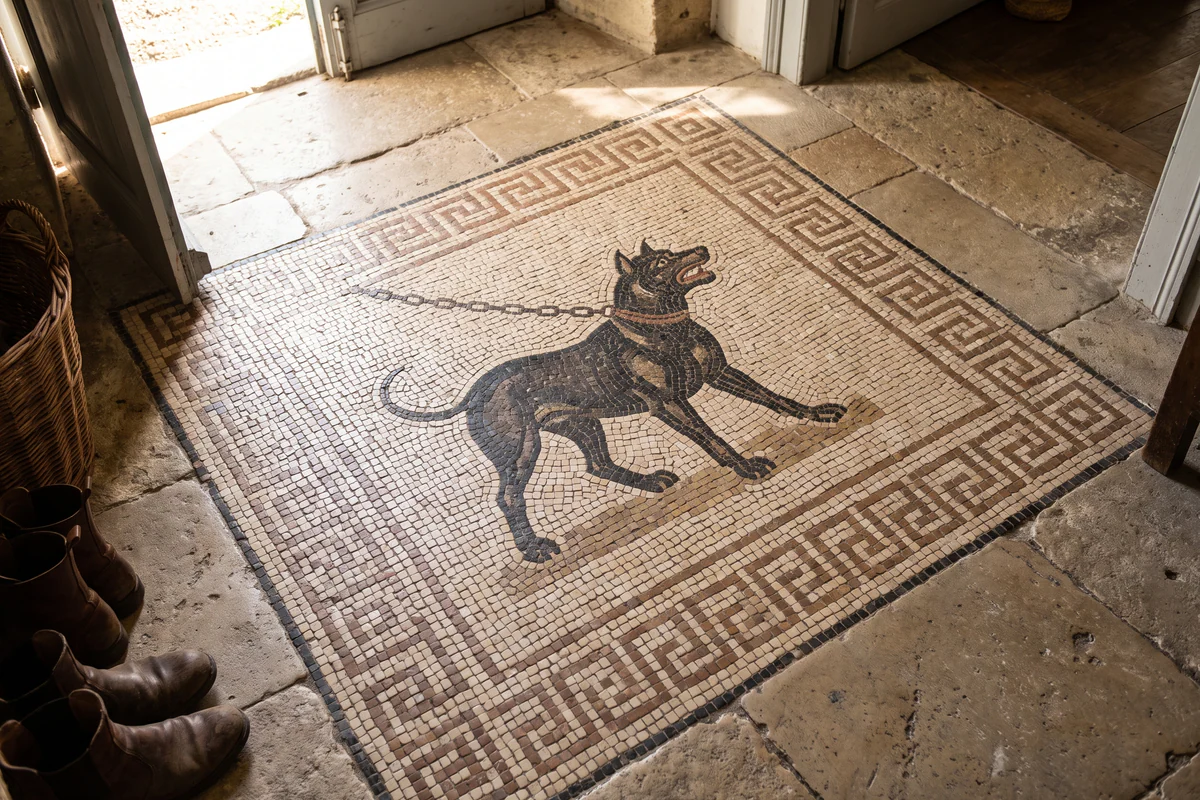
In Pompeii, in the House of the Tragic Poet, a mosaic shows a menacing dog at the entrance, above two Latin words: Cave canem, “Beware of the dog”. The writer Petronius plays with the idea in the Satyricon: as he walks into the house of the wealthy Trimalchio, the narrator, Encolpius, jumps at the sight of a dog… which turns out to be only a painting.
The warning has outlived Pompeii. You still see it on gates, in Latin or in plain English. The guard dog is probably the most down-to-earth of all its meanings: the one who keeps watch while the house sleeps.
Dogs that walk with the dead
The next meaning is the most surprising. In many myths, the companion of our days becomes our guide through the night of death. There is a scholarly word for these dogs: psychopomps, because they lead souls to the land of the dead. A psychopomp animal does not stand for death itself: it goes with us across the border from one world to the other.
Anubis, the black canine of the necropolis
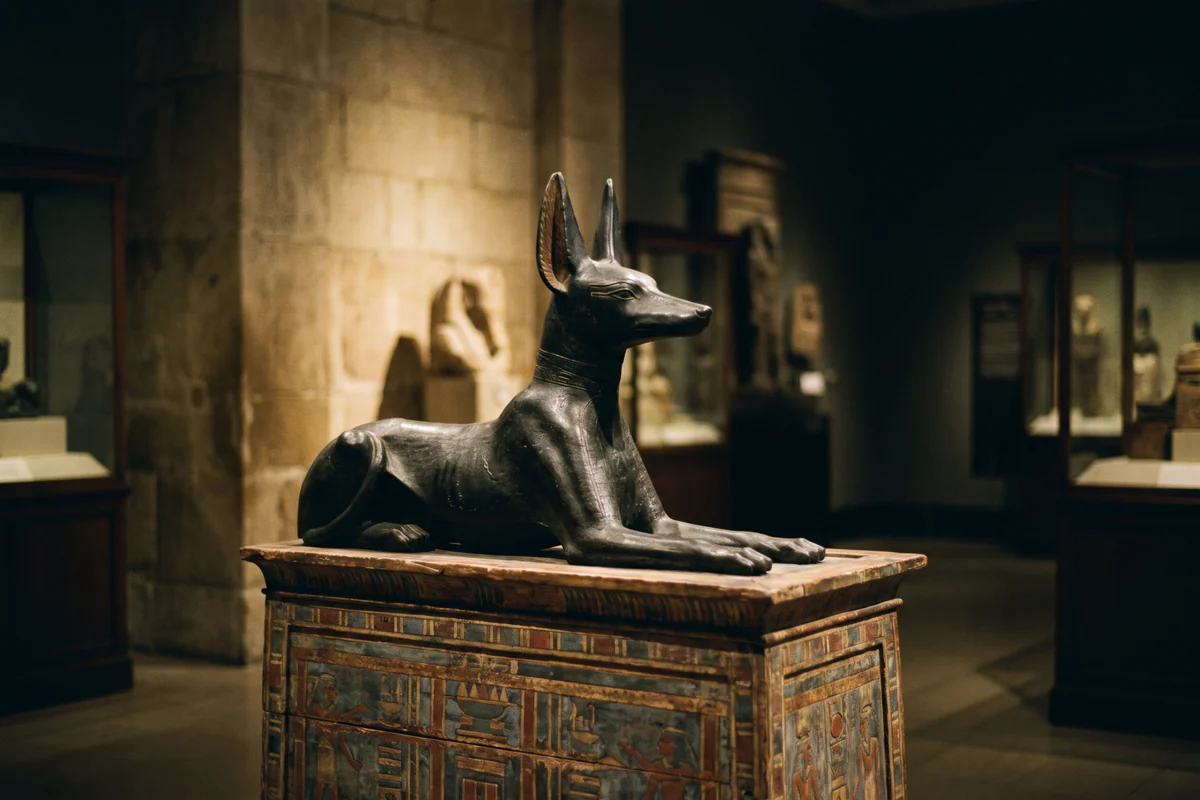
In ancient Egypt, Anubis is shown as a large black canine lying on its belly. Dog or jackal? According to George Hart, an Egyptologist at the British Museum, it is probably a jackal. One theory for the choice: this animal prowls around tombs at night, and the ancient Egyptians may have linked it with death.
Anubis became the lord of the necropolis and the protector of embalmers. He welcomed the dead and judged their souls at the weighing of the heart. He was worshipped chiefly at Hardai, which the Greeks called Cynopolis, “the city of the dog”. His cult lasted from the 32nd century BC until somewhere between the 4th and 6th centuries AD.
Cerberus, the hound at the gates of the Underworld
The Greeks gave the dog a different job: he does not guide the dead, he guards them. Cerberus, son of the monsters Echidna and Typhon, watches over the realm of Hades. His task cuts both ways: to stop the dead from escaping, and to stop the living from coming to take some of them back.
Very few ever got past him. Heracles captured him, the last of his twelve labours. Orpheus charmed him with music on his way to fetch Eurydice. Aeneas and the Sibyl threw him a cake that sent him to sleep. Even the most fearsome of dogs can be won over.
Xolotl, the Aztec companion of the dead
On the other side of the Atlantic, the Aztecs gave a similar role to Xolotl. This god, most often shown with the head of a dog, went with the sun into the underworld every night and guided the souls of the dead to Mictlan, the land of the dead. Most specialists see his head as that of the xoloitzcuintle, Mexico’s hairless dog. He was also the evening star.
Egypt, Greece, Mexico: three civilisations far apart, and the same intuition. The one who walks beside us by day walks beside us by night as well. Other animals have played this guiding role: in Hindu tradition, a fish guides humanity through the flood, as our article on what the fish symbolises explains.
A dog that fed a saint, and a greyhound treated as one
In Christian Europe, the dog played two unexpected parts: rescuer and, in one corner of France, saint, honoured locally despite opposition from the Church.
Saint Roch and his dog
In religious art, Saint Roch is often recognised by the dog beside him. Stricken with plague, he took refuge in the woods near Sarmato. A spring gushed out, and a dog, probably sent by its master, came every day to bring him a loaf of bread. That master may have been a nobleman, Gothard Pallastrelli. In Brittany, a statue in the church on the island of Bréhat even shows the dog licking the saint’s wound.
Guinefort, the greyhound saint of the Dombes
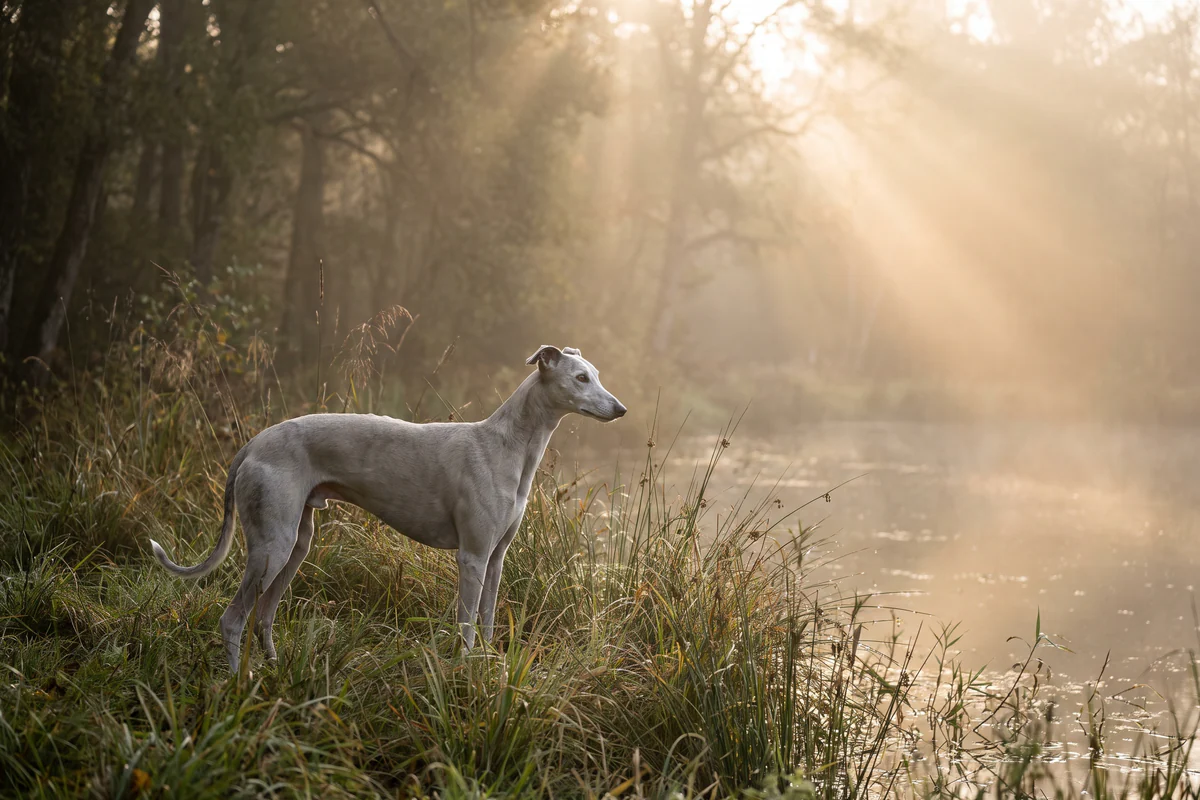
Now for a French story, and one of the strangest. Around 1250, the Dominican friar Stephen of Bourbon (Étienne de Bourbon) reported that people in the Dombes, near Lyon, were worshipping… a dog. Guinefort was a greyhound. According to the legend, he killed a snake that was about to bite his master’s baby, the child of a knight. The knight found the child covered in blood, believed the dog guilty and killed him. Then he found the snake, torn to pieces, and the baby waking up, unharmed.
Realising his mistake, the knight buried the greyhound and planted a bush on his grave. Local people soon credited the “martyred dog” with the power to heal children. Stephen of Bourbon had the dog’s remains dug up and burnt, along with the bush. It made no difference: the cult of the greyhound saint lasted for centuries, until the 1930s.
The Dog in the Chinese zodiac
In China, the Dog is the eleventh of the twelve zodiac animals, between the Rooster and the Pig. It corresponds to the earthly branch Xu. Chinese astrology gives the Dog qualities close to the ones Europeans see in dogs: it is said to be sensitive to injustice, intelligent and helpful.
What is the spiritual meaning of a dog?
If you are wondering about the spiritual meaning of a dog, the traditions give several answers, and they overlap:
- in Egyptian, Greek and Aztec myths, the dog watches over the passage between life and death;
- in Christian history, a dog fed the sick Saint Roch and, in the Dombes, a greyhound was even prayed to as a saint;
- in literature and history, from Homer to Edinburgh and Tokyo, the dog stands for a loyalty that survives absence, and even the master’s death.
The common thread? Presence. The dog stays when everyone else has gone. Beyond these traditions, if a dog makes you think of joy, childhood or a companion you have lost, that is a personal reading, and it is yours to keep. The cat, its age-old neighbour, has also changed meaning from one country to the next: read the story of the lucky cat.
A dog brooch as a gift: who it’s for and what to write
Who it’s for
With all these stories behind it, a dog brooch suits plenty of occasions:
- a long friendship, in honour of Bobby, Argos and Hachikō;
- a wedding anniversary, as a nod to the little dog in the Arnolfini portrait;
- a new home, for the dog who keeps watch on the doorstep;
- someone born in a Year of the Dog;
- a friend who has just welcomed a puppy;
- the memory of a four-legged companion who has gone, like a guide who stays by your side.
For any of these, our dog and puppy brooches range from the wise to the mischievous.
A few words for the card
- “Faithful as Greyfriars Bobby.”
- “Still here, even after twenty years.”
- “A guardian for your new home.”
A dog brooch to wear
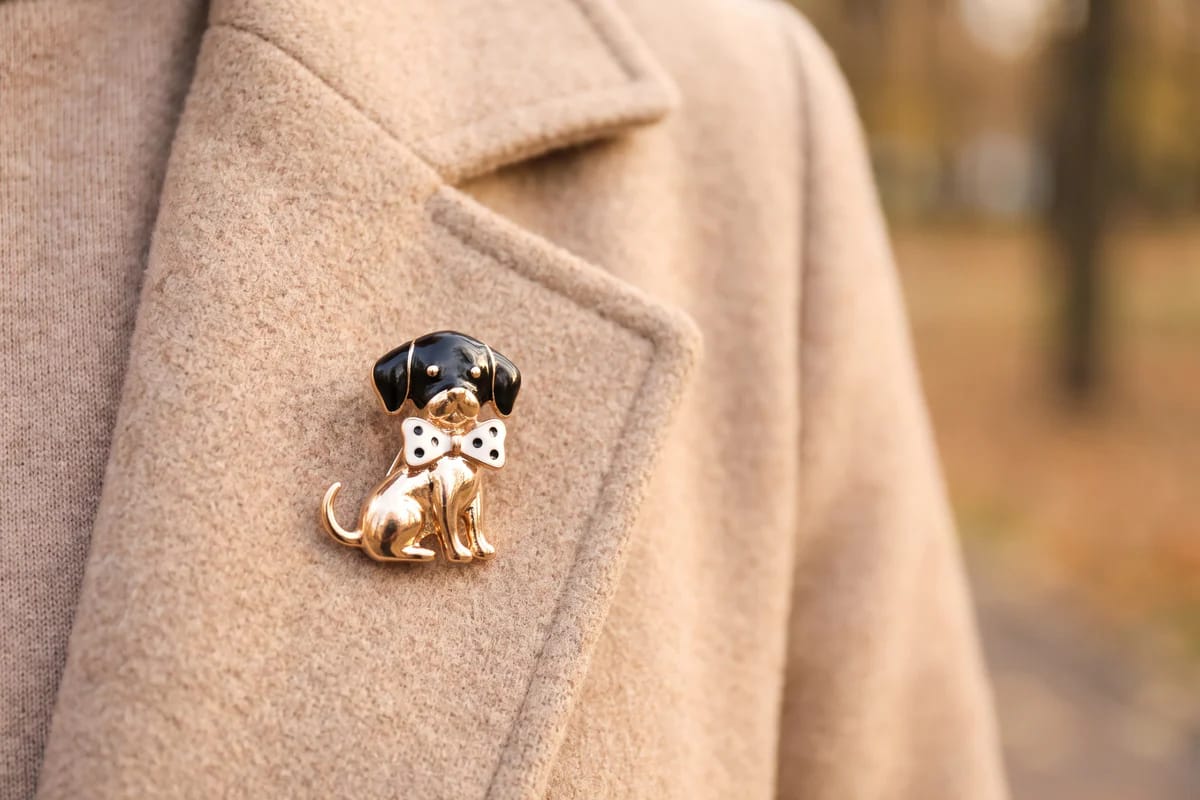
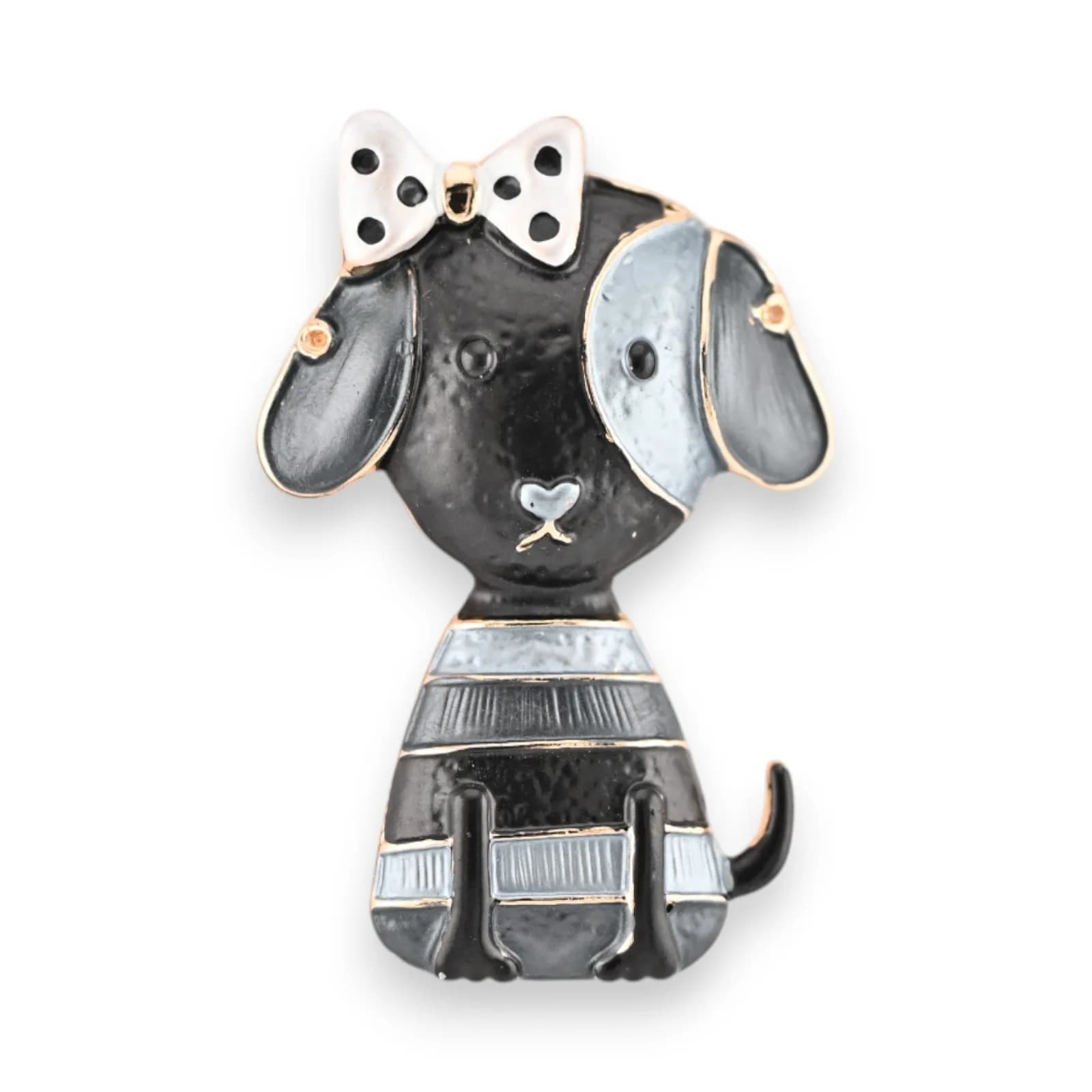
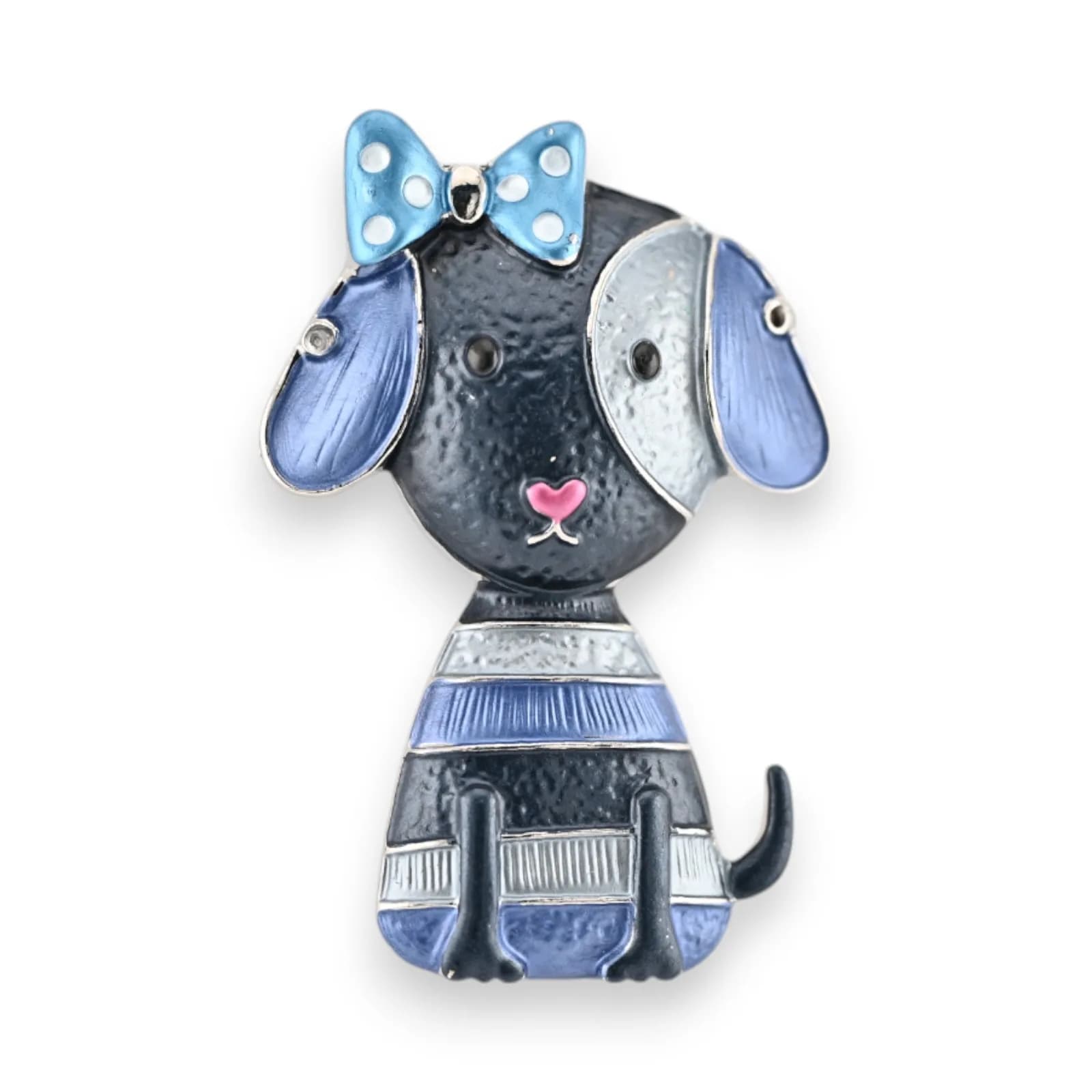
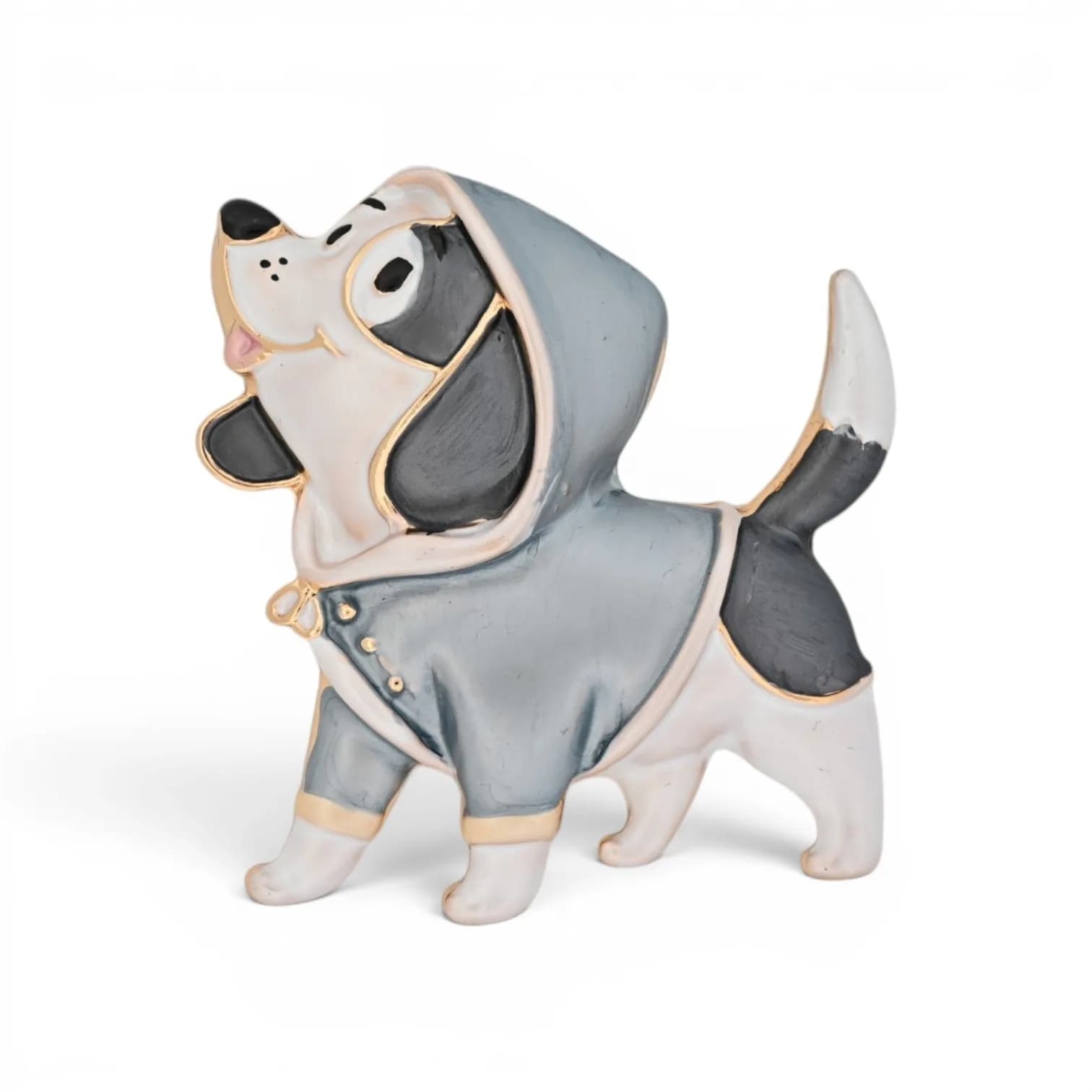
A dog brooch is a companion that never leaves your coat. Among our fashion brooches, several dogs and puppies echo these stories. The sitting dog with a black head and a white bow with black polka dots, in gold-coloured steel, looks every inch the wise guardian. The puppy with a charcoal head, lavender-blue ears and a little pink heart-shaped nose is all tenderness, and comes in silver-coloured steel. And the white and grey dog in a hooded raincoat and boots, in gold-coloured steel, is ready for a walk in the rain. All three are pieces of fashion jewellery with a magnetic clasp.
On the lapel of a blazer, a wool jumper or a bag, a dog gets noticed without trying too hard. And if you are still deciding, other creatures are waiting among our animal brooches.
Dog symbolism at a glance
From one tradition to the next, the dog remains a companion. Here is how the traditions compare:
| Tradition or source | Story or figure | What the dog stands for |
|---|---|---|
| Edinburgh (1858 to 1872) | Greyfriars Bobby | Loyalty: by tradition, fourteen years by his master’s grave |
| Homer’s Odyssey (Book 17) | Argos | Loyalty: he recognises Odysseus after twenty years |
| Japan (Tokyo, 1925 to 1935) | Hachikō | Loyalty: almost ten years of waiting at Shibuya station |
| Flemish painting (1434, National Gallery, London) | The little dog in The Arnolfini Portrait | Marital fidelity |
| Pompeii | The Cave canem mosaic | Protecting the home |
| Ancient Egypt | Anubis | Lord of the necropolis, who welcomes the dead |
| Ancient Greece | Cerberus | Guardian of the border between the living and the dead |
| Aztecs | Xolotl | Guide of souls to Mictlan |
| Christian Europe | Saint Roch’s dog, the greyhound Guinefort | Rescue and healing |
| Chinese zodiac | The eleventh sign | A character sensitive to injustice, intelligent and helpful |
Frequently asked questions
How many heads does Cerberus have?▾
It depends on the author. He is most often shown with three heads, but ancient descriptions vary: the Greek poet Hesiod, for example, gives him fifty.
What did the Greeks put in tombs to calm Cerberus?▾
According to Greek tradition, a honey cake for Cerberus was placed in the tomb, next to the coin set aside for Charon, the ferryman of the Underworld.
Where is Hachikō today?▾
After his death on 8 March 1935, Hachikō was preserved by taxidermy: he is on display at the National Science Museum of Japan, in Tokyo. His remains were buried in Aoyama Cemetery, near his master’s grave.
What does the name of the Aztec god Xolotl mean?▾
In Nahuatl, Xolotl can be translated as “twin”, “dog” or “slave”. He is also the protector of twins.
When are the next Years of the Dog in the Chinese zodiac?▾
The Dog comes round every twelve years. The most recent Years of the Dog were 1994, 2006 and 2018; the next ones are 2030, 2042 and 2054.