
Bee meaning: from Manchester's worker bee to Napoleon
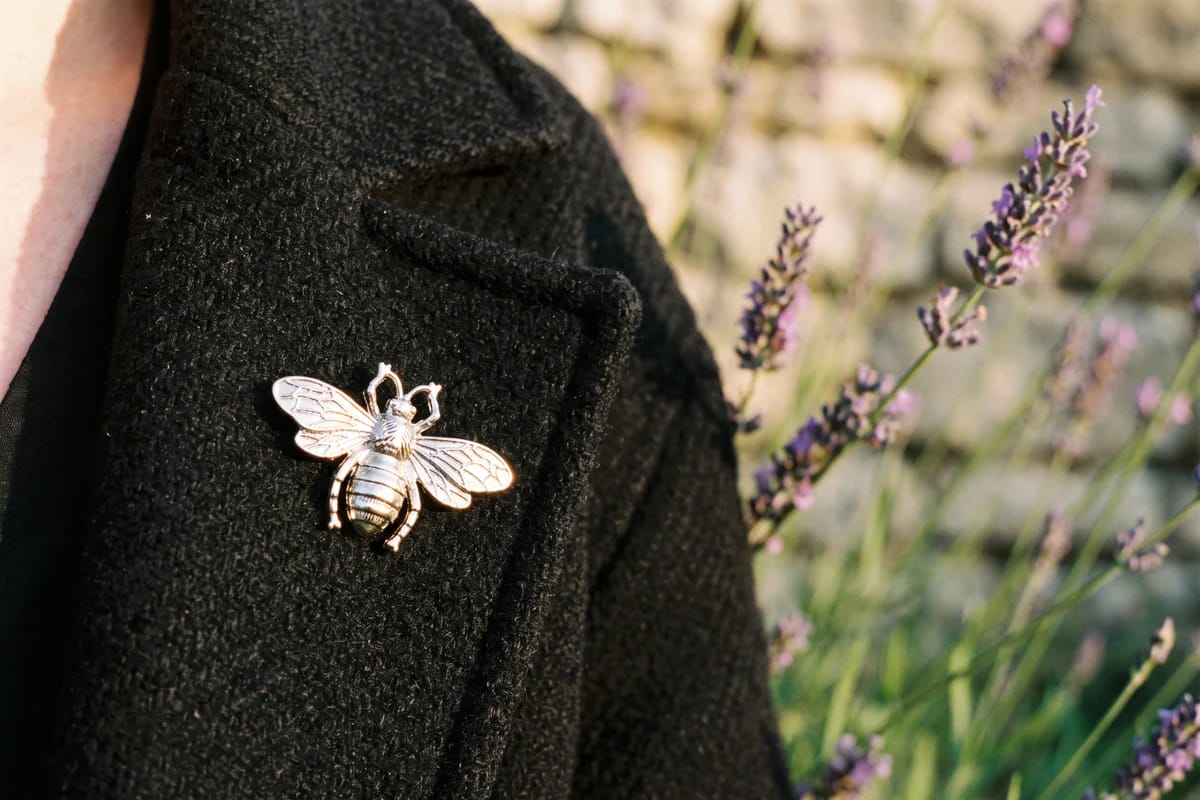
Bees on Manchester's bollards, a sun god who weeps, a king buried with winged jewels, an emperor hunting for ancestors: discover what the bee symbolises and how each era added its own meaning.
Look down at a bollard in Manchester, or up at a lamppost, and there is a good chance a bee is looking back at you. The city has worn this little insect as its badge since the 19th century. It was far from the first to do so.
So what does the bee stand for? Most often, people see in it hard work, community, power and rebirth. Over the centuries, people have also linked it with purity and with a bond between the dead and the living. Those meanings didn't appear all at once: they were built up layer by layer, from an Egyptian sun god to a French emperor, and on to the red-brick streets of the North West. Here is how.
What does a bee symbolise? The meanings at a glance
Before the history, the short version. When people look up bee meaning or bee symbolism, they usually have one of these ideas in mind:
- hard work and perseverance, the busy insect that never stops;
- community and team spirit, borrowed from the hive;
- power and good order, since kings and an emperor took the bee as their emblem;
- rebirth and immortality, an idea that runs from ancient Egypt to Napoleon;
- purity, a reading inherited from the Middle Ages.
Most of these start with simple observation. Stand near a hive on a summer morning: bees come and go, each one seems to know its job, and at the end of it all there is honey. Every era then added its own story on top. The British story is a good place to begin.
Manchester's worker bee: a city that built itself
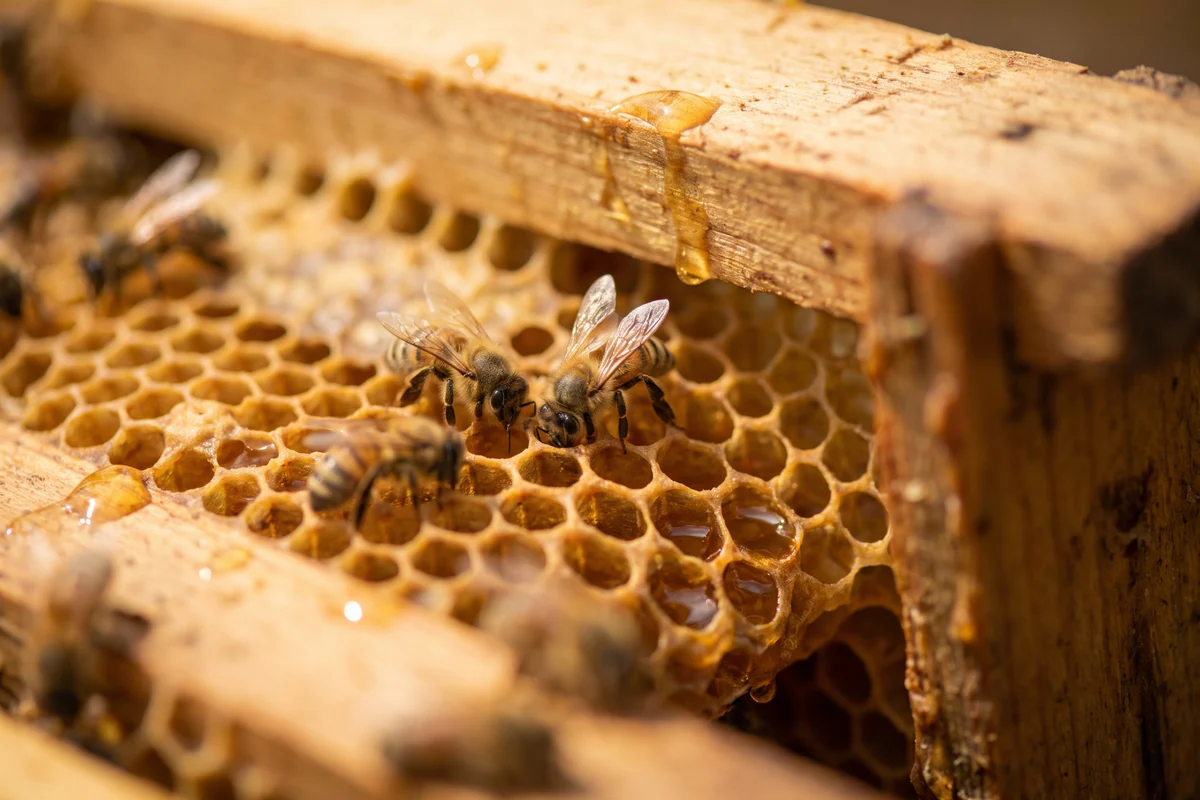
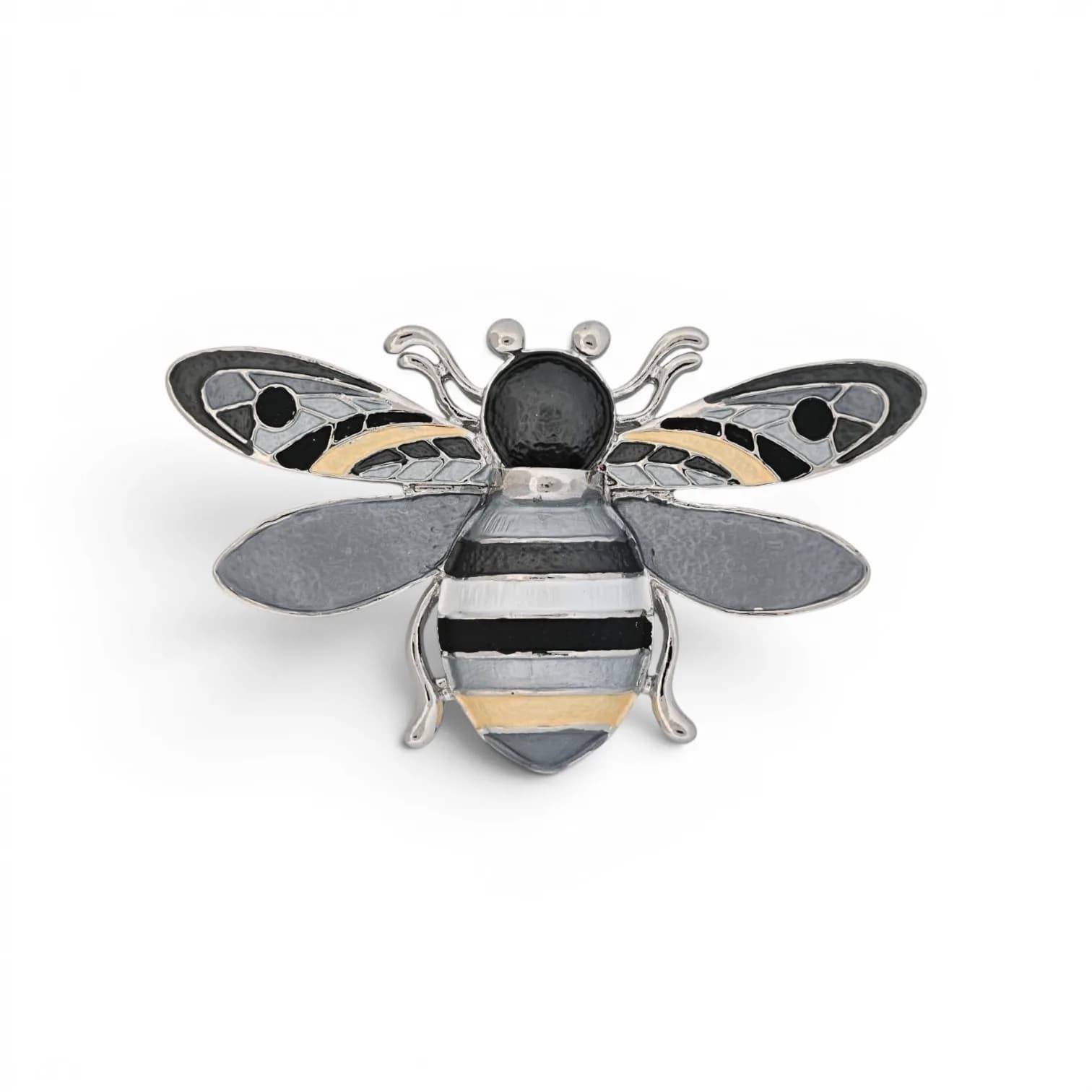
When the Corporation of Manchester was granted its coat of arms in 1842, the crest showed a globe scattered with flying bees. The choice wasn't just decorative. Manchester was then a hive of activity, at the forefront of the new mass production methods of the Industrial Revolution, and the worker bee came to stand for Mancunians' hard work.
The motto beneath says the same thing in Latin: Concilio et Labore, loosely translated as "by counsel and labour". Notice which bee was chosen. Not the queen: the worker. It is the emblem of a city proud of the people who made it.
The bee never left. You can still spot it on lampposts and bollards, and the coat of arms appears on buildings such as Manchester Town Hall and the Corn Exchange.
In May 2017, after the Manchester Arena attack, the worker bee took on a new meaning. It appeared on banners and graffiti as a public symbol of unity, and tattoo parlours offered bee tattoos to raise money for the victims. A symbol of work had become a symbol of standing together.
That's Manchester's answer to what the bee means: effort shared by many. But the idea is much older than the cotton mills.
Long before the mills: honey, a sun god and the medieval hive
CIPRA, the international commission that works to protect the Alps, has published an article on the "queen of insects" that traces this long history. It starts with a rock painting in eastern Spain showing honey being gathered, dated to the Neolithic, between 10,000 and 6,000 BC. Thousands of years ago, someone thought that moment was worth painting on the rock.
In ancient Egypt, the same article explains, people said the bee was born from the tears of Ra, the sun god. That divine birth gave it a special role: it was a link between the dead and the living. Hold on to that thought, because an emperor would come looking for it much later.
In the Middle Ages, the bee took on a religious meaning. The hive, with all its bees working together, stood for the Christian community, and the bee itself for purity; it even became an allegory of the Virgin Mary.
Then a king took notice. In the 16th century, Louis XII of France used the bee and the hive as his emblems. The message was easy to read: a well-run kingdom works like a hive, where everyone keeps their place.
The king who was buried with "bees"
In 1653, near the church of Saint-Brice in Tournai, the tomb of a Frankish king came to light: Childeric I, the father of Clovis. According to the account of Childeric I's tomb, the tomb held some 300 small winged jewels that had been placed on the king's cloak.
The scholar Jean-Jacques Chifflet suggested that they were brooches decorating one of the king's ceremonial garments. Picture it for a second: a king wearing bees on his clothes to show who he was. Pinning on a symbol is a very old gesture.
There's a twist, though. Were they really bees? The Fondation Napoléon says plainly that they were in fact cicadas. It hardly mattered. Long taken for bees, they were considered the oldest emblem of the kings of France, and that reputation would one day make them famous.
Napoleon's imperial bee: borrowing a thousand years of history
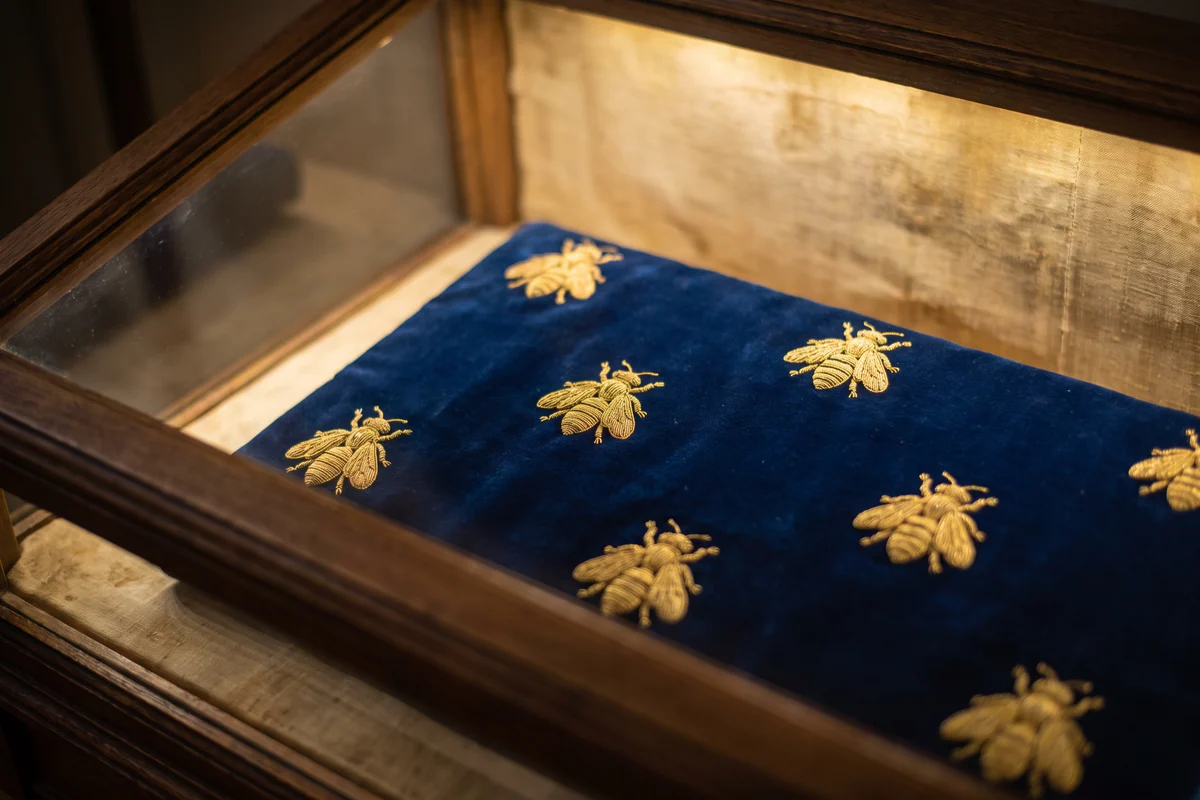
When Napoleon became emperor in 1804, the new regime needed emblems, and the choice was debated at the Council of State. Cambacérès favoured the bee, the Fondation Napoléon explains, since France was "a republic with a head, like a hive".
The eagle won and became the main emblem, but the bee stayed at its side. The Fondation Napoléon gives the reason: the bee was a "symbol of immortality and resurrection", chosen to link the new dynasty to the very origins of France. Childeric's bees, in other words.
Clever, isn't it? By taking up the emblem of the first kings, Napoleon presented himself as their heir. And the old Egyptian idea of a link between death and new life found its way onto imperial velvet.
The imperial bee made its first appearance at the coronation on 2 December 1804. That day it stood for a society that was disciplined, hard-working and productive, gathered under one leader: exactly the hive Cambacérès had in mind.
Bee spiritual meaning: beliefs to draw inspiration from
Search for the spiritual meaning of the bee and you'll find all sorts of interpretations. They borrow from every era above, and they're beliefs and interpretations, not proven facts.
One of the most common says that the bee invites you to find your place within a group without losing yourself. Others see it as a reminder to keep going, or as a sign of renewal, an echo of ancient Egypt and of Napoleon's empire. Take them as sources of inspiration rather than promises.
The bee also has cousins in the world of symbols. The butterfly, another insect full of meaning, has a story all of its own: read about butterfly symbolism and compare. The two insects also sit side by side among our insect brooches. And if lucky animals intrigue you, the lucky cat has some lovely legends of its own.
Giving a bee as a gift: what it says without words
A bee-themed gift speaks for itself. It fits naturally into moments like these:
- success after a long effort, such as exams, a degree or a finished project;
- a new job or a new business;
- a wedding or a birth, to wish for a happy, lively home;
- a retirement, to honour a working life;
- a friend, a colleague or a team who has always been there for you.
What matters is to link the bee to what is happening in the person's life: that link gives the gift its meaning. For more ideas in the same spirit, here is how to choose a brooch as a gift.
A few words on the card are enough:
- "Like the bee, you built it all with patience. Well done."
- "Concilio et Labore: you earned this one."
- "Quiet, but essential: thank you for being there."
Wearing a bee every day
When you wear a bee, you carry on a gesture that may go all the way back to Childeric. For you, it can be a reminder of your energy or of the people you work alongside; for those around you, it can start a conversation.
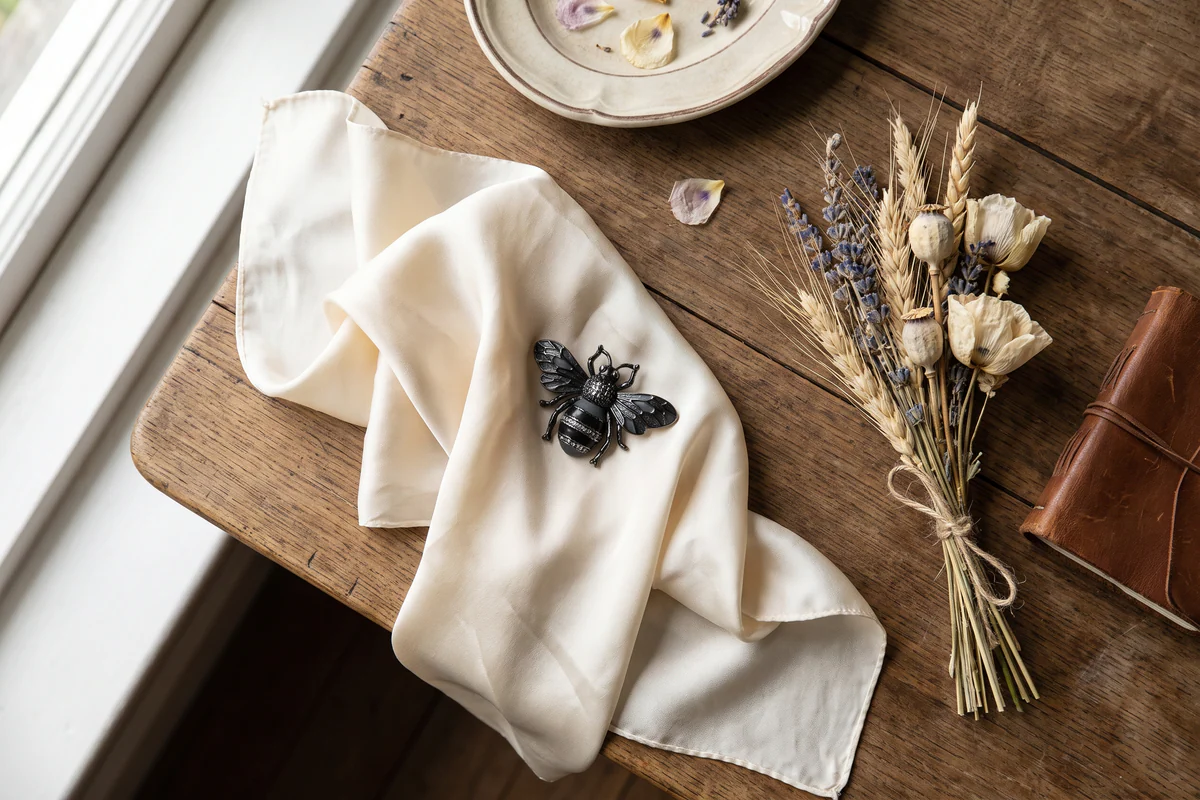
At Ma Broche, our brooches are fashion jewellery made of steel, most often gold-coloured, rose-gold-coloured or silver-coloured, with a magnetic clasp: one magnet sits on each side of the fabric.
Why not browse our bee brooches and choose the one that best matches what this symbol means to you? And if another little creature speaks to you more, you'll find plenty more among our animal brooches.
In short: bee meaning through the ages
The meaning of the bee brings together hard work, community, power and rebirth, and each era has added its own layer:
| Era or place | What the bee stands for |
|---|---|
| Neolithic, eastern Spain | A honey harvest thought worthy of being painted |
| Ancient Egypt | Born from the tears of Ra, a link between the dead and the living |
| Middle Ages | Purity, the Christian community, an allegory of the Virgin Mary |
| Louis XII, 16th century | The hive, a model of a well-ordered kingdom |
| Childeric I, tomb found in 1653 | Winged jewels long taken for bees, the oldest emblem of the kings of France |
| Napoleon, 1804 | Immortality, resurrection, a hard-working society under one leader |
| Manchester, 1842 | The worker bee: the hard work of an industrial city |
| Manchester, 2017 | Unity and standing together |
| Today | Hard work, team spirit, rebirth (beliefs and interpretations) |
Next time you pass a bollard in Manchester, you will know how much history that little bee is carrying.
Frequently asked questions
What happened to Childeric's bees?▾
During the night of 5 November 1831, into the 6th, Childeric's treasure was among some 80 kg of valuables stolen from the library where it was kept and melted down. A few pieces were later recovered from the Seine, where they had been hidden, including two of the bees.
What does the French proverb "Une abeille vaut mieux que mille mouches" mean?▾
Literally "one bee is worth more than a thousand flies": this French proverb, quoted by CIPRA, simply puts the bee far above the fly. It makes a charming line to write on a card.
Where does Maya the Bee come from?▾
As CIPRA's article on the "queen of insects" notes, Maya the Bee first appeared in a novel by the writer Waldemar Bonsels, published in 1912.
Is the bee a lucky charm?▾
Some people see it as a talisman of abundance and success, a nod to honey and to hard work that pays off. This is a belief: nothing proves that a bee brings luck, but the meaning you give it can be a motivating everyday reminder.
Is a bee a good gift for a man?▾
Of course. Hard work, team spirit and perseverance have no gender. The bee suits a colleague launching a project just as well as a father who is retiring. Worn on a jacket lapel, a brooch makes a discreet, elegant accessory.