
Rooster Symbolism: The Bird That Wakes the World
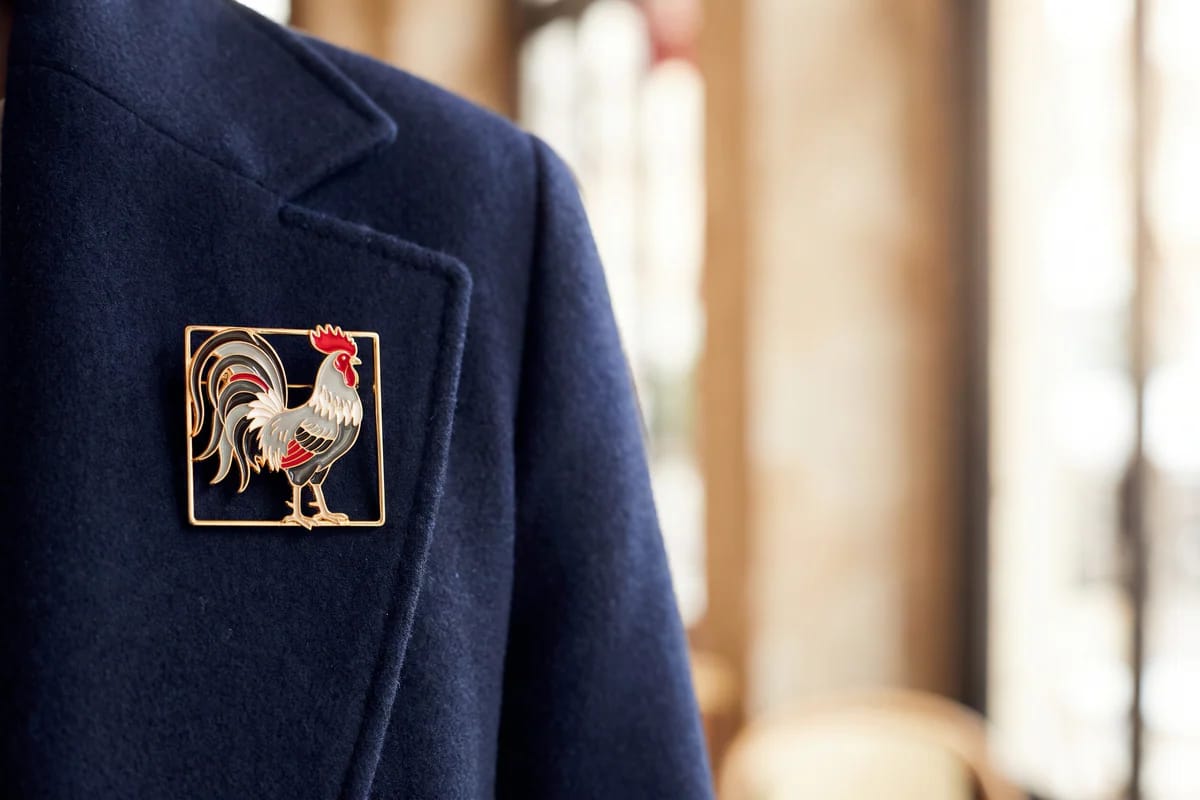
A weathercock on the Bayeux Tapestry, a Bible verse, a Latin pun, a football crest and a lucky bird from Portugal: what the rooster stands for, and where each meaning comes from.
Look closely at the Bayeux Tapestry and you will find a small, busy scene. Near the top of a church, a man leans out and fixes a bird to the roof. The church is Westminster Abbey, and the bird is a weathercock. Cockerels still turn in the wind above many church steeples today, and most of us walk past without asking why they are there.
Rooster symbolism starts with a sound. Because the rooster crows before sunrise, it stands first for vigilance and for the return of light: it is the one that keeps watch while everyone else sleeps. On church steeples, it recalls a scene from the Gospels. In France, it became the national emblem thanks to a Latin pun. In Portugal it stands for faith, justice and good luck, and in China it has its own year in the zodiac. Here is where each meaning comes from, and how much of it rests on firm ground.
What does a rooster symbolise?
In short, there is no single universal meaning. The rooster's dawn call explains vigilance, while religious, national and folk traditions add meanings of their own. Depending on the place and the period, people have given it these meanings:
- awakening and watchfulness, because it crows before dawn;
- failure and forgiveness, through the cockerel on church steeples;
- France, ever since the Romans linked the rooster and the Gauls;
- faith, justice and good luck, in Portugal;
- one year in twelve, in the Chinese calendar.
Everything begins with that cry at the end of the night, so let us begin there too.
The bird that calls up the sun
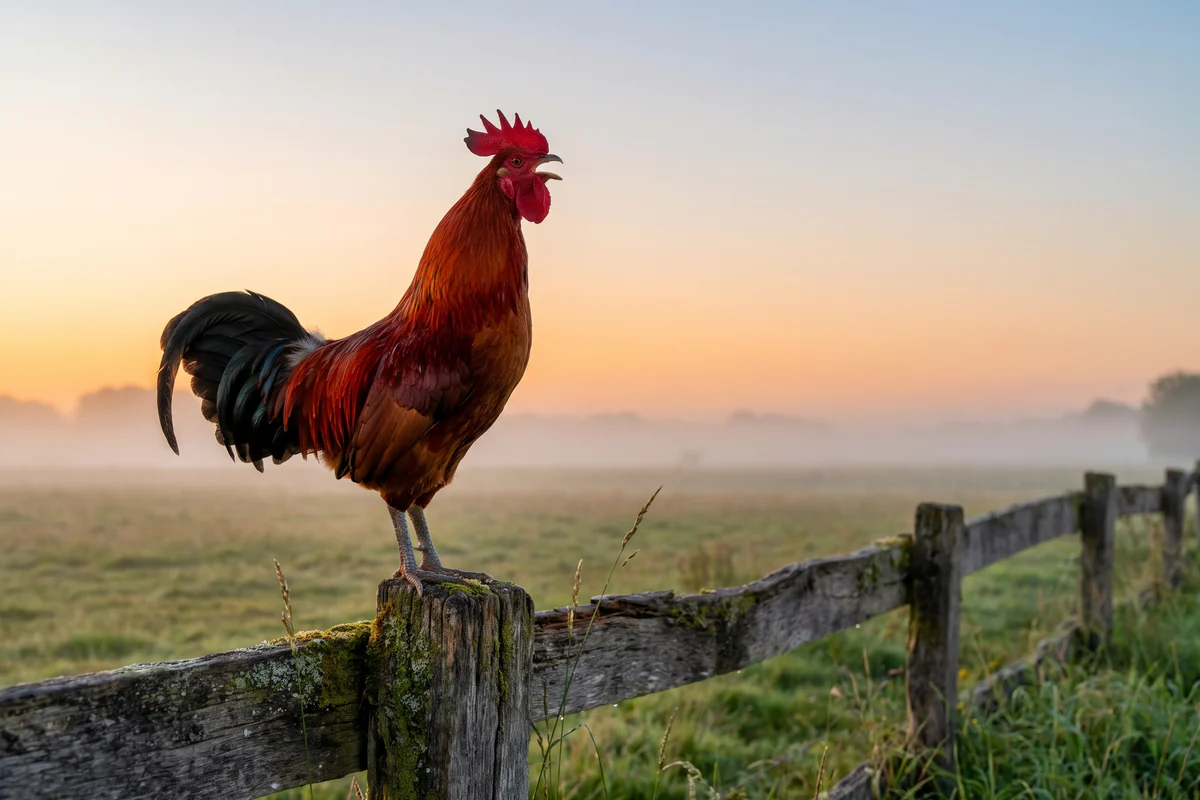
A rooster does not learn to crow: the call is innate. In fact it crows throughout the day, with one peak at dawn and another at dusk. We only notice the first because it breaks the silence of the night. In French, the bird even takes its name from the sound: coq is thought to come from cocorico.
Every language hears that call in its own way. English speakers write cock-a-doodle-do, Germans Kikeriki, Spaniards quiquiriquí, Italians chicchirichì and the Japanese kokekokko. The bird is the same everywhere; only the ear changes.
An alarm clock with feathers
Before mechanical clocks, across much of Europe and Asia, the rooster told people the time. One story shows how seriously this was taken: a law of the Ottoman sultan Mehmed II allowed only one rooster per mill, just enough to know the hour without the poultry stealing the grain. It is easy to see why the bird became the symbol of waking up: it announces the day to those who are still asleep.
A rooster for Asclepius
The rooster also appears in one of the most famous deaths in philosophy. In the Phaedo, Plato records the last words of Socrates: he reminds his friend Crito that they owe a rooster to Asclepius, the god of medicine. The line is often read as if, for Socrates, death were a kind of healing. The bird of morning was owed to the god who heals.
Rooster symbolism in the Bible: the night of Peter's denial
If you have ever wondered why so many church spires carry a cockerel, the answer lies in a single night described in the Gospels.
On the night of his arrest, Jesus tells Peter that before the rooster crows, Peter will have denied him three times. The scene appears in all four Gospels (Matthew 26:34, Mark 14:30, Luke 22:34 and John 13:38). In the courtyard of the high priest, Peter says three times that he does not know Jesus. Then the rooster crows. Peter remembers, goes out and weeps bitterly. Painters often placed a rooster beside the apostle: it recalls his weakness, but also his repentance.
From the Pope to the weathercock
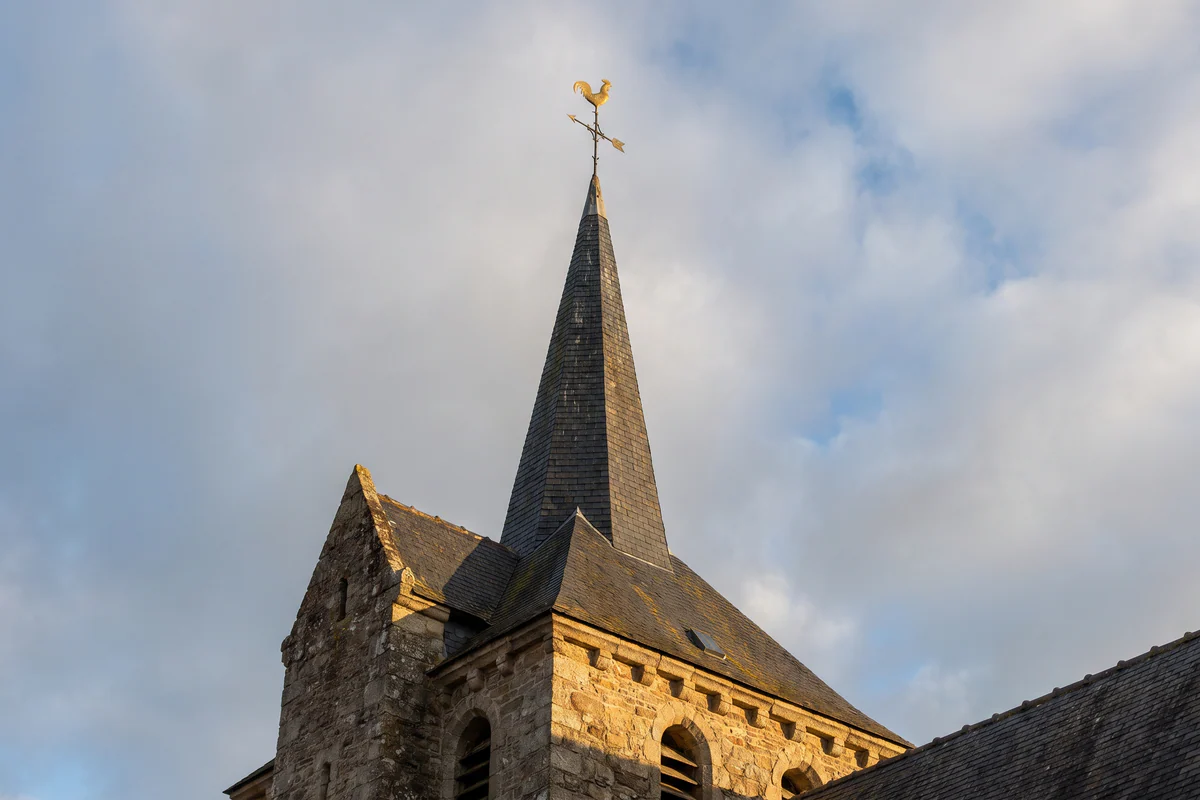
According to a tradition reported in Wikipedia's article on the weather vane, it was Pope Nicholas I, in the 9th century, who ordered a rooster to be placed on church steeples, as a reminder of the words Jesus spoke to Peter. Many steeples already carried a vane, so the rooster settled on top and began to turn with the wind. That is how the weathercock was born.
The custom reached England too. The Bayeux Tapestry, which tells the story of the Norman Conquest, shows a man installing a weathercock on Westminster Abbey. In Normandy itself, the bird mattered a great deal: in 1091, after a storm, the Bishop of Coutances had the gold-coloured rooster on his cathedral hastily repaired.
So the weathercock says two things at once. It watches over the village, just as the farmyard rooster announces the day. And it reminds everyone below that anyone can fail, and then get up again.
Another bird rules the night, at the opposite end of the day: our article on the owl's spiritual meaning tells its story.
Why is the rooster a symbol of France?
Across the Channel, the rooster took a different road. The answer to why it stands for France fits in one word. As the French presidency explains, the Latin word gallus means both ‘rooster’ and ‘Gaul’. The link goes back to the Romans, and the bird's outline already appears on Gallic coins.
From insult to emblem
In the Middle Ages the symbol faded, and when it came back it was not always a compliment: France's enemies used it to make fun of the French. It resurfaced in Germany in the 14th century, and from the Renaissance onwards it found its way into images of the King of France. The Revolution gave it real momentum, and it even appeared on the seal of the Directory.
The emperor who said no
Not everyone was won over. Napoleon preferred the eagle, and according to the Élysée he dismissed the idea: ‘The rooster has no strength, so it cannot be the image of an empire such as France.’ The rooster bided its time. On 30 July 1830, an order placed it on the buttons of the National Guard uniform and at the top of its flags. The Second Republic put it on its seal.
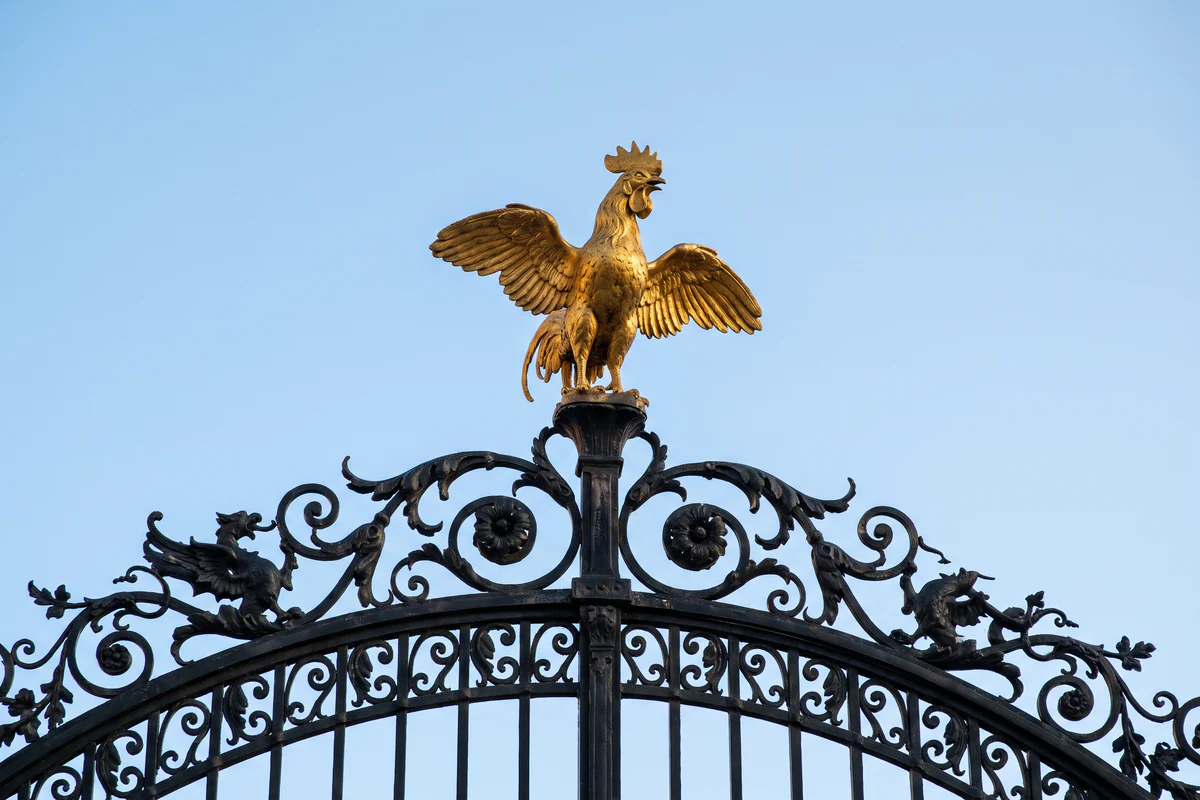
Its golden age came under the Third Republic. It was engraved on seals, struck on coins and set on top of the gate to the gardens of the Élysée Palace, wings spread and comb held high. The farmyard bird now watches over the home of the French head of state. Today the Republic prefers to be represented by Marianne, but the rooster remains, in the Élysée's words, the emblem of France for everyone, including at sporting events.
A cockerel on the football pitch
Sport is where most British readers have met the French rooster. Since the 20th century it has been closely tied to France's national teams, and Footix, the mascot of the 1998 World Cup, was a rooster. When French fans shout ‘cocorico!’ after a win, they borrow its call to express a touch of patriotic pride. The bird even crossed a border: in 1912, Walloon activists chose it for their region of Belgium, as a ‘bold rooster’ with its right leg raised, to recall their Gallo-Roman roots.
Tottenham's fighting cock
Britain has a football cockerel of its own, and it has nothing to do with France. Tottenham Hotspur is named after Harry Hotspur, who was said to have earned his nickname by digging in his spurs as he charged into battle, and spurs are also associated with fighting cocks. At the end of the 1909-10 season, a bronze cockerel standing on a ball, made by former player William James Scott, was placed on top of the West Stand. In 1921, the club wore a cockerel within a shield at the FA Cup Final, and since the late 1960s the badge has shown the bird standing on a ball. Here the rooster means fighting spirit rather than dawn or faith.
The Barcelos rooster: Portugal's lucky bird
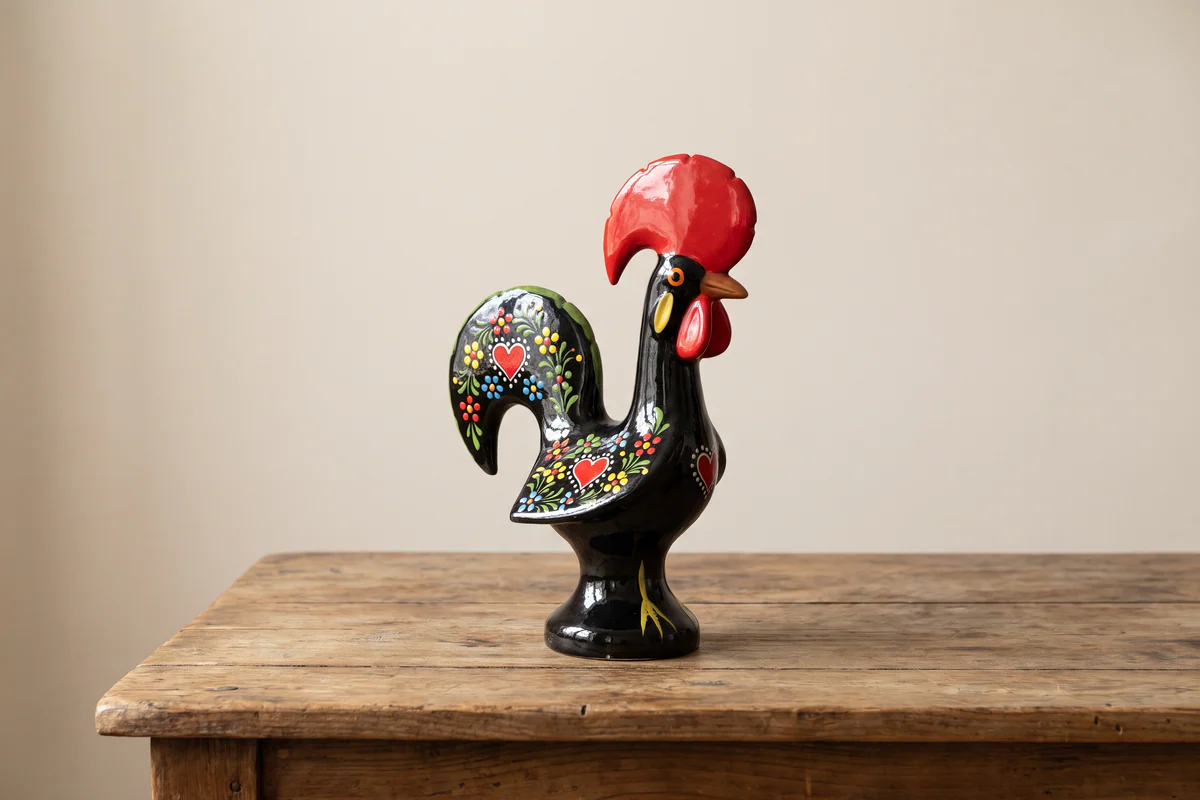
If you have holidayed in Portugal, you have almost certainly seen a brightly painted black rooster in a souvenir shop. It comes from Barcelos, a small market town in the north of the country, and from a legend told in Wikipedia's article on the Rooster of Barcelos.
A pilgrim on his way to Santiago de Compostela is found guilty without proof. Condemned to hang, he tells the judge that, as surely as he is innocent, the cooked chicken on the judge's table will stand up and crow at the moment of his hanging. When the day comes, the bird crows. The man is spared and set free.
Since then, the Barcelos rooster has stood for faith, justice and good luck. The town is known for its richly decorated ceramic roosters, and the bird has become one of the great tourist emblems of Portugal. The story closely resembles the miracle of the hanged man who was saved, often told along the pilgrim routes to Santiago.
Rooster symbolism in the Chinese zodiac
In China, the rooster is the tenth animal of the zodiac, between the monkey and the dog. Legend says the Jade Emperor, or the Buddha in other versions, chose the twelve animals after a race. Each year bears the name of one of them. The last Year of the Rooster was 2017, the year of the Fire Rooster; the next will be 2029, the year of the Earth Rooster. It will begin at Chinese New Year, which falls between 21 January and 20 February.
The spiritual meaning of a rooster: history or belief?
Search for what a rooster represents spiritually and you will find pages about the rooster as a spirit animal, a guide or a messenger, and about what it means to dream of one. These are modern, personal readings. Here, ‘documented’ means that a text, a decree or an identifiable tradition ties the meaning to a source. The table below tells the two apart:
| Idea | Where it comes from | Status |
|---|---|---|
| The rooster as the bird of waking | Its innate dawn call | Observed fact |
| The cockerel on the steeple | Peter's denial, a decision attributed to Nicholas I | Documented Christian tradition |
| The rooster as the emblem of France | Latin gallus, the 1830 order, the Élysée gate | Documented history |
| The rooster of justice and luck | The Barcelos legend | Documented folk legend |
| The Year of the Rooster | Chinese zodiac | Documented traditional calendar |
| The rooster as totem or messenger | Present-day spirituality websites | Modern interpretation, not attested in the sources examined |
| Dreaming of a rooster | Dream books and websites | Personal interpretation |
The same sorting works for every animal. Our article on animal symbolism shows how these meanings take shape, between ancient stories and recent beliefs.
Wearing a rooster brooch
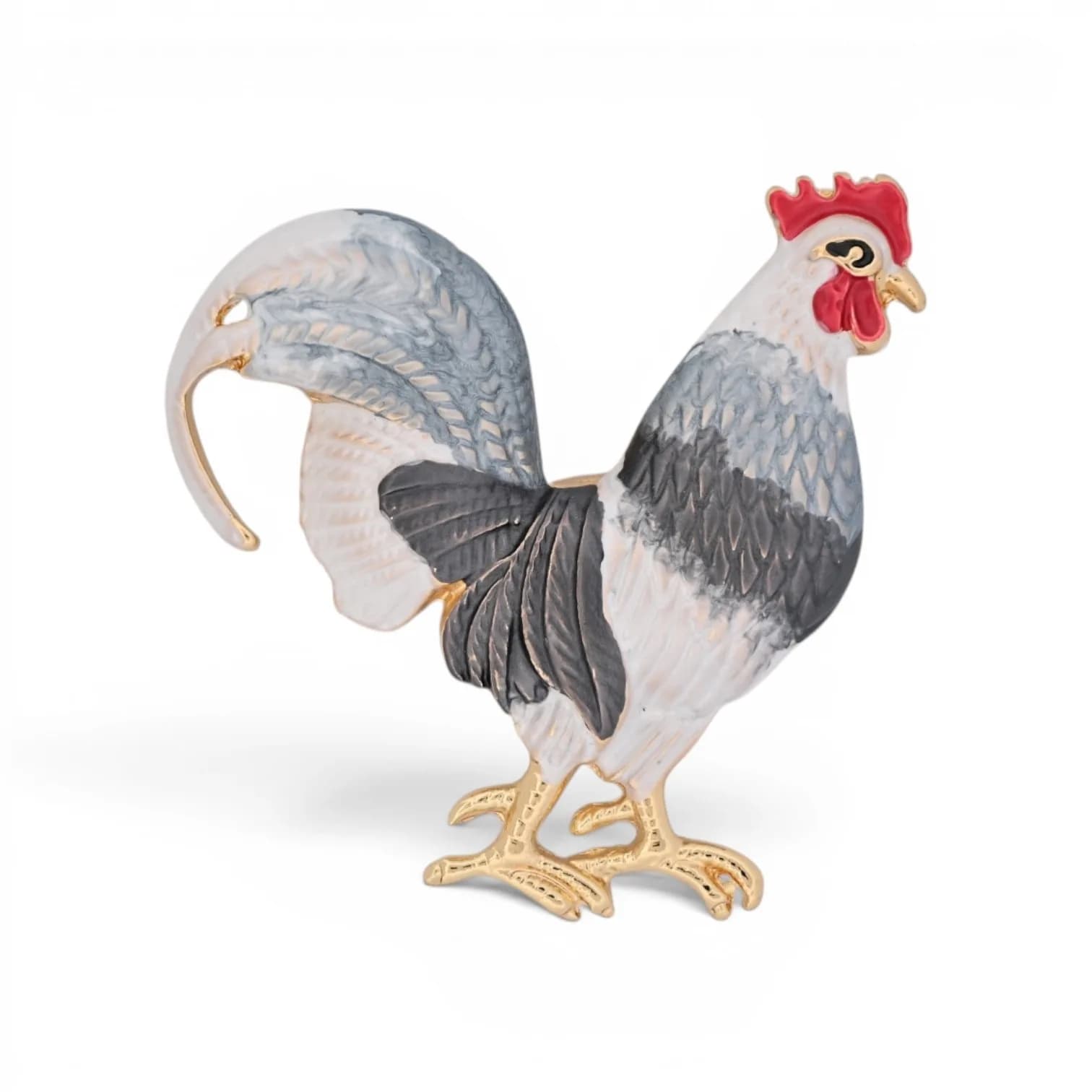
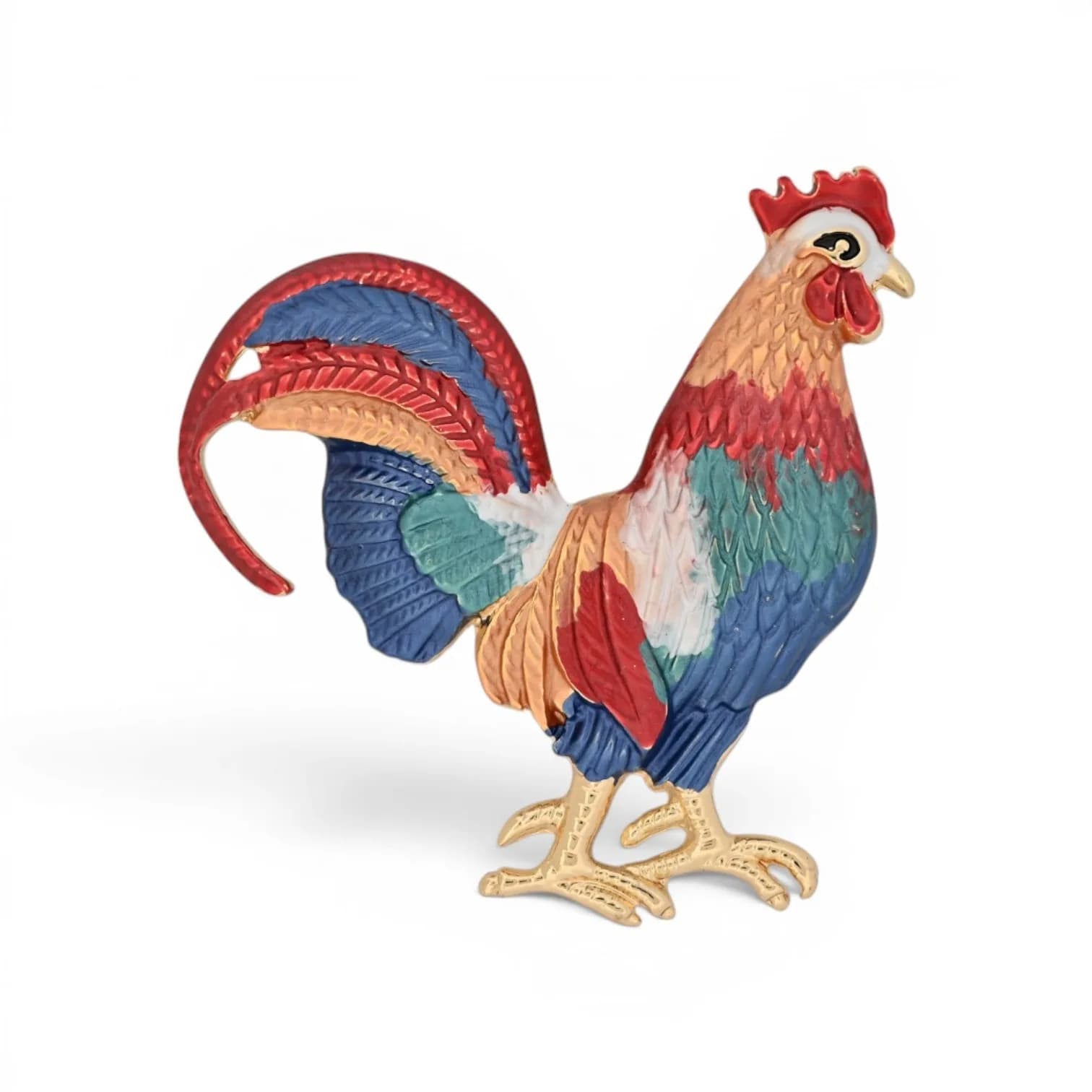
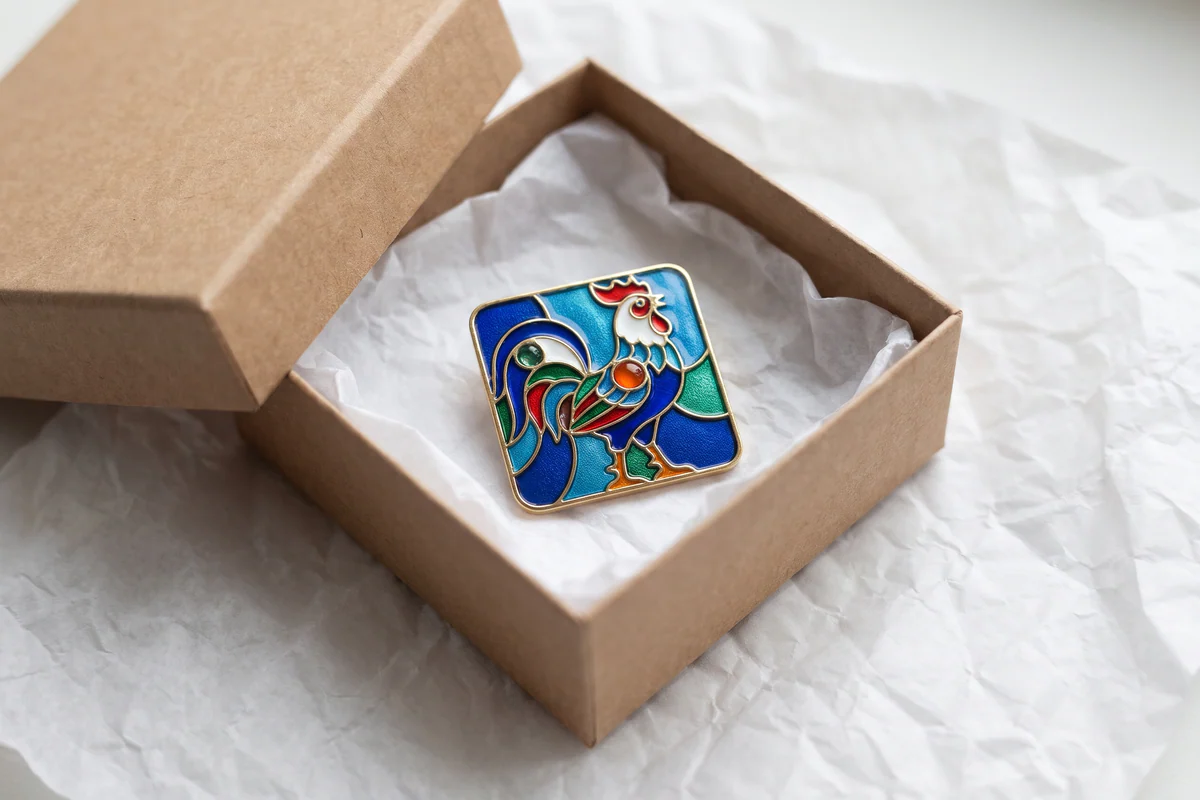
Among our bird brooches, two roosters stand tall, comb up and long tail curved, in a 5 cm square format:
- a grey, white, black and red enamel rooster on gold-tone steel, in understated shades;
- a multicoloured rooster in gold-tone steel, with touches of blue, red, green, white and orange, for a cheerful look.
Both fasten with a magnet: a disc on the back of the rooster and a round plate slipped inside the garment, like all our brooches that hold without a pin.
A rooster reads best against a plain background. The grey design stands out on navy, dark green, burgundy or beige. Try it on a blazer lapel, a cardigan or a coat collar, leaving space around the comb and the tail. Our guide on how to wear a brooch goes through each spot. To match it with the rest of your jewellery, have a look at our gold-tone designs.
A rooster brooch as a gift
A rooster speaks to many people: a Spurs supporter, a friend who loves France, the early riser who is up before everyone else, someone back from the road to Santiago. Its story also gives you something to write on the card:
- for a big match, with the cockerel of the stadiums;
- for a fresh start, with the call that announces the day;
- after a pilgrimage or a trip to Portugal, with the lucky rooster of Barcelos;
- for someone born in a Year of the Rooster, with the Chinese zodiac;
- for someone brave enough to admit a mistake, with Saint Peter's rooster.
Feathers have a language of their own too: our article on feather meaning explains it. For other creatures, browse our animal designs, or the whole range of fashion brooches.
Rooster symbolism at a glance
| Tradition | Where you find the rooster | What it says |
|---|---|---|
| The farmyard | The dawn call | Waking, vigilance |
| Ancient Greece | The rooster owed to Asclepius | A religious debt, sometimes read as an image of healing |
| Christianity | Steeples, following a tradition attributed to Nicholas I; Westminster on the Bayeux Tapestry | Admitting failure, watchfulness |
| Rome and Gaul | The gallus pun | The Gaul, then the French |
| France, 1830 to today | Flags, the Élysée gate, stadiums | The emblem of the country |
| Tottenham Hotspur | The West Stand cockerel, the 1921 crest | Fighting spirit |
| Portugal | The Barcelos rooster | Faith, justice, luck |
| China | 10th animal of the zodiac | One year in twelve |
Mocked, turned down by an emperor, perched on steeples, cheered in stadiums: the rooster has been through it all without ever losing its voice. Perhaps that is its best lesson: be the first one up, even while it is still dark.
Frequently asked questions
What does a rooster symbolise?▾
A rooster most often represents awakening and vigilance. Other meanings depend on the context: Peter's denial in Christian imagery, France through the Latin word gallus, faith, justice and good luck in the Barcelos legend of Portugal, and a year of the Chinese zodiac.
What does the rooster mean in the Bible?▾
In all four Gospels, Jesus tells Peter that he will deny him three times before the rooster crows. Peter does so, hears the rooster and weeps bitterly. The bird recalls both his weakness and his repentance, which is why painters often show it beside the apostle.
Why is there a cockerel on church steeples?▾
A reported tradition credits Pope Nicholas I, in the 9th century, with ordering a rooster to be placed on church steeples as a reminder of Jesus's words to Peter. Set on a vane, it became the weathercock; the Bayeux Tapestry shows one being fixed to Westminster Abbey.
Why is the rooster a symbol of France?▾
Because of a Latin pun: gallus means both rooster and Gaul. The symbol returned during the Revolution, an order of 30 July 1830 put it on the flags of the National Guard, and the Third Republic placed it on the gate of the Élysée Palace gardens.
What is the legend of the Barcelos rooster?▾
A pilgrim on his way to Santiago de Compostela, condemned without proof, says the cooked chicken on the judge's table will crow at his hanging. The bird crows, and the man is spared and set free. Since then the rooster has stood for faith, justice and good luck in Portugal.