
How to Wear a Brooch: Lapel, Coat, Jumper or Scarf
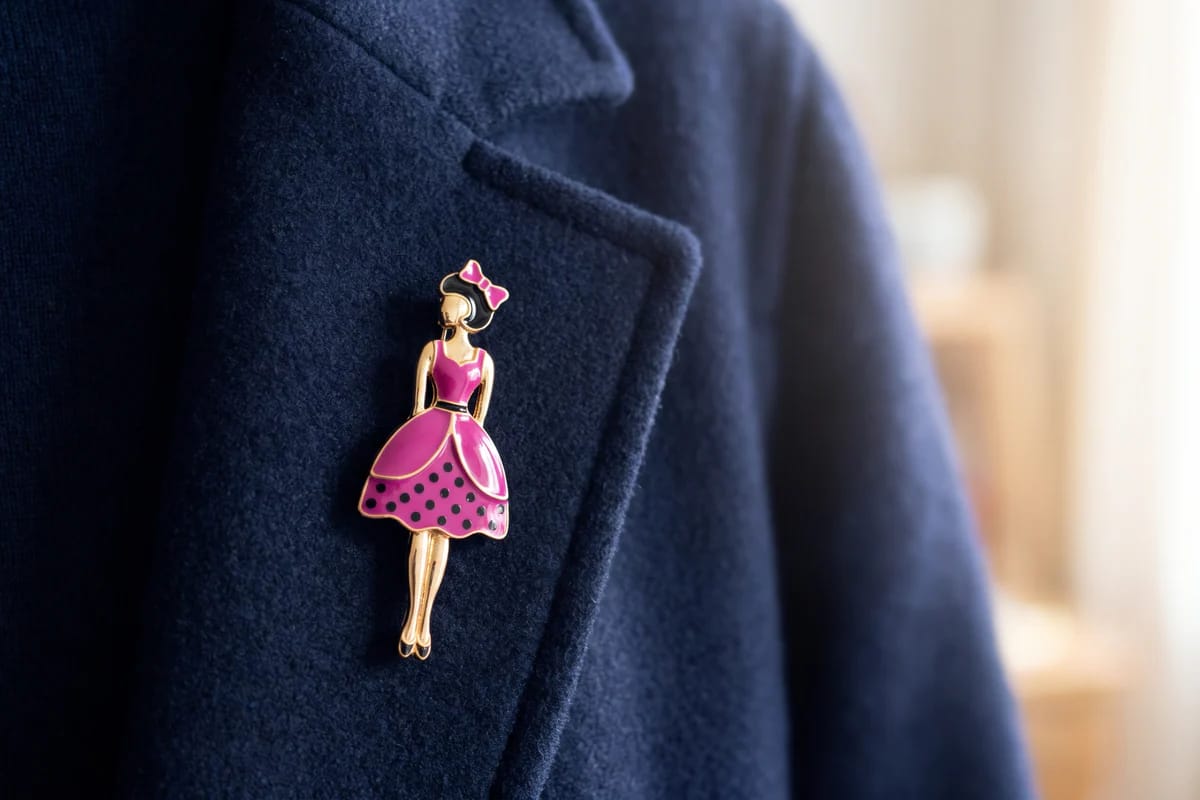
Lapel, shoulder, collar, scarf: the simple rule for placing a brooch on any garment, choosing between a pin and a magnet, and making it stand out against your outfit.
A century ago, the answer was short. Describing a brooch made in the 1920s, the Victoria and Albert Museum in London notes that pieces of this kind ‘were worn on the lapel or at the front of a cloche hat’. Today, the choice is far wider: coat, jumper, collar, scarf, even a handbag. And that freedom is exactly what makes people hesitate.
So here is how to wear a brooch, whatever the garment: place it on a flat, visible surface, away from buttons, thick seams and folded edges. The lapel of a jacket, the shoulder of a coat, the top of a jumper, a scarf that is already tied or the strap of a bag are all good places to start. After that, three choices make the difference: the fastening (pin or magnet), the contrast with the fabric, and how many brooches you wear at once. Let’s take them one at a time.
The one rule: a flat, visible spot
The English-language Wikipedia describes a brooch as ‘a decorative jewellery item’ designed ‘to be attached to garments’. In practice, it has two sides: the decoration, which faces forward, and the fastening, hidden behind.
Everything about placement follows from that. The decoration has to be seen from the front without tipping over. The fastening needs an even surface. The product pages for our magnetic designs say it plainly: a seam, a fold, a curve, several layers of fabric or simply moving about can all change how well a brooch holds. The right spot, then, is first of all a smooth one.
Try the spot before you fasten anything
One simple trick saves a lot of fuss. Cut a piece of paper or card to the size of your brooch and hold it in different places in front of the mirror. You can compare positions without piercing the fabric or taking the brooch on and off ten times.
Turn it over first: pin or magnet?
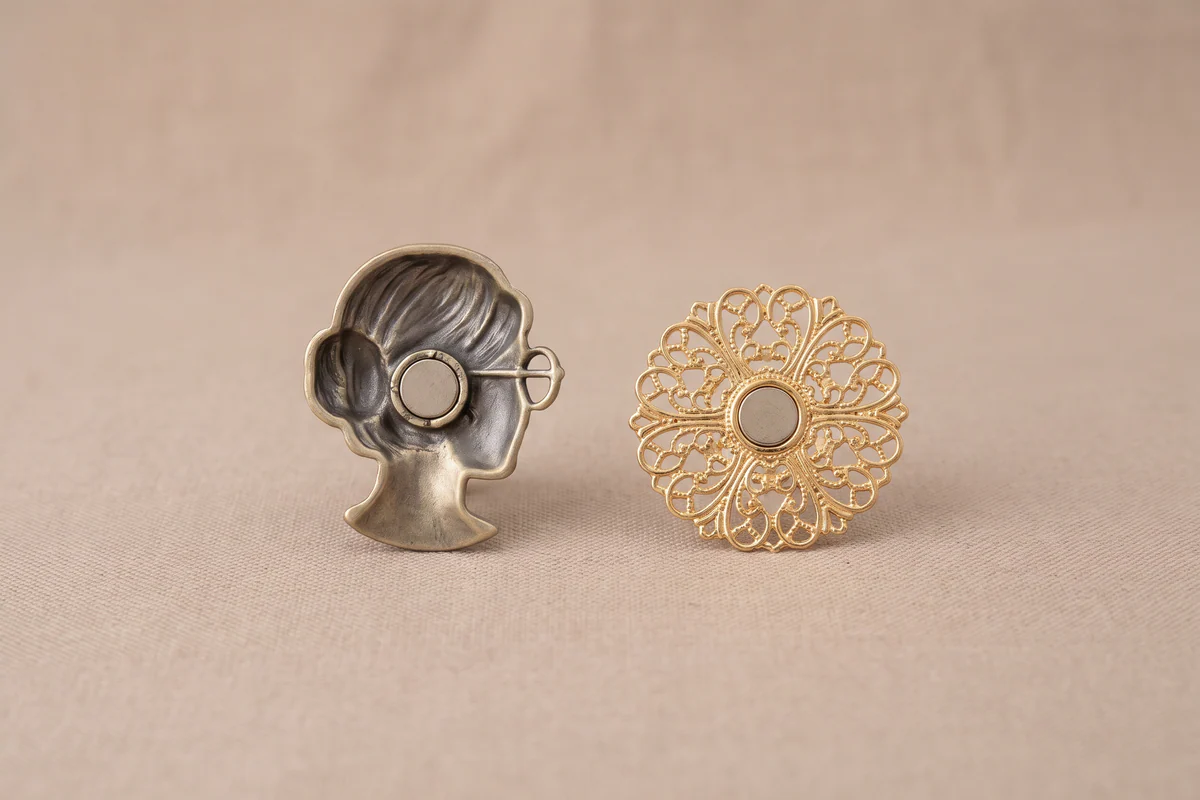
Before you choose a spot, look at the back of your brooch. In our collection, each product page states the fastening, a pin or a magnet, and that choice decides where the brooch is happiest.
The pin, the traditional fastening
The pin is the classic fastening, reliable on jackets, coats and thick fabrics. It often works like a safety pin, a cleverer device than it looks. The English-language Wikipedia traces it back to the fibula, and calls the modern safety pin its ‘descendant’. Its secret is a spring and a clasp that covers the sharp point, and opening it takes a deliberate movement. Use it on thick fabrics, and keep it away from silk, which would show the hole.
The magnet, with no hole in the fabric
A magnetic brooch comes in two parts: the design, with a magnet fixed to its back, and a separate plate that goes on the other side of the fabric. Our brooches that close with a magnet have been tested on several materials, including wool. To put one on:
- hold the design on the outside of the garment;
- bring the plate up from the inside, facing the magnet, and let the two parts line up;
- move about as you normally would for a moment, then check that the brooch has not slipped;
- to take it off, hold the design and slide the plate sideways, without pulling.
Repeat this little test every time you move it: always check the hold in the exact spot where you wear the brooch.
Where to wear a brooch, garment by garment
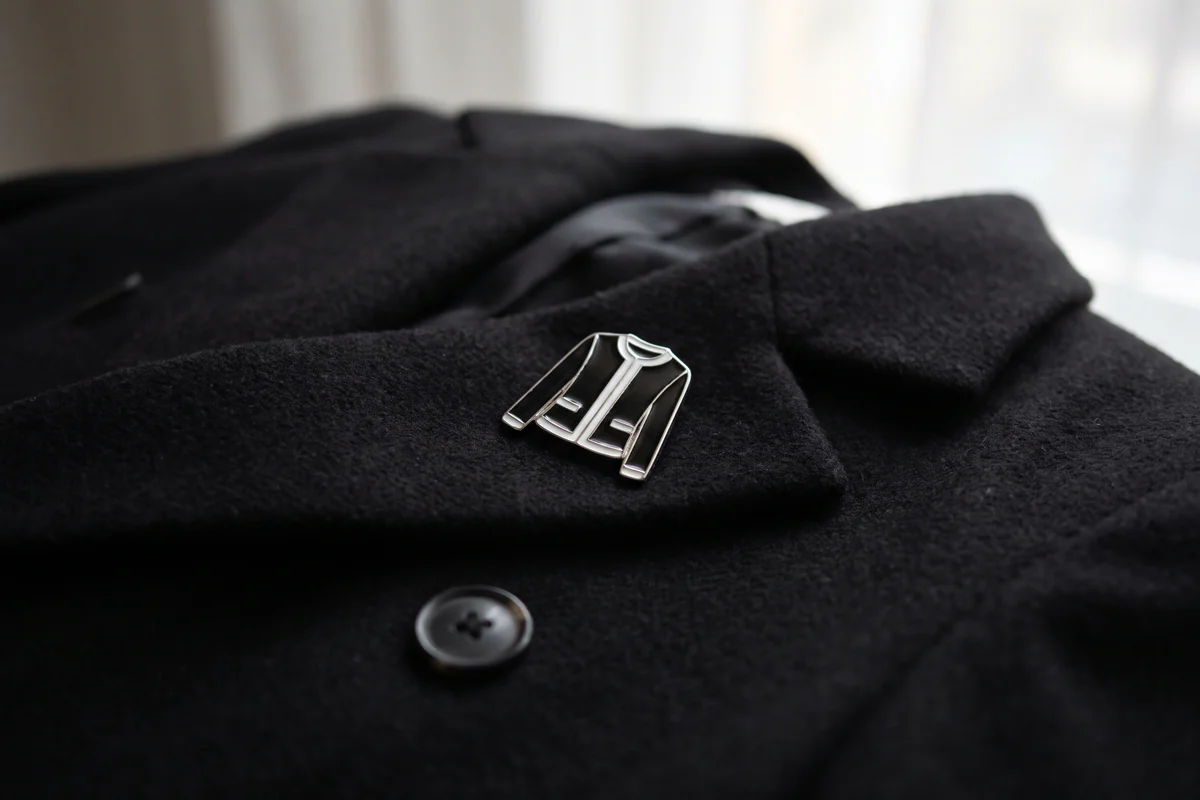
A good spot ticks three boxes: it is flat, it is visible, and it suits the thickness of the fabric. Every garment has its favourite place. Here they are, from the most classic to the most unexpected.
On a jacket or blazer
The lapel is the brooch’s natural home: it is flat, it frames your face and it catches the eye as soon as someone talks to you. Go for the plain part of the lapel, clear of the buttonhole and the collar seam. On a black, grey or navy lapel, a colourful design stands out straight away.
On a coat
When your coat is buttoned up, two areas stay in view: the shoulder and the top of the lapel. A winter coat can also carry a larger brooch. Just think about thickness. Count everything the fastening has to go through: the outer fabric, the lining and any interfacing. Our product pages point this out for bags, and the same logic applies to a lined coat.
On a jumper or cardigan
On knitwear, place the brooch high on the chest, away from buttons and seams. Leave a little space around the design so the design has room to breathe. On a fine jumper, a magnetic fastening has a real advantage: it goes on without piercing the fabric. Simply check that it holds in the spot you have chosen.
On a shirt or dress
The collar of a shirt is a discreet, elegant place: a small brooch on one collar point is enough. On a simple dress, the top of the bodice plays the same role as a jacket lapel. Here, a compact design works better than a large one, which would pull a light fabric out of shape.
On a scarf, a hat or a bag
A brooch can also leave your clothes altogether. On a scarf, wait until it is tied or folded into its final shape before adding the brooch: our guide on how to wear a scarf with a brooch walks you through the knots. On a hat, a clutch or the flap of a bag, pick a flat area you can easily reach. On a fabric bag, choose a part you can get to from the inside.
Making it stand out: background, finish and colour
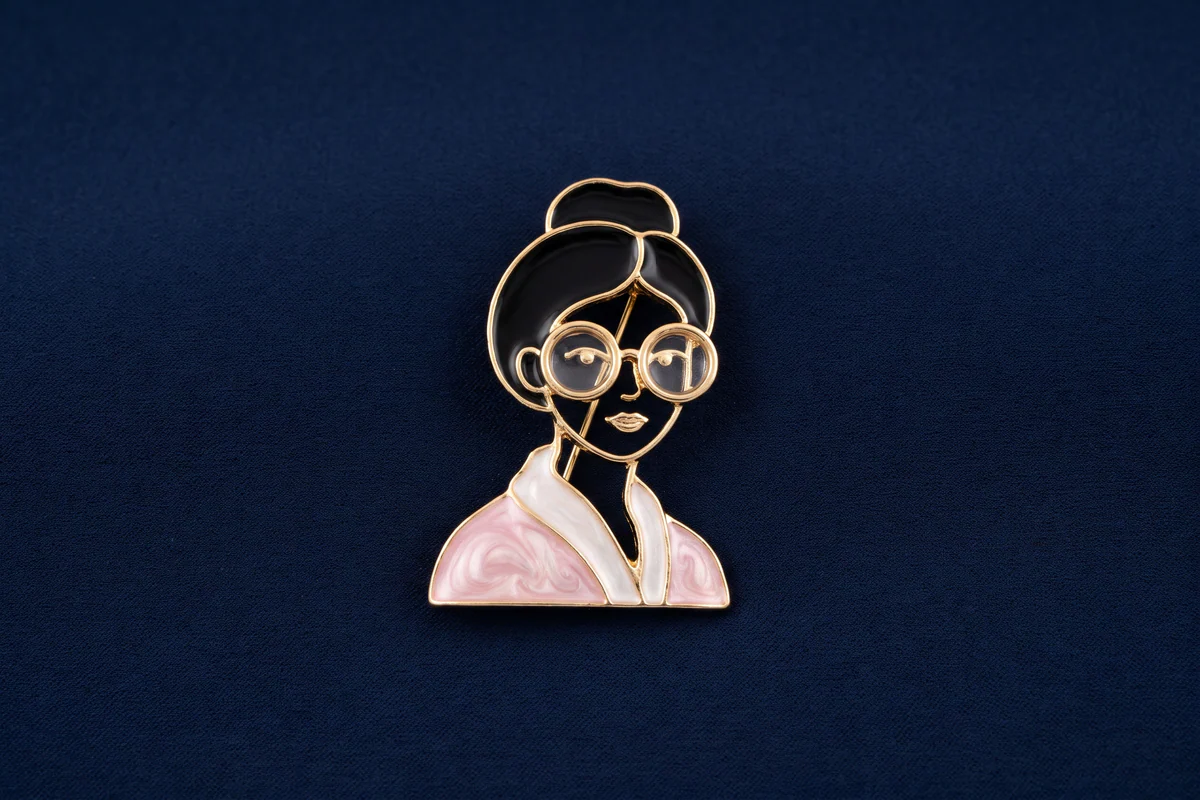
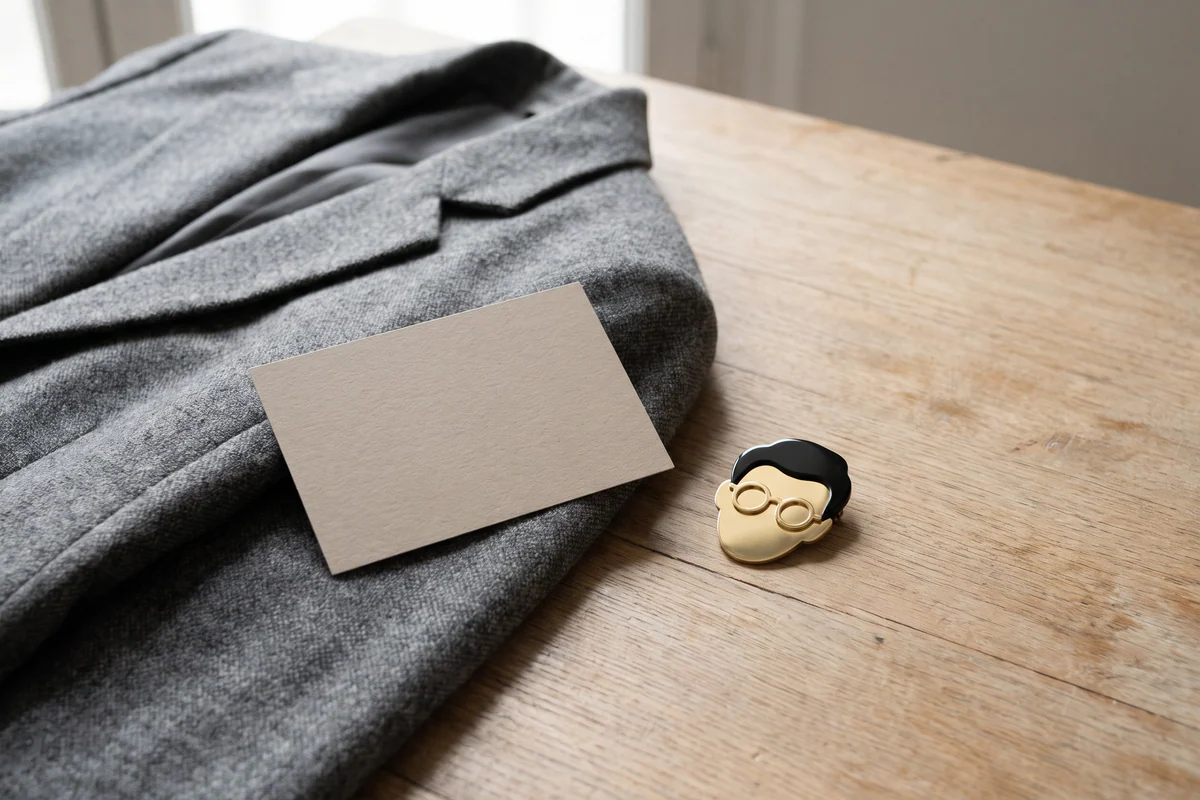
A brooch is only as striking as the background behind it. On a black or navy jacket, gold-coloured outlines and pale areas stand out. On an ecru or grey background, it is the dark details that take over. Our portrait brooches show this well: the same face in round glasses tells a different story on a black blazer and on a pale grey jumper.
For the finish, gold-coloured or silver-coloured, one simple rule: match it to your other jewellery, your earrings or your necklace. a gold-coloured finish dresses up a party outfit, while silver-coloured designs are more discreet and go with almost everything.
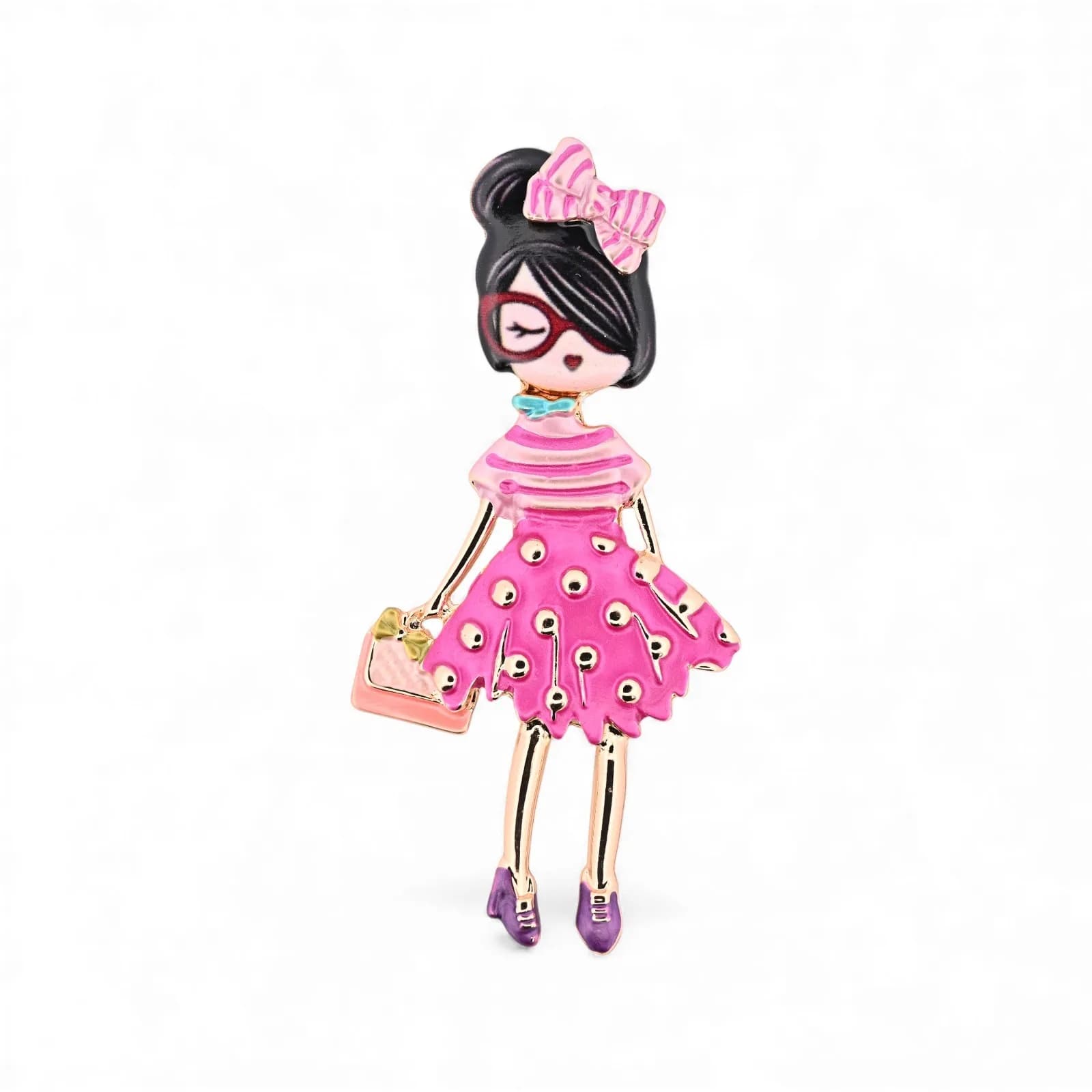
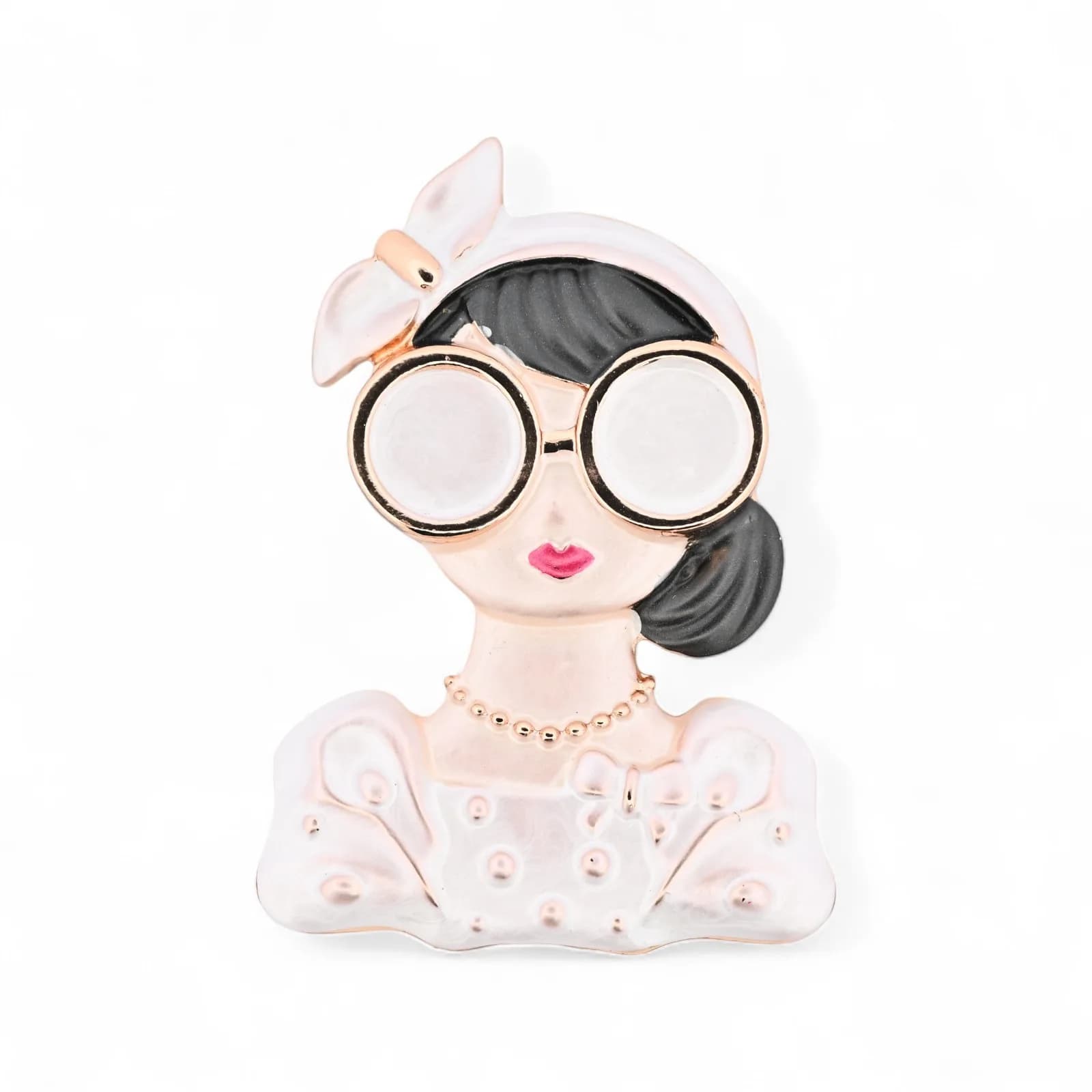
And the colour of the design itself? A very colourful brooch, like the one showing a woman’s silhouette dressed in fuchsia pink, can become the only touch of colour in a plain outfit. It can also pick up an accessory in the same shade, such as a bag or a scarf.
From the office to a wedding
The same brooch changes its role with the occasion:
- for everyday wear, it livens up a plain jumper or a denim jacket;
- at work, it gives structure to a blazer;
- for an evening out or a wedding, a gold-coloured or rhinestone design adds sparkle;
- in summer, a small brooch looks just as good on a light linen jacket.
That versatility lets a brooch move from one outfit to the next in a few seconds. Every style, from animals to portraits, is waiting in our collection of brooches for women.
One brooch, or a little cluster?
A single brooch adds a subtle touch. It draws the eye to one point, often close to your face when it sits on a lapel or a collar. Several brooches together make a bolder statement and turn the group into a focal point.
A few pointers for making a group work:
- gather them in one area, the lapel or the top of a coat, rather than scattering them;
- keep a common thread: the same finish, gold-coloured or silver-coloured, the same theme (flowers, animals) or the same palette;
- vary the sizes, for example one large and two small;
- leave a little space between them so each design can stand out on its own.
From the shoulder to the lapel: where brooches have lived
Pinning jewellery to clothing is a very old habit. The ancestor of the brooch is the fibula, which Wikipedia defines as ‘a brooch or pin for fastening garments, typically at the right shoulder’. The first designs appeared in the late Bronze Age. Pin a brooch to the shoulder of your coat and you are echoing one of the oldest ways of wearing it.
In Britain and Ireland, Celtic brooches took a path of their own. The same encyclopedia describes them as ‘a distinct tradition of elaborately decorated penannular and pseudo-penannular brooch types developed in Early Medieval Ireland and Scotland’: rings with a small gap left open, the Tara Brooch being the best-known example.
Then fashion moved the brooch around the body. By the 1920s, as the V&A notes of one fashionable style, it sat on the lapel or at the front of a cloche hat: two places that still feel right a century later.
‘Read my pins’: when a brooch sends a message
Over time, the fastener became an ornament, and sometimes a message. The most famous example comes from Madeleine Albright. In the mid-1990s, she was the United States ambassador to the United Nations when Saddam Hussein’s newspaper in Baghdad printed a poem calling her an ‘unparalleled serpent’. At her next meeting with Iraqi officials, she wore a serpent brooch dating from around 1860.
It became a habit. President George H. W. Bush had been known for ‘Read my lips’; she began urging colleagues and reporters to ‘Read my pins’. ‘The pin reflected my mood,’ she writes in her book Read My Pins: on tough days, she chose wasps, to do ‘a little stinging’. An exhibition of her collection brought together over 200 pins and brooches.
You don’t need to be a diplomat to do the same. An animal, a flower, a portrait: the brooch you pick in the morning says something about your mood. That meaning belongs to you alone.
After wearing it, before giving it
Putting it away
A brooch that is stored well lasts longer. Lay it flat, separately from your other jewellery, and keep the design and plate of a magnetic brooch together, away from bank cards. For everyday care, our guide on how to clean costume jewellery comes down to a few simple steps.
Giving a brooch, with its instructions
A brooch received as a gift sometimes stays in its box because its new owner is not sure where to put it. To make sure it is worn from day one, slip a few pointers into the parcel:
- the size of the design, so they can picture where it will go;
- how the two parts work, if the brooch is magnetic;
- a reminder to test every new spot.
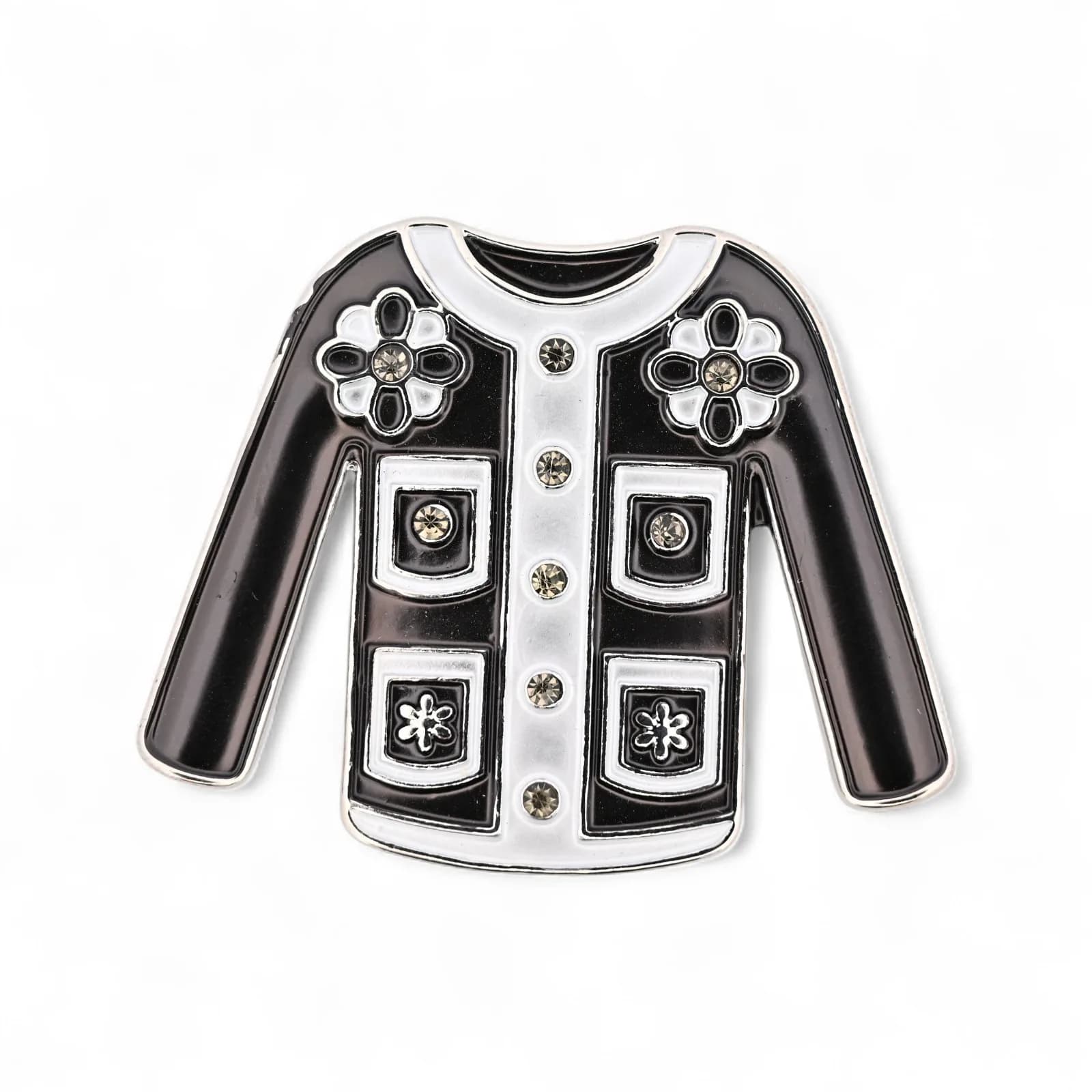
Our brooches are packaged ready to give. If you are unsure about the design, our guide to picking a brooch for someone helps you start from the person rather than the object. Three designs sum up the range of styles: a woman’s silhouette dressed in pink, a portrait in round glasses and a little black-and-white jacket. To see every other design, browse all our costume brooches.
How to wear a brooch at a glance
| Garment | Where to put it | Remember |
|---|---|---|
| Jacket, blazer | Plain part of the lapel | Clear of the buttonhole and seams |
| Coat | Shoulder or top of the lapel | Count the full thickness, lining included |
| Jumper, cardigan | High on the chest | Magnet for fine knits, space around the design |
| Shirt, dress | Collar point or top of the bodice | A compact design is enough |
| Scarf, bag | Scarf already tied, flat part of the bag | Plate reachable from the inside |
- Pin: for fabrics that can take a small hole.
- Magnet: to fasten the brooch without piercing the fabric.
- Either way: test the hold in the exact spot.
A flat surface, a background that lets the design shine, one last look in the mirror: all that is left is to choose today’s brooch.
Frequently asked questions
Should I choose a magnetic brooch or a pin brooch?▾
A pin suits jackets, coats and thick fabrics that it can pass through easily. A magnet goes on without piercing the fabric, which makes it a good choice for a fine jumper. Either way, test the hold in the exact spot where you wear it.
How do you take off a magnetic brooch?▾
Hold the design with one hand and slide the plate sideways, without pulling. Then keep the two parts together, away from bank cards.
How do you attach a brooch to a bag?▾
Choose a flat area that you can reach from the inside of the bag. Count the full thickness to go through: the outer material, the lining and any reinforcement.
Can you wear a brooch in a bun?▾
Yes, a bun is another option, just like a clutch or the flap of a bag. As anywhere else, check the hold in the exact spot you have chosen.
Will a magnetic brooch hold on faux leather?▾
Our magnets have been tested on several materials, including faux leather 5 mm thick. A seam, a curve or movement can change the hold, so always check in the spot you have chosen.