
Feather Meaning: From the White Feather to the Peacock
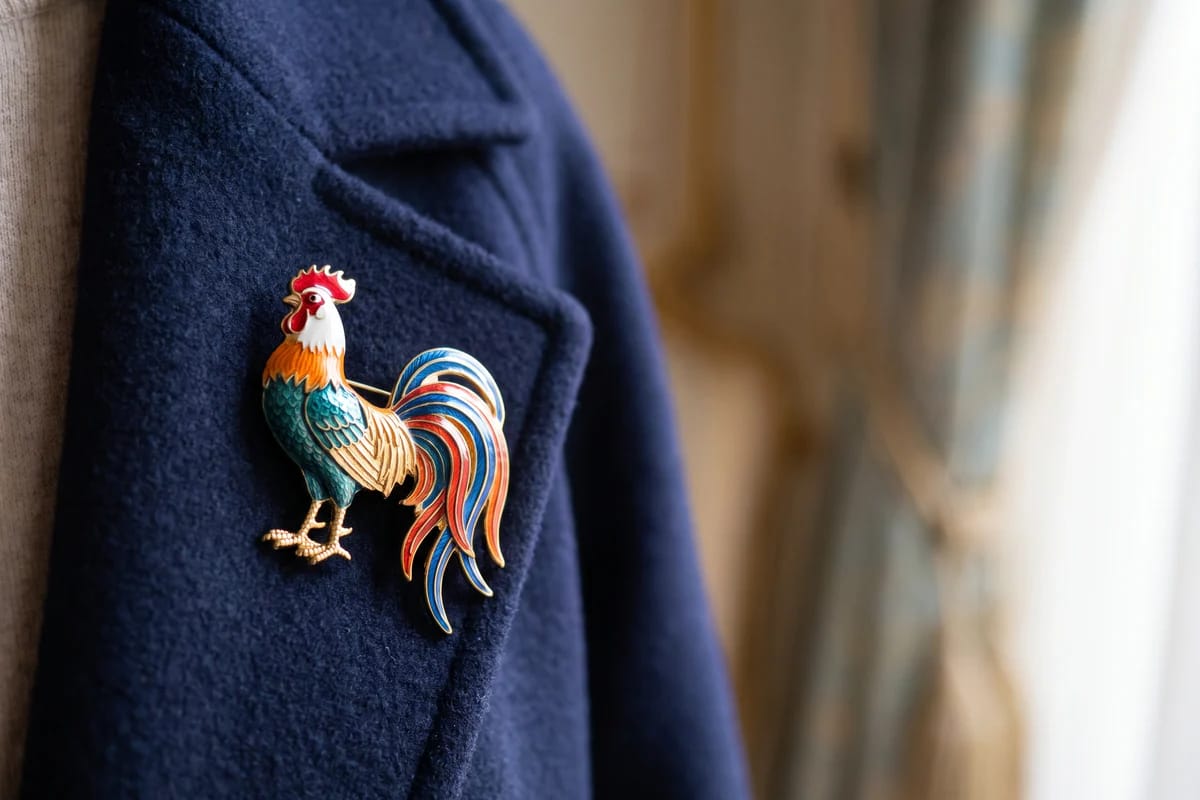
Three ostrich feathers on a 2p coin, white feathers handed out in 1914, a peacock’s hundred eyes: what feathers mean, colour by colour, separating fact from belief.
Have a look at the coins in your purse. If you find a two pence piece minted between 1971 and 2008, turn it over: three ostrich feathers rise from a small crown, above a ribbon bearing two words, Ich dien, “I serve”.
So what meanings have people attached to feathers? First of all lightness, breath and truth: in ancient Egypt, the feather of the goddess Maat was weighed against the hearts of the dead. Colour then changes the message. In Britain, white feathers were handed to men to brand them cowards, while in France a white plume rallied a king’s army. A blue feather owes its colour to light, not to a blue pigment. And the “eyes” on a peacock’s tail tell the story of a giant with a hundred eyes. Here is what history records, and what belongs to belief.
Let’s start with the three feathers in your change.
Three ostrich feathers in your change
The badge on those coins is known as the Prince of Wales’s feathers. In the language of heraldry, it is a plume of three ostrich feathers encircled by a royal coronet, with the motto Ich dien, German for “I serve”. You will also find it on the insignia of the Royal Welsh regiment, and it serves as the logo of the Welsh Rugby Union.
Where does it come from? A popular story says that Edward, the Black Prince, defeated the blind King John of Bohemia at the Battle of Crécy in 1346, then took his helmet with its ostrich feather crest, and his motto along with it. English Wikipedia is blunt: there is “no sound historical basis” for the tale, and King John’s own crest was made of vultures’ wings. It does add one twist. John was also Count of Luxembourg, and the badge of Luxembourg was an ostrich feather.
Keep that ostrich feather in mind. Thousands of years before Crécy, another ostrich feather stood for something far weightier than a motto. But first, what exactly is a feather?
What a feather is made of
A feather is not a hair, but it is a close relative. It is made of beta-keratin and, like hair, scales, nails and claws, belongs to the same family of structures that grow from the skin. Together, a bird’s feathers (its plumage) do several jobs at once:
- keeping the body safe from water and cold;
- making flight possible;
- helping the bird blend into its surroundings;
- attracting a mate and being recognised by other birds.
This thermal shield works both ways: a feather protects against heat as well as cold. It is light and made for flight, so it is easy to see why people linked it with air and breath, and why it soon came to mean far more than the bird itself.
Maat’s feather: lighter than a guilty heart

The ostrich feathers on a 2p coin have a much older cousin. In ancient Egypt, Maat, the goddess of truth, order, harmony and justice, is recognisable by the ostrich feather standing upright on her head. Her main hieroglyph is itself an ostrich feather “in perfect balance”.
That feather had a decisive part to play after death. The English Wikipedia entry on Maat describes the hearts of the dead being weighed against her single “Feather of Maat”. If the heart weighed no more than the feather, the dead person could live on for ever in the afterlife. The scarab, the amulet that watched over that same heart, has its own story in our article on what the scarab meant to the Egyptians. The heart of it: a righteous life had to be as light as a feather.
Breath, writing and a mark of rank
Because it belongs to the air, the feather also became an image of breath, and so of life. The ancient Egyptians, according to French Wikipedia, called the feather “the tracer of all”. In French, the word plume still stands for writing itself, and even for the writer: a gifted author is called une belle plume, a fine feather.
Feathers were also costly. Until the nineteenth century, they signalled high social standing. In Mesoamerica, feathers, above all those of the quetzal, were the symbol of power and wealth. In Rome, people left feathers, or jewellery made with feathers, in the sanctuaries of Juno. Wearing a feather showed the world who you were, and the three plumes of the Prince of Wales still say something very similar.
White feather meaning: shame in Britain, courage in France

In Britain, the white feather carries a heavy history. On the other side of the Channel, the very same colour tells the opposite story.
A badge of cowardice
The idea goes back to cockfighting: a white feather was said to appear in the tail of young cockerels that fought badly. Across the British Empire, the white feather became a symbol of cowardice. In August 1914, Admiral Charles Penrose-Fitzgerald founded what became known as the Order of the White Feather: groups of young women handed white feathers to men in civilian clothes in public places, to shame them into enlisting. The English Wikipedia page on the white feather calls it a widely recognised propaganda symbol in the United Kingdom and across the Commonwealth.
The same feather later changed sides. In 1937, the Peace Pledge Union sold 500 white feather badges as symbols of peace.
A plume to rally round
In France, white means something else entirely. On 14 March 1590, at the Battle of Ivry, King Henri IV wore a great plume of white feathers on his helmet. His former comrade in arms, Agrippa d’Aubigné, turned the moment into a famous line: “Rally to my white plume.” The emblem united the Protestants and the Catholics who had sided with the king. In French history, the white feather is a sign of courage and unity.
Finding a white feather
Today, another reading is everywhere online: the idea that finding a white feather is a sign from an angel, a message of peace or hope. It is a recent belief, and the historical sources we consulted do not mention it. If a white feather on your path makes you think of someone, that thought is yours to keep.
Feather colour meaning: what nature puts in each shade
A feather’s colour can point to three different things: a physical process, a historical symbol or a modern belief. It helps not to mix them up. The colours discussed here come from three main sources:
- melanins, pigments that give black;
- carotenoids, pigments ranging from yellow to red;
- the structure of the feather itself, which scatters or reflects light to produce blues and iridescent sheens.
Every colour has a physical story first. Some were given a human story as well.
Blue: a colour with no blue in it
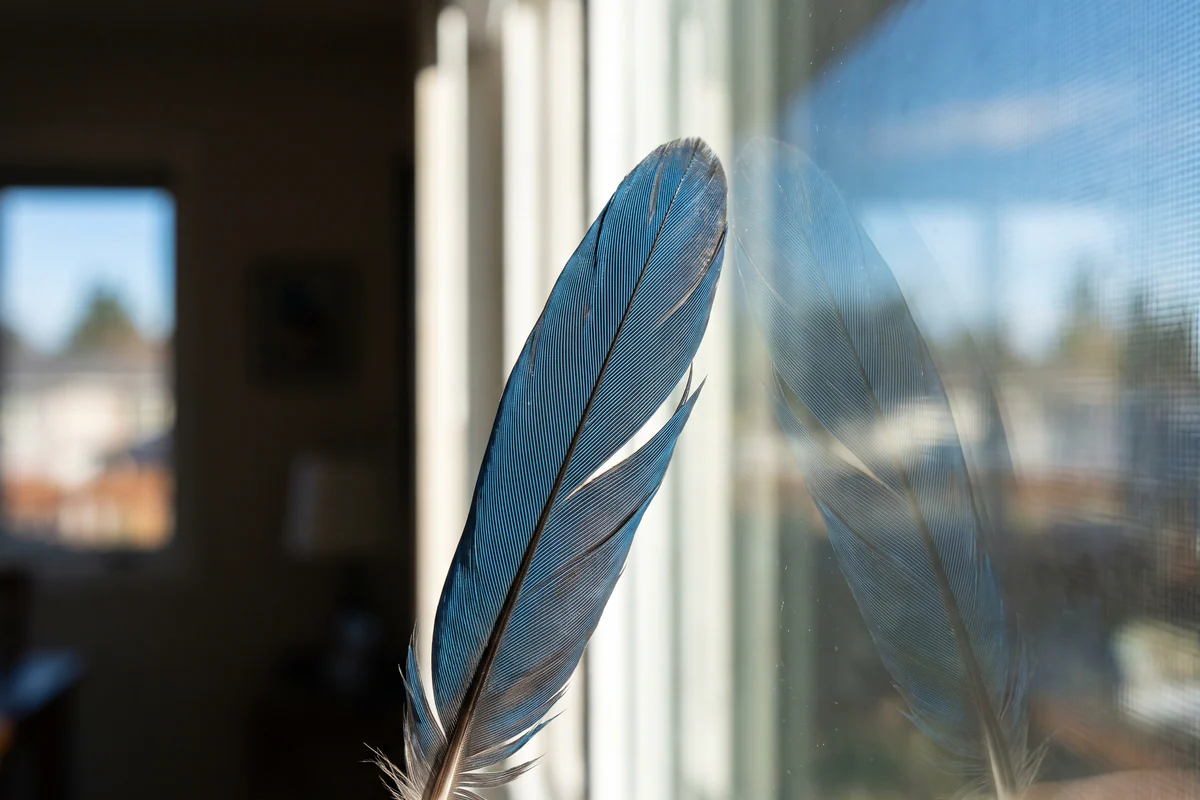
Now for the real surprise. Some blue feathers contain no blue pigment at all. Their colour comes from tiny structures in the barbs that scatter light: Rayleigh scattering, the same effect that makes the sky blue. If you are looking for a meaning to give a blue feather, this one has the merit of being true.
Red, orange and yellow: colours from the menu
Carotenoids colour feathers from yellow to red. Flamingos get these pigments from their food: their pink depends on what they eat. Warm-coloured feathers tell a story of diet and health rather than magic.
Black and brown
Black comes from melanins. For this colour, our sources describe the chemistry, not a particular tradition, so we would rather not invent a message for it. One tip if you find a dark feather: tilt it to the light. Some hide a sheen.
The peacock and the hundred eyes of Argus
The shifting sheen of iridescent feathers comes from the barbules, which contain networks of tiny plates. The peacock is a familiar example, with the round “eyes” on its tail. Greek myth gives them an origin. Argus Panoptes was a giant with a hundred eyes, fifty of which slept while the other fifty kept watch. Hera had set him to guard Io, whom Zeus had turned into a white heifer. After Argus died, Hera placed his eyes on the feathers of the peacock, her favourite bird, to reward the giant’s loyalty. Ovid tells the story in his Metamorphoses, where Hera goes by her Latin name, Juno. The peacock feather thus became an image of watchfulness and loyalty.
Facts and beliefs: sorting the feathers
With feathers, it is easy to mix everything up. Here is how to tell them apart:
- documented: the physical origin of colours (pigments or structure), Maat’s feather in Egyptian texts, the white plume of Ivry, the white feathers of the First World War, the story of Argus in Ovid, the prestige of feathers in Mesoamerica and Europe, the badge on the 2p coin;
- belief: the idea that a feather you find carries a personal message, whether from an angel or from someone you have lost.
The idea of a winged messenger goes well beyond feathers: see how the owl became a bird of wisdom and of the night. No one can prove such a message, or disprove it. But you can choose the meaning you give it: lightness after a heavy time, the courage of a white plume, or simply the beauty of something made to fly.
Giving a feather that won’t blow away
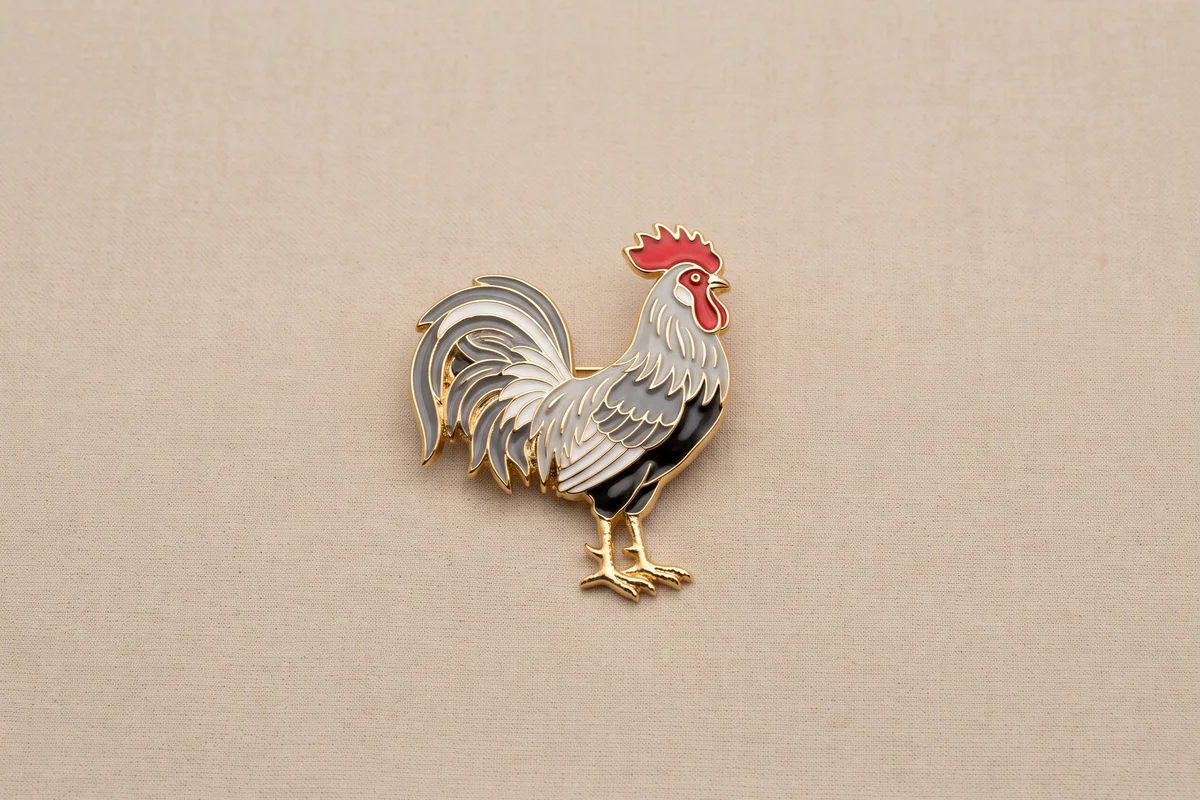
A real feather is fragile: it gets lost, it gets crushed. To keep its meaning close, a piece of jewellery does the job well. A bird brooch will speak especially to:
- someone coming out of a difficult time and feeling lighter again;
- a person who writes, teaches or loves words;
- bird and nature lovers;
- anyone with a passion for history, from ancient Egypt to the Battle of Ivry.
Two cockerels with finely drawn feathers
Among our bird brooches, two cockerels put plumage centre stage. The cockerel has a history of its own: Roman poets were playing on the Latin word gallus, which means both “cockerel” and “Gaul”, and the bird became one of the emblems of France. It also stands for the return of daylight after the night.
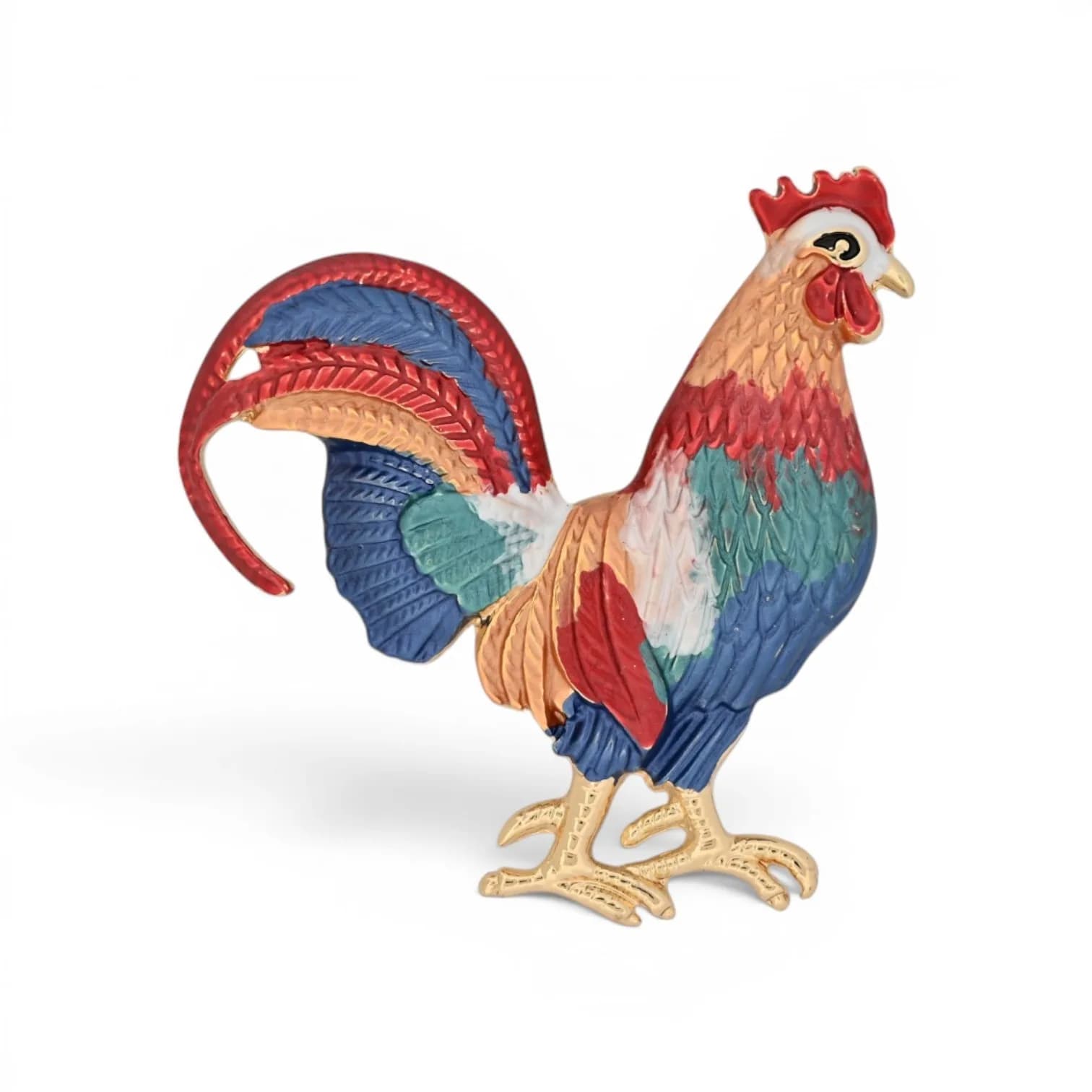
The first, a multicoloured bird, brings together almost every colour in this article: a red comb, a white head, an orange neck, a blue-green body and a tail mixing blue, red and orange. Its feathers are raised in relief. It looks striking on plain black, navy, beige or grey.
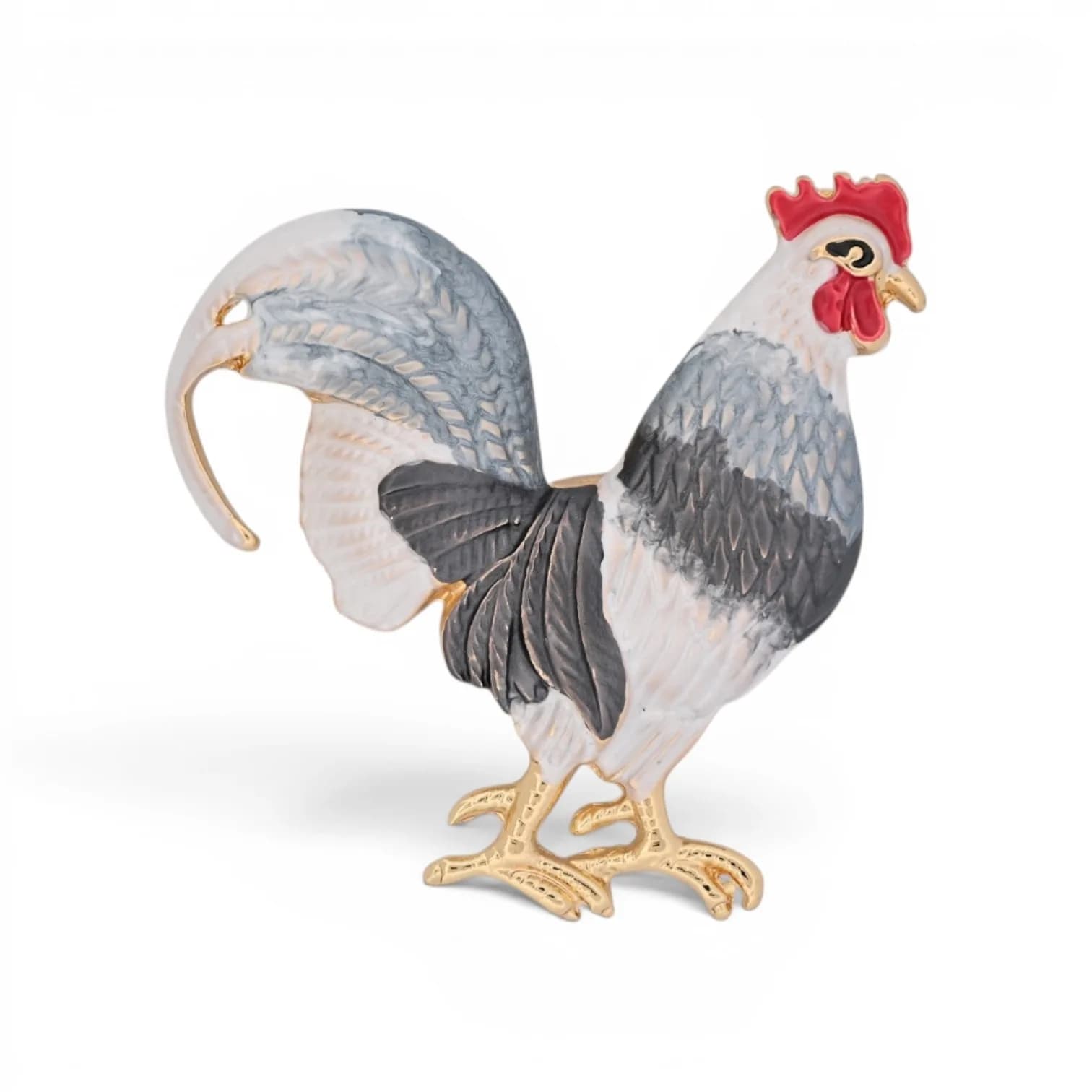
The second is more understated: grey, white and black enamel, lifted by a red comb. It goes well with navy, dark green, burgundy or plain beige. Both are made of gold-coloured steel with a magnetic fastening, and they sit nicely on a jacket lapel, a cardigan or a wool coat.
If you love animals with a story, our animal jewellery has many more, and the whole collection of costume brooches from Ma Broche is waiting on our home page.
Feather meaning at a glance
A feather’s meaning depends on its history and its colour. Here, feather by feather, is where each meaning comes from:
| Feather | Documented fact or story | Type of information | Possible reading |
|---|---|---|---|
| Three ostrich feathers of the Prince of Wales | Badge with the motto Ich dien, on 2p coins minted from 1971 to 2008 | Heraldry | Service, rank |
| Maat’s ostrich feather | Weighed against the heart in the Egyptian afterlife | Ancient religious story | Truth, justice, lightness |
| The feather as a pen | “The tracer of all”, then the French word for a writer | History of language | Words, writing |
| White, in Britain | Handed to men out of uniform in the First World War; peace badges in 1937 | Historical fact | Cowardice and shame, later peace |
| White, in France | Henri IV’s plume at Ivry in 1590 | Historical fact | Courage, rallying |
| White, found on the ground | Widespread online reading | Recent belief | A sign from an angel, peace or hope |
| Blue | Structure that scatters light, no blue pigment | Physical process | Light |
| Red, orange, yellow | Carotenoids that come from food | Physical process | A reflection of what the bird eats |
| Black | Melanins | Physical process | No documented traditional meaning |
| Peacock | The hundred eyes of Argus placed by Hera, in Ovid | Myth | Watchfulness, loyalty |
A fallen feather is a small piece of flight resting in the grass. What it tells you is up to you.
Frequently asked questions
How many feathers does a bird have?▾
It varies a great deal from one species to another. A tundra swan can carry nearly 25,000 feathers when its plumage is at its fullest, while hummingbirds have only about 1,000 when theirs is at its sparsest.
Did dinosaurs have feathers?▾
Some did. Feathers or protofeathers have been found on theropod fossils from Liaoning, in China. They probably served first to regulate body temperature, long before flight.
How often do birds moult?▾
Depending on the species, birds moult between one and four times a year. Each moult replaces worn feathers with new ones.
Which novel made the white feather of cowardice famous?▾
The Four Feathers, by A. E. W. Mason, published in 1902. A young officer who leaves the army receives a white feather from each of his three comrades and from his fiancée, then sets out to prove his courage.
How was Argus of the hundred eyes defeated?▾
In Greek myth, Hermes lulled him to sleep by playing the pan pipes, then killed him. It was after his death that Hera placed his eyes on the peacock’s feathers.