
The Sunflower Meaning Behind a Flower That Faces East
It waits for the sun every morning, its French name first meant a blue dye, and a 19th-century flower dictionary calls it “false riches”: the sunflower’s true story.
Picture a departure hall at Gatwick Airport. A traveller walks past wearing a green lanyard dotted with small yellow sunflowers. To the staff, it quietly says something important. Why a sunflower? When the lanyard scheme began in 2016, the flower was chosen to stand for confidence, growth and positivity. It was an easy choice: few flowers carry so much light.
Here is the short answer on sunflower meaning. First of all, it is the flower of the sun: its French name, tournesol, comes from the Italian tornasole, “that turns with the sun”. Since the 16th century it has also been linked to Clytie, the nymph in Ovid who watched the Sun she loved, which made it an image of faithful love. Yet the 19th-century language of flowers gives it a far less tender meaning: “false riches”. And science corrects a popular belief: only young sunflowers follow the sun. The mature flower simply waits for it every morning.
Two threads run through this story: the facts (botany, the history of words) and the stories (myth, the language of flowers). We’ll keep them apart, starting with the question everyone asks.
Does a sunflower really follow the sun?
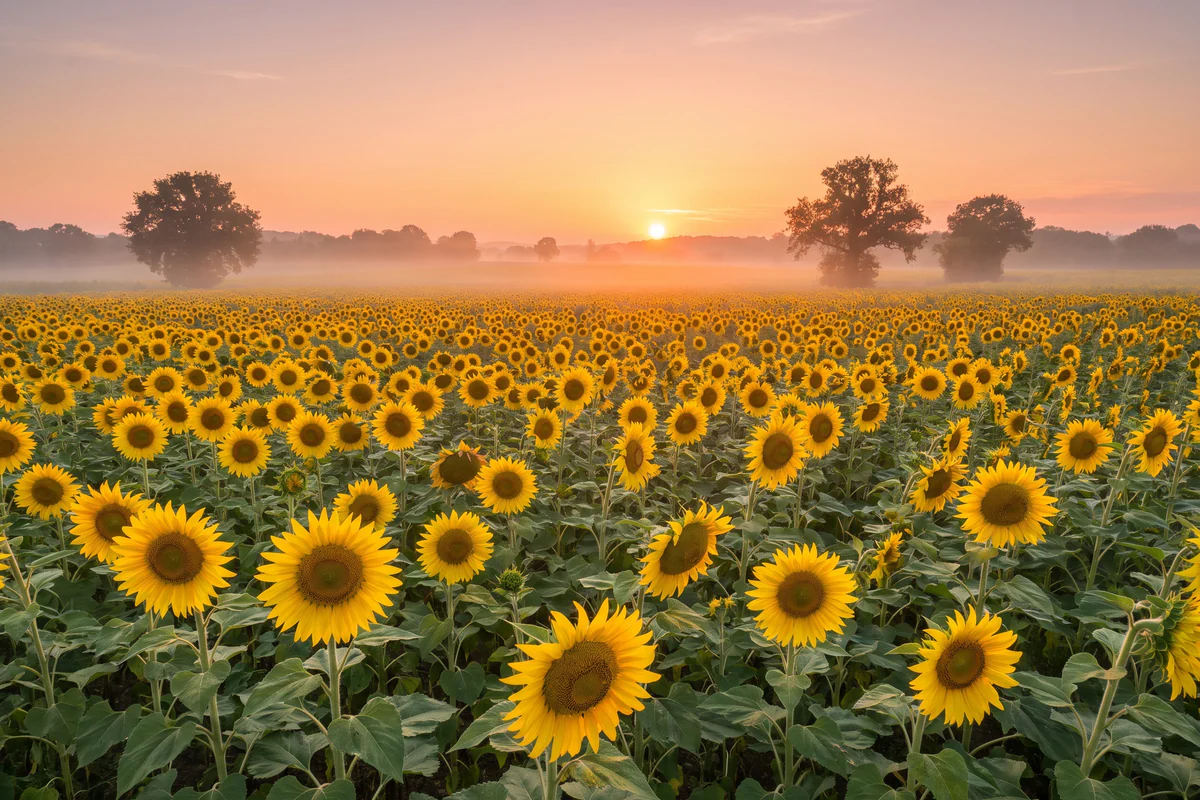
The short answer: yes, but only while it’s young.
Young sunflowers track the sun
Before it flowers, the plant grows in step with the sun. During the day, the east side of its stem grows faster than the west side, so the head slowly swings west as the sun crosses the sky. At night the opposite happens: the west side grows in turn, and by dawn the head faces east again, ready for sunrise.
This isn’t a simple reaction to light. The movement is set by the plant’s internal clock. Atamian, Harmer, Blackman and their colleagues, at the University of California’s Davis and Berkeley campuses, showed this in a study published in the journal Science on 5 August 2016.
Mature sunflowers face east
Once in flower, the sunflower stops moving. It stays facing east, towards the rising sun. The researchers found a good reason for this: flowers facing east warm up faster in the morning and receive around five times more visits from pollinating insects.
So the picture of a sunflower chasing the sun all its life is wrong. The true story is gentler. The mature flower no longer needs to run after the sun: it waits for it every morning, always on time.
A flower made of many flowers
Here comes the second surprise: the big yellow flower you have in mind isn’t a single flower at all.
What botanists call a flower head
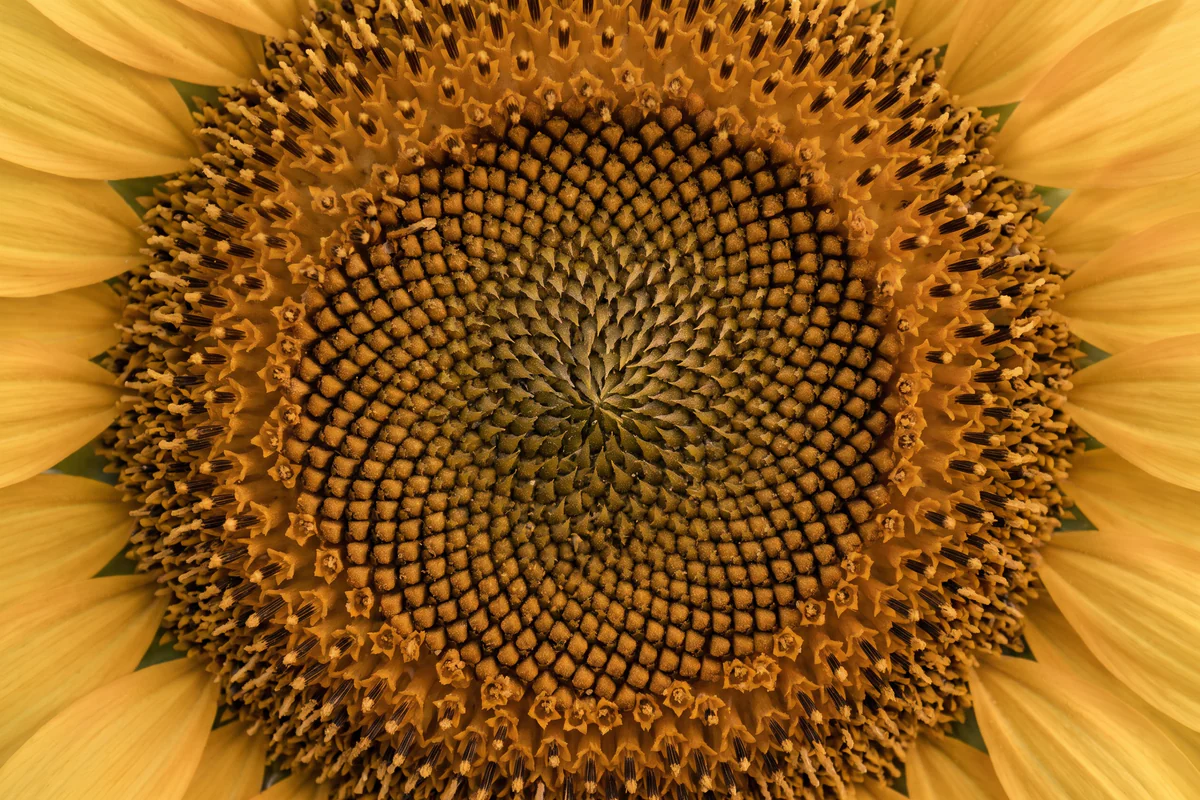
The common sunflower, Helianthus annuus, is a tall annual plant of the Asteraceae family. What we call its flower is really a flower head: a disc that can reach 30 centimetres across and carries two kinds of flowers:
- around the edge, a single ring of ray florets, usually yellow and sterile, which everyone takes for petals;
- in the centre, small tube-shaped disc florets, which go on to produce the seeds.
The Wikipedia page on the common sunflower describes this structure in detail. Once pollinated and heavy with seeds, the head finally bows towards the ground. You’ll find that round, sunny shape on several of our flower brooch designs.
Spirals that can count
Look closely at the centre of a ripe sunflower. The seeds form spirals running in both directions. Count them and you get two consecutive numbers from the Fibonacci sequence, in which each number is the sum of the two before it (1, 1, 2, 3, 5, 8, 13, 21…): 34 and 55, for instance, or 55 and 89. A flower that can count, or nearly.
A name that turns with the sun
In English, the name says it plainly: sun, flower. The scientific name does the same, since Helianthus joins the Greek words for sun and flower. The French name has a more winding story.
Tournesol was borrowed from the Italian tornasole, recorded from the early 14th century and built from torna (from tornare, to turn) and sole, sun. Yet when it first appears in French, in 1360, in the accounts of the kings of France, it refers to a blue dye. In 1606 it refers to a plant called heliotrope. Only in 1671 is the word used for our sunflower.
Traditional French names keep the sun in sight as well: grand soleil (great sun), soleil des jardins (garden sun) and, more unexpectedly, graine à perroquet, “parrot seed”.
From North America to European fields
The genus Helianthus has around fifty species, all native to North America, the Jerusalem artichoke among them. The sunflower was domesticated there, by Native Americans and in Mexico, and used for food, medicine and dye.
The Spanish brought it to Europe in the 16th century. In France it was grown in the early 18th century in Languedoc, near Nîmes. For its seeds? No: for dye, once again.
Remember that date. It matters for what comes next, because the best-known sunflower legend is far older than the plant’s arrival in Europe.
Sunflower symbolism: faithful love or false riches?
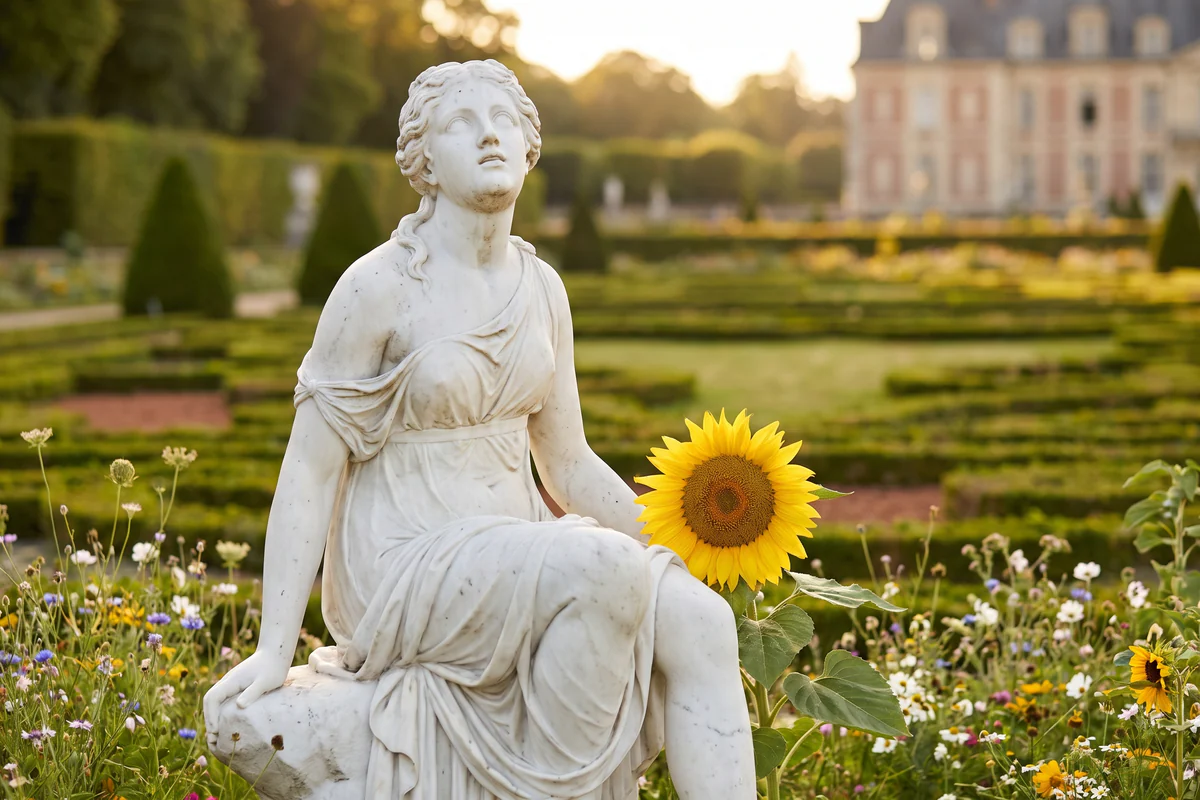
Clytie, the nymph who watched the sun
In Book IV of the Metamorphoses, the Latin poet Ovid tells the story of Clytie, one of the Oceanids. She loves Helios, the Sun. But Helios loves another, Leucothoe. Jealous, Clytie reveals their affair, and Leucothoe’s father has his daughter buried alive.
Helios never looks at Clytie again. So she sits on the ground. For nine days, without food or drink, she follows the sun across the sky with her eyes. Little by little, she turns into a flower.
Ovid’s flower was not a sunflower
Which flower, though? In Ovid it’s a heliotrope, a flower “like a violet”. It can’t be the sunflower: the plant comes from America, and the ancient world never knew it. The Wikipedia page on Clytie makes the same point.
The link between Clytie and the sunflower was made in the 16th century, mostly by Italian painters. At Versailles, in the reign of the Sun King, Clytie appears changed into a sunflower, at the Apollo Fountain and above a door in the Grand Trianon. In the 19th century, the English sculptor G. F. Watts even showed her rising out of a sunflower.
From this story comes the sunflower’s tender side: a faithful love, even one that is never returned, always turned towards the person you love.
In the language of flowers: “false riches”
With a legend like that, you’d expect the old flower dictionaries to say “devotion”. Not at all. In Le Langage des fleurs, published in France around 1819, Charlotte de La Tour files the flower under “Soleil ou Tournesol” and gives it the meaning false riches. If you’re curious about how this code began, our guide to flower meanings and their history tells the story.
She explains it with a story. The flower, she writes, “comes to us from Peru”, where the “virgins of the Sun” wore crowns shaped like sunflowers, and the Spanish found whole fields of maize and sunflowers reproduced in metal. Her moral: riches like these shine, but they feed no one. That is her story, not botany: botanists place the sunflower’s origin in North America, not Peru.
The same book quotes Father Jean de Bussières, who compares the flower to the empire of Constantine: “all the pomp of this flower ends in useless wood”. Harsh.
The heliotrope, Clytie’s flower: “I love you”
And Clytie’s flower? Charlotte de La Tour gives it an entry of its own. The heliotrope, a plant from Peru, was named by the botanist Jussieu because its flowers “turned softly towards the sun”. Its message: “Intoxication, I love you”.
That’s the paradox. The loving meaning we give the sunflower today belongs, in this book, to another flower: the heliotrope, which carries the name of Clytie’s flower.
Is there a spiritual sunflower meaning?
Many people look for one. The sources we consulted say little. The sunflower was part of the creation myth of the Onondaga people, and the Aztecs linked it with Huitzilopochtli, their god of war.
Beyond that, what is documented is the sun in its name, Clytie’s faithfulness and Charlotte de La Tour’s moral. If a sunflower speaks to you of light or hope, that reading is personal, and it belongs to you.
Van Gogh’s Sunflowers, from Arles to London
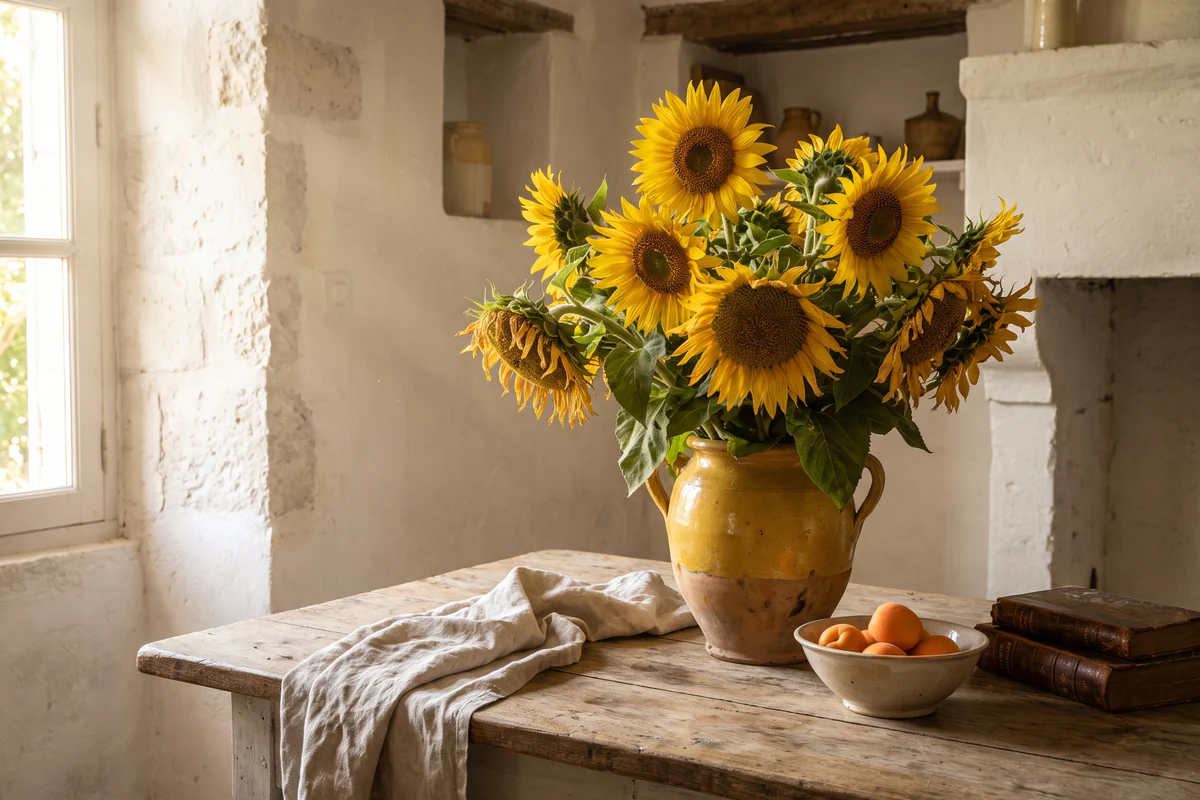
No flower is more closely tied to one painter. Vincent van Gogh painted sunflowers in two series. In Paris, in 1887, he painted cut sunflowers lying on a table. In Arles he painted four canvases in August 1888, then two new versions in January 1889, this time with the flowers in a vase. A seventh canvas exists, but its attribution is disputed.
In August 1888 he wrote that he was painting “with the gusto of a Marseillais eating bouillabaisse”. His plan was to decorate the studio he would share with Paul Gauguin. “Nothing but big Sunflowers”, he told his brother Theo, “a symphony in blue and yellow”. Gauguin arrived at the Yellow House on 23 October 1888. Two of the Sunflowers canvases were hanging in his bedroom. Sunflowers to welcome a friend: it’s hard to imagine a warmer greeting.
You don’t need to go far to stand in front of one. One of the four canvases from August 1888, fifteen sunflowers in a vase against a yellow background, hangs at the National Gallery in London.
A sunflower to wear as a sign
The sunflower is also a sign people carry today. It is the national flower of Ukraine. On 24 and 25 February 2022, a widely shared video, reported among others by The Guardian, showed a Ukrainian woman handing sunflower seeds to a Russian soldier, so that flowers would grow where he fell. Since then, the sunflower has also become a sign of support for the country.
And then there is the lanyard from the airport. The Hidden Disabilities Sunflower scheme was created in 2016 with Gatwick Airport and several charities. Its green lanyard lets staff know that the wearer has a disability that can’t be seen, and may take longer or need extra help. The green and the sunflower were chosen for the reasons given at the start: confidence, growth and positivity. A new chapter for a flower that, since Clytie, has always turned towards someone.
Sunflowers and bees
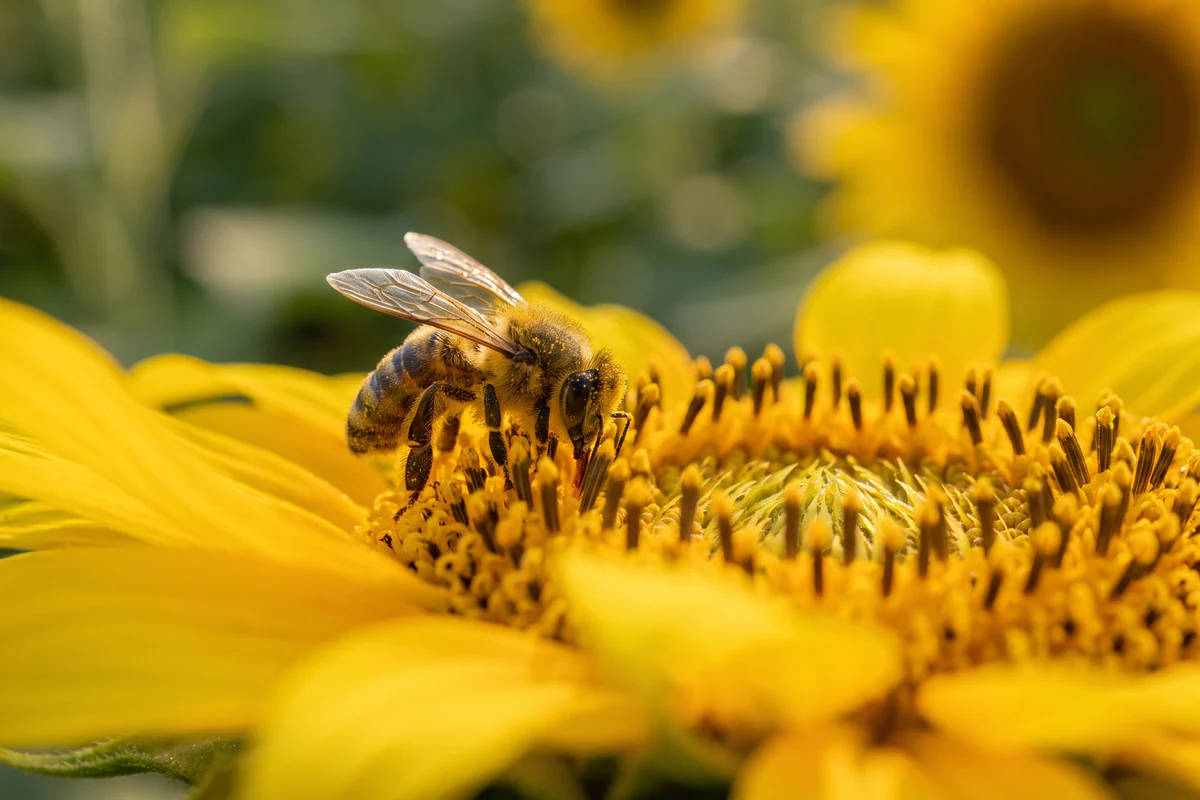
The sunflower has a faithful partner: the bee. The plant is pollinated mainly by bees, often honeybees from hives set up in the fields. In Avignon, researchers at INRA, the French agricultural research institute, covered the flowers with bags to keep bees out: the seed yield fell close to nothing.
The exchange works both ways. The sunflower is an excellent honey plant, and it flowers late, in August, when other food is scarce. Its pollen is good for bees. And remember the 2016 study: flowers facing east get five times more visits. The bee has a long symbolic history of its own, told in our article on what the bee means.
Who would you give sunflowers to?
With so many stories behind it, the sunflower suits all sorts of people:
- a loyal friend, like the Sunflowers waiting for Gauguin in Arles;
- a steady love, in memory of Clytie turned towards the sun;
- an early riser, like the flower that waits for dawn;
- someone who loves Van Gogh and painting;
- a gesture of support, with Ukraine in mind.
Just don’t quote Charlotte de La Tour on the card: “false riches” would make an odd compliment. A few words are enough:
- “You’re my morning sunshine.”
- “Like a sunflower, I’ll always turn to you.”
- “A symphony in blue and yellow, just for you.”
Fancy pairing it with another flower? Find out what a daisy says. And if you’re unsure which piece to choose, our guide to choosing a brooch as a gift starts with what the person already wears.
Wearing a sunflower brooch
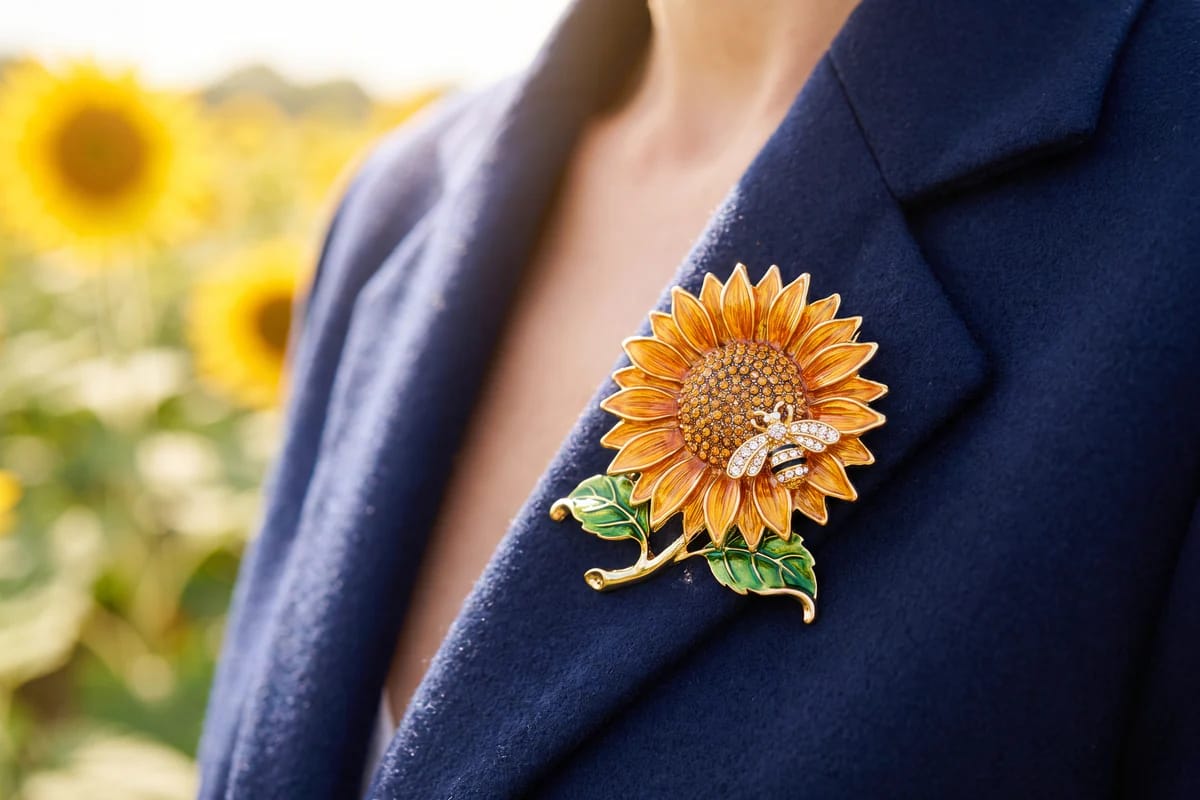
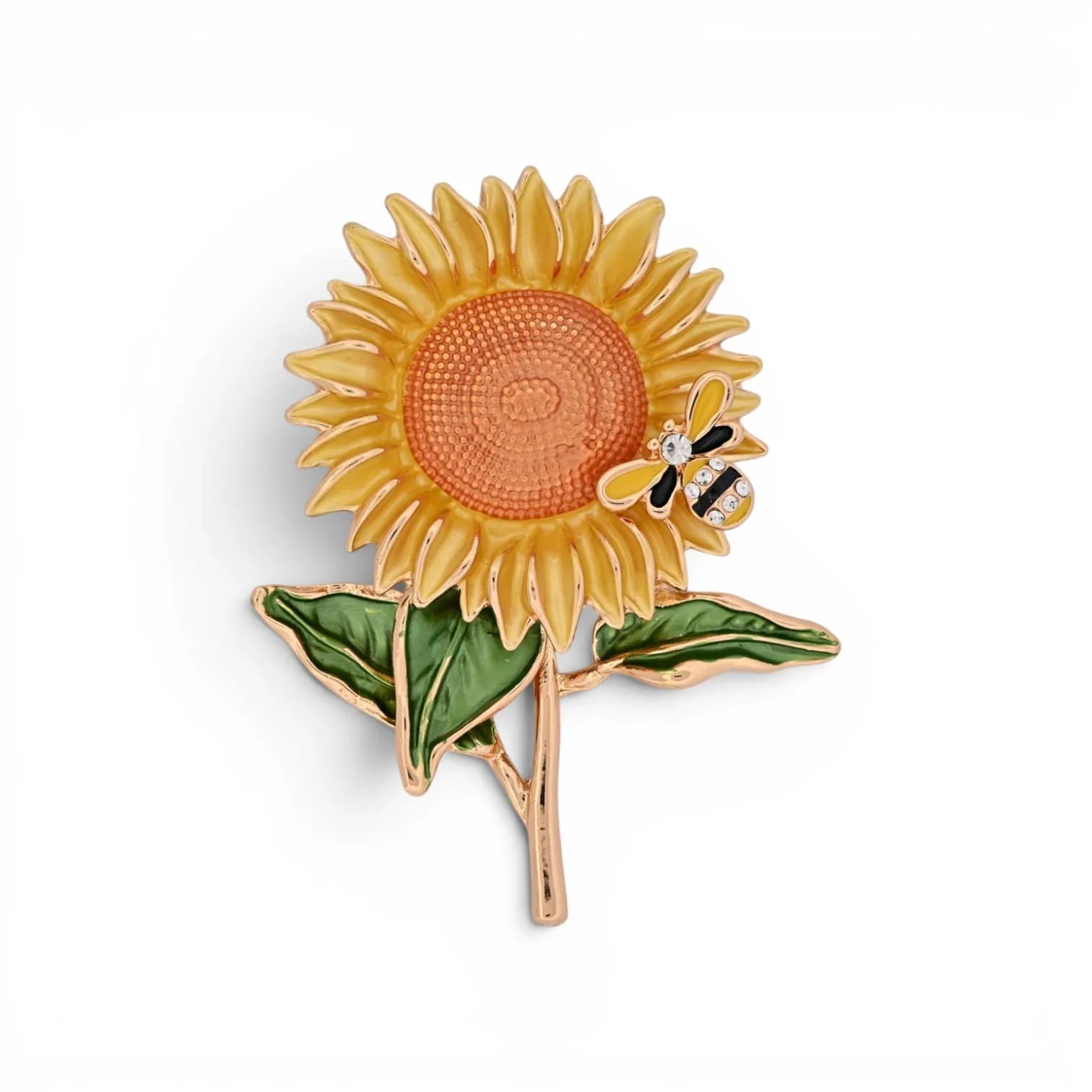
A sunflower brooch never wilts and never bows its head. Among the fashion jewellery at Ma Broche, the Magnetic Sunflower Brooch brings the flower and the bee together: a large yellow and orange flower, green leaves and a little bee set with rhinestones, on a gold-coloured steel base. It fastens with a magnetic clasp.
Wear it on the lapel of a navy blazer, a brown coat or a dark denim jacket: the yellow and orange stand out like a field in high summer. To go with it, browse our flower brooches, or add a second bee with a bee brooch.
Sunflower meaning at a glance
By its name, the sunflower is the flower of the sun; through Clytie, it stands for faithful love; and in the 19th-century language of flowers, it means “false riches”. The table separates facts, stories and modern signs:
| Field or source | What the sunflower stands for |
|---|---|
| Botany | A flower head: yellow ray florets around the edge, disc florets in the centre, seeds in Fibonacci spirals |
| Movement (Atamian et al., Science, 2016) | Young plants follow the sun; the mature flower stays facing east |
| Name | French tournesol, from Italian tornasole, “that turns with the sun”; first a blue dye in French |
| Origin of the plant | North America; reached Europe in the 16th century |
| Clytie (Ovid, then 16th-century painters) | Faithful, unrequited love, turned towards the sun |
| Charlotte de La Tour (around 1819) | “False riches”; the heliotrope, not the sunflower, says “I love you” |
| Van Gogh | The Arles Sunflowers, painted to welcome Gauguin; one hangs at the National Gallery, London |
| Ukraine | National flower, a sign of support since 2022 |
| Hidden Disabilities Sunflower (2016) | Confidence, growth and positivity, on a green lanyard |
| Spiritual meaning | Little documented: Onondaga creation myth, link with Huitzilopochtli among the Aztecs |
Frequently asked questions
How tall can a sunflower grow?▾
A garden sunflower usually reaches about 3 metres. Some giants go much further: according to Guinness World Records, the tallest sunflower on record measured 10.90 metres. It was grown in Fort Wayne, Indiana, by Alex Babich, a gardener born in Ukraine, and verified on 3 September 2025.
Why is litmus paper called “tournesol” in French?▾
In French, the litmus paper of school chemistry lessons is papier de tournesol. It owes its name to the dye that the word tournesol meant in French from 1360, long before the flower. According to Wikipedia, this dye comes mostly from lichens, not from the big yellow flower.
How did the sunflower become an oil crop?▾
Growing sunflowers for oil took off in the 19th century in Russia, where the plants were bred until their seeds held 40% oil. According to Wikipedia, sunflower oil was not on the list of foods banned by the Orthodox Church during Lent, which is said to have helped the crop spread. Today it is one of the three main cooking oils in Europe, along with rapeseed and olive oil.
What is Professor Calculus called in French?▾
In the original French Tintin books, Hergé’s absent-minded scientist is Tryphon Tournesol: Professor Sunflower. English readers know him as Cuthbert Calculus. He was inspired by the physicist Auguste Piccard and first appeared in Red Rackham’s Treasure, published as a book in 1944. Why Hergé gave him that name, our sources don’t say.
Is there a sunflower day?▾
Yes, in the French Republican calendar: 19 Vendémiaire, which usually falls on 10 October, is dedicated to the sunflower.