
Daisy Meaning: Innocence, Pearls and a Love Game
A chain on the lawn, a name that once meant pearl, a ring worn by a king: discover the daisy meaning, from innocence to a polite “I’ll think about it”.
Think of a British lawn in summer. Children sit cross-legged in the grass, threading one daisy into the next until the chain is long enough to wear. Daisy chains are a traditional children’s game, and many of us made one long before we knew anything about the flower.
So what is the daisy meaning behind that small white flower? In Le Langage des fleurs, a French book on the language of flowers published in 1819, Charlotte de La Tour gives the little daisy the meaning of innocence. The bigger meadow daisy answers a suitor with a polite “I’ll think about it”: not yes, not no. Its French name, marguerite, comes from the Latin for “pearl”, and its English name means “the day’s eye”. Each one has a story worth following.
Along the way, we’ll keep two things apart: what is established (botany, the history of words) and what is told (the language of flowers, traditions). Both are worth your time, as long as you know which is which.
Lawn daisy or oxeye daisy: which flower are we talking about?
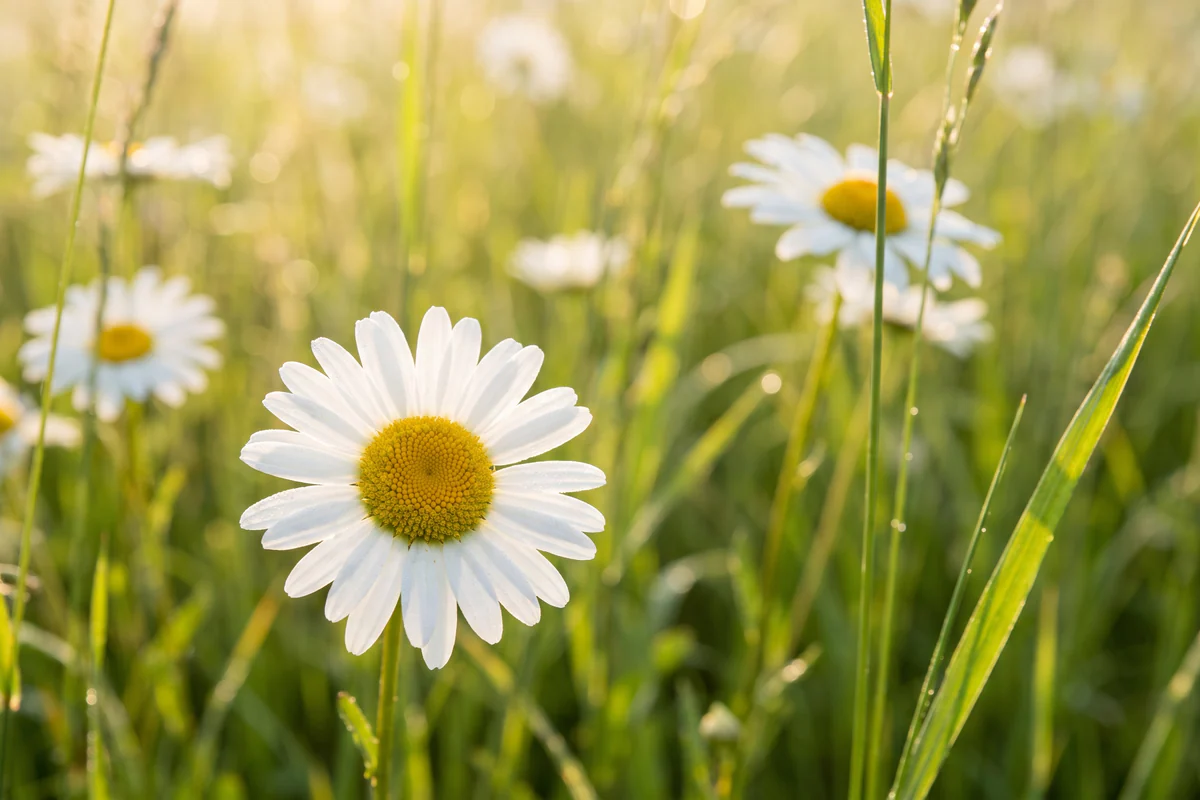
In English, “daisy” covers two flowers you’ve almost certainly met. The small one on the lawn is the common daisy, Bellis perennis, also called the lawn daisy or English daisy. The tall one in meadows and on road verges is the oxeye daisy, Leucanthemum vulgare, which English also calls the marguerite. The French word marguerite mainly means this larger flower, and the French call the lawn daisy the “little marguerite”.
One flower made of dozens
Here is the first surprise: a daisy isn’t really one flower. Both plants belong to the Asteraceae family, and what we see is a flower head, a tight cluster of many tiny flowers:
- around the edge, white rays that everyone calls petals;
- in the middle, small yellow disc florets packed close together.
So when you pull the “petals” off a daisy, you’re removing tiny flowers, one at a time. The Wikipedia page on the oxeye daisy describes this structure in detail.
The oxeye daisy is a perennial. It grows in meadows, on verges and in open woodland, and it’s very common all over Europe. You’ve probably driven past thousands of them on a country road without a second look.
Why it is called the day’s eye
The lawn daisy has a charming habit: it closes at night and opens again in the morning. That habit gave English its name for the flower. “Daisy” comes from the Old English dæges eage, “day’s eye”, and Geoffrey Chaucer called it the “eye of the day”, as the Wikipedia page on Bellis perennis notes. The same page records that daisies have traditionally been used for making daisy chains in children’s games.
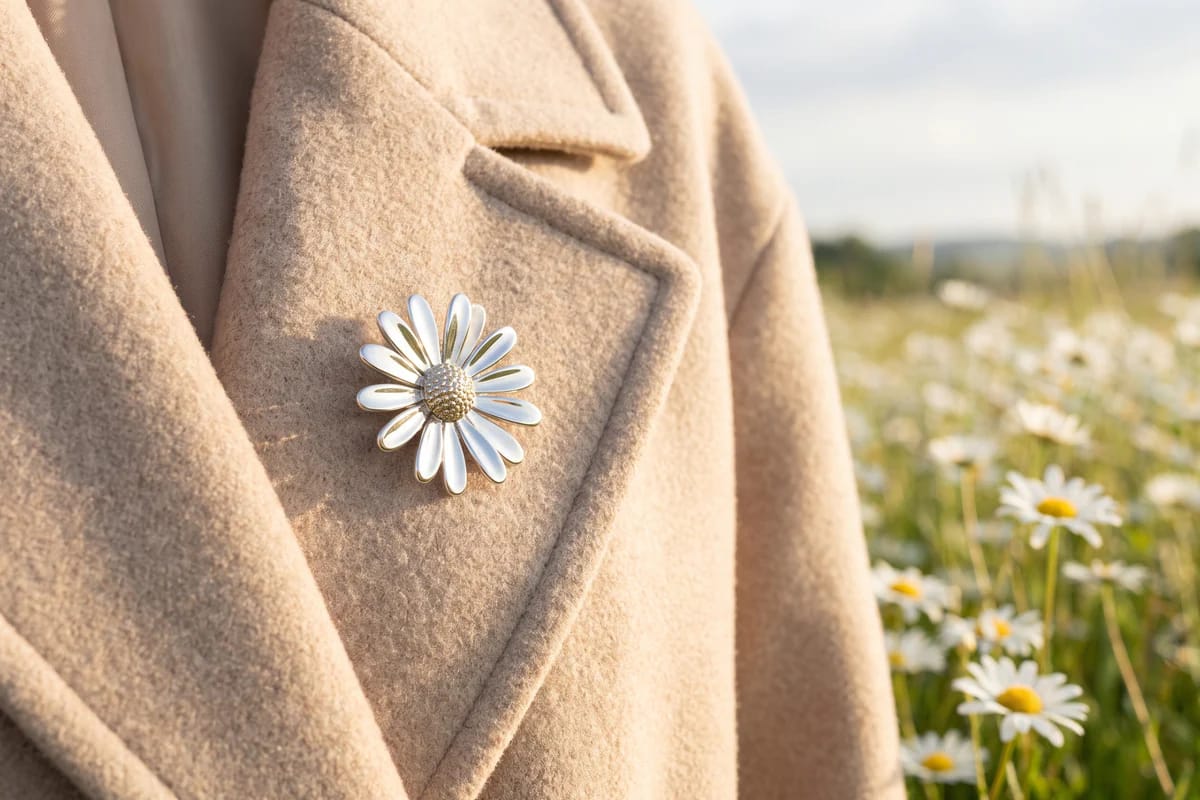
You’ll find that round flower with its crown of petals on several of our flower brooches. But before the jewellery, there was a pearl.
From pearl to Margaret to Daisy
Long before it was a flower, the word was a jewel.
The French marguerite comes from the Latin margarita, “pearl”, which itself comes from the Greek margarítês. In medieval French it first meant just that: the form “margerie”, meaning pearl, is recorded around 1130 to 1140. Only later did the word pass to the flower. It first appears with that meaning in the 13th century, in the French tale Aucassin et Nicolette, where it names the lawn daisy.
The old pearl is still hiding in a phrase you know well: “cast pearls before swine”. It comes from the Gospel of Matthew, and the Latin text uses that very word: margaritas.
Look at a daisy with that in mind: a sunny yellow heart, a neat white ring. It’s easy to see why a pearl and a flower could share a name. Poets agreed. In 1364, Guillaume de Machaut gave the flower a whole poem, Le Dit de la marguerite.
And here the story crosses the Channel. In English, Daisy is a pet name for Margaret, because marguerite is the French name of the flower. So a Daisy may carry a pearl in her name without ever knowing it.
What does a daisy symbolise in the language of flowers?
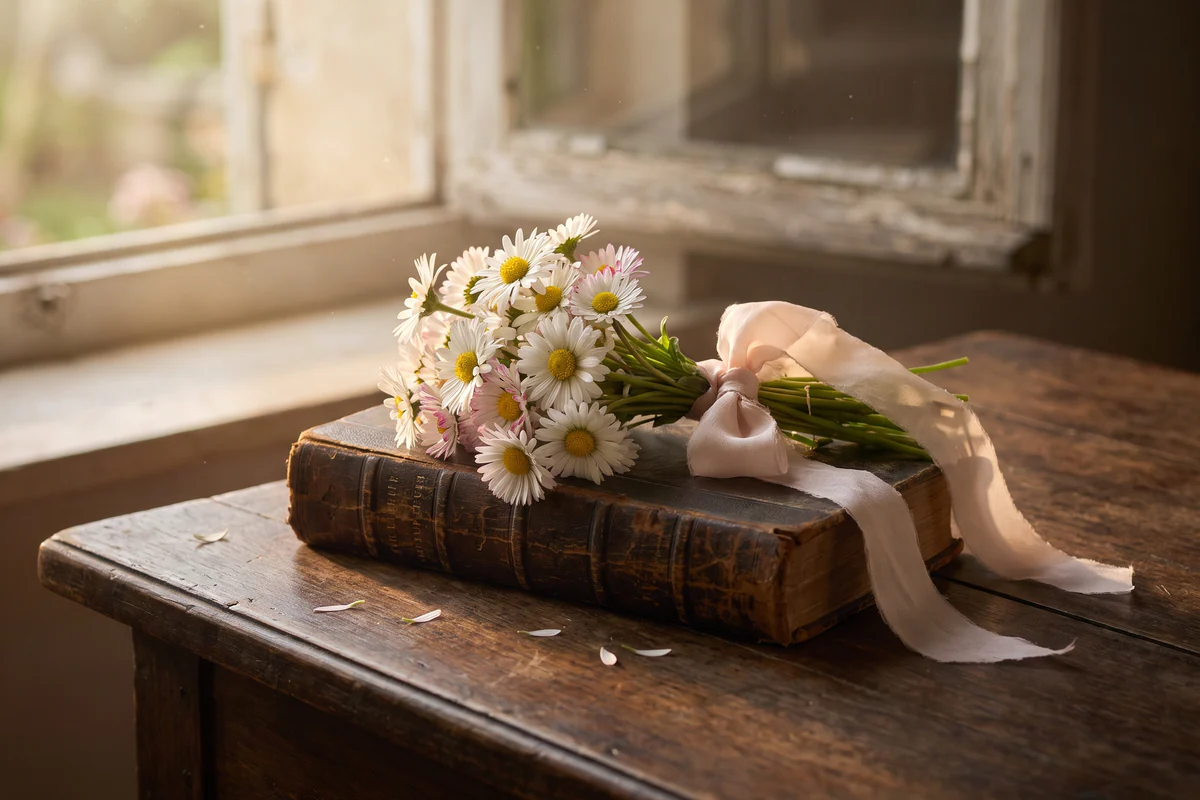
In the 19th century, people loved bouquets that carried messages. Charlotte de La Tour’s book of 1819 gave a meaning to each flower, and the daisy received several, depending on the variety. Keep in mind that these are conventions set down in a book, not truths about the plant. To see how this code of flowers came about, read our friendly guide to flower meanings.
The little daisy: innocence
According to Charlotte de La Tour, the little daisy (our lawn daisy) stands for innocence. To explain it, she turns to Scotland, or rather to Ossian, an 18th-century cycle of Scottish poems. In it, Malvina mourns Oscar, and also Oscar’s son, who died before birth. The young women of Morven then dedicate the little daisy “to early childhood”. It becomes “the flower of innocence, the flower of the newborn”.
This is a literary legend, not an ancient belief. Still, it gives the little white flower a very gentle meaning: a life just beginning.
The meadow daisy: “I’ll think about it”
The tall meadow daisy carries a more mysterious message. In French, “J’y songerai”: I’ll think about it. The same book tells how, in the days of knights, a lady who appeared crowned with white daisies “was understood to answer: I will think about it” to the man who asked to serve her.
Neither yes nor no. The knight could hope, but take nothing for granted. That suspense is the whole charm of the flower: the daisy is the flower of a love that hesitates.
Is there a spiritual meaning?
Plenty of people ask whether the daisy has a spiritual meaning. In the sources we consulted, no ancient tradition gives the daisy a precise spiritual message. What we do find is the innocence and childhood that the 19th-century language of flowers gives it, and the hopeful waiting of “I’ll think about it”. If a daisy speaks to you of something else, that reading is personal, and it belongs to you.
He loves me, he loves me not
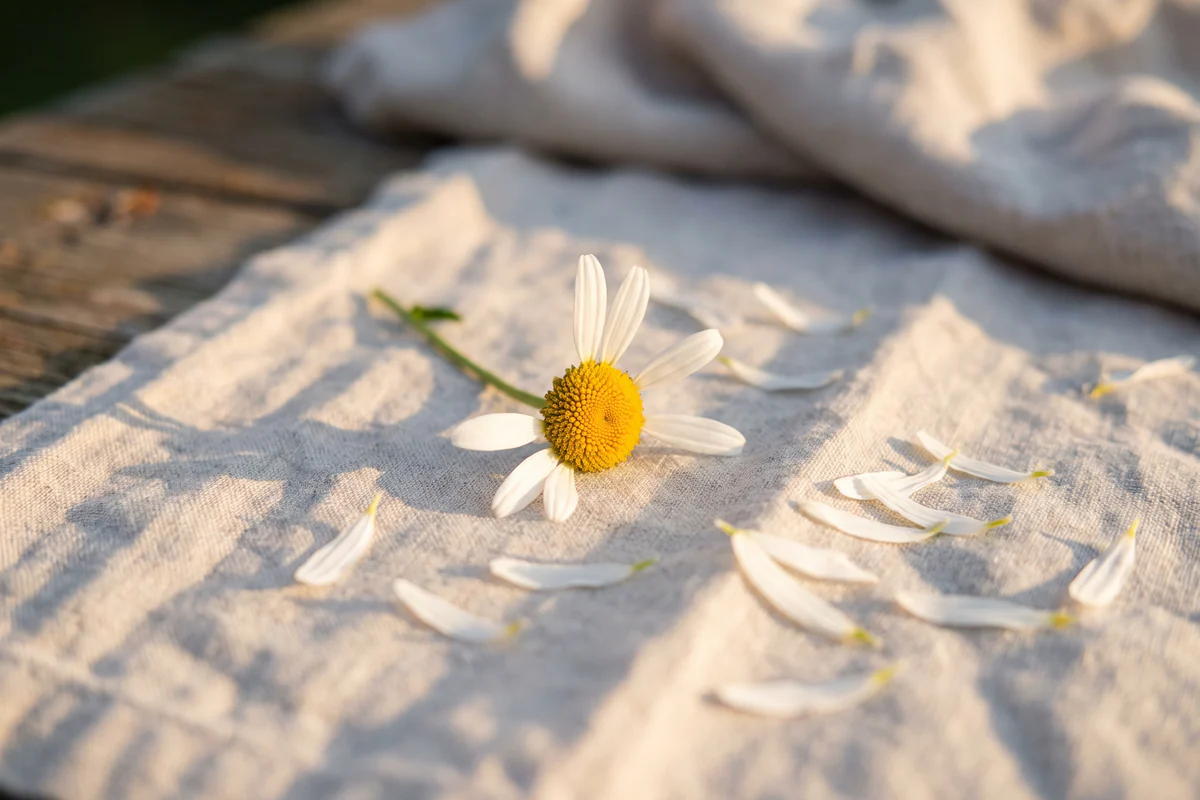
Which brings us back to the lawn. In English, the game is simple: you pull off one petal for “he loves me” and the next for “he loves me not”, and the last petal gives the answer. The French version is longer, with degrees of love: “il m’aime, un peu, beaucoup, passionnément, à la folie, pas du tout”, which runs “he loves me, a little, a lot, passionately, madly, not at all”. Some versions add “more than anything”.
The game is played in several countries, with oxeye daisies as well as lawn daisies. It even made it onto the stage: you can see it in the ballet Giselle by Jean Coralli and Jules Perrot, first performed in Paris in 1841. Victor Hugo mentions it too, in Les Misérables.
And where does it come from? Hard to say. The sources we consulted give neither its origin nor its exact age. It remains a small question asked of a flower on a summer day.
A king’s ring of lilies and daisies
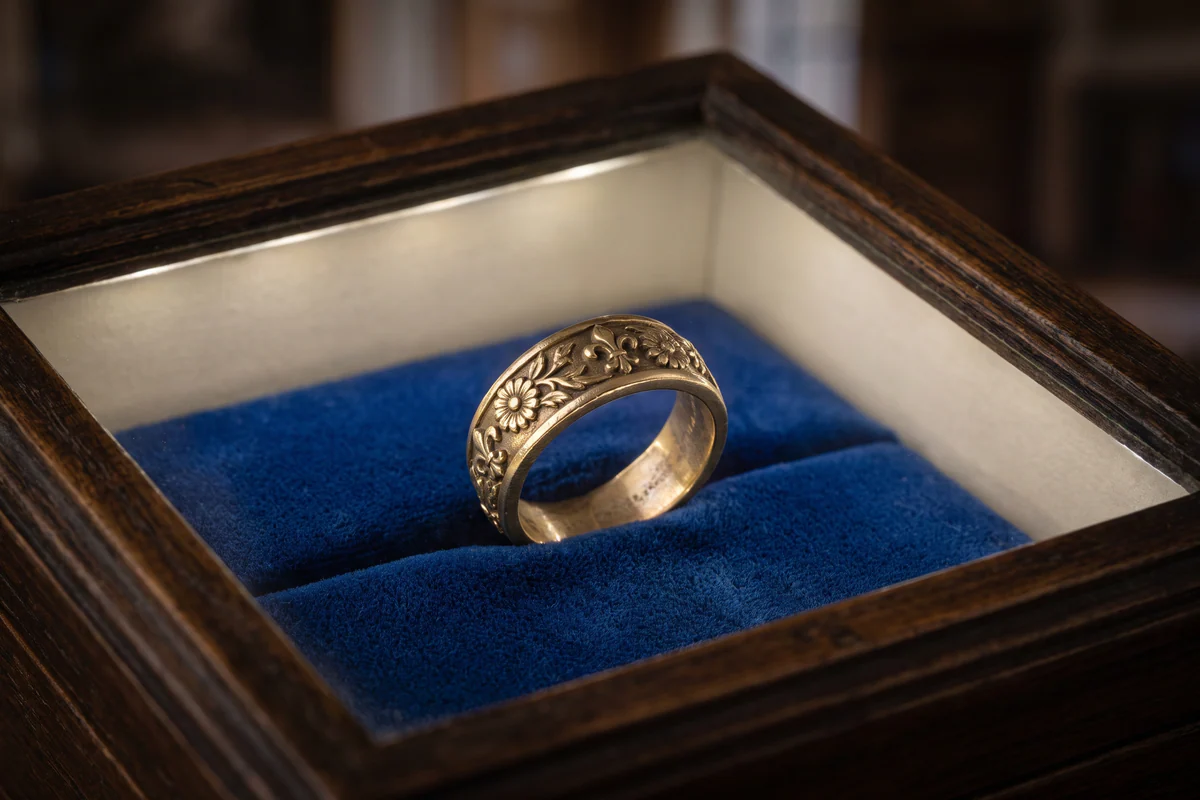
A flower that shares its name with a queen was bound to find its way to court.
In 1234, Louis IX of France, later known as Saint Louis, married Marguerite of Provence. According to Charlotte de La Tour, the king wore a ring decorated with a garland of lilies and daisies, with a crucifix and this motto in Old French: “Hors cet anel pourrions-nous trouver amour ?”, or “Outside this ring, could we find love?” The ring brought together, she writes, faith, France and the queen.
This is a tradition reported in a 19th-century book, not an object you’ll find in any archive. But the idea is touching: a king wearing on his finger the flower that bore his queen’s name.
What are you saying when you give a daisy?
With all these meanings, a daisy suits very different moments:
- a birth, in memory of “the flower of the newborn”;
- a shy declaration, or an answer that leaves the door open: “I’ll think about it”;
- a friend called Margaret, Daisy or Marguerite, who already carries the flower in her name;
- anyone who loves meadows and wildflowers.
What matters is linking the flower to what the person is going through. A few words on the card are enough:
- “Welcome to the world, little flower.”
- “I’ve thought about it. The answer is yes.”
- “A daisy for my Daisy.”
Not sure what kind of brooch to give? Our guide to choosing a brooch as a gift starts from the coat or jacket the person wears most. And if you want a stronger message, pair the daisy with another flower and read what red and white roses mean.
Wearing a daisy as a brooch
English has a phrase for someone who looks bright and well rested: fresh as a daisy. A daisy brooch lives up to it: it never wilts and can be worn in any season. At Ma Broche, our daisies are fashion jewellery pieces that interpret the flower in several ways:
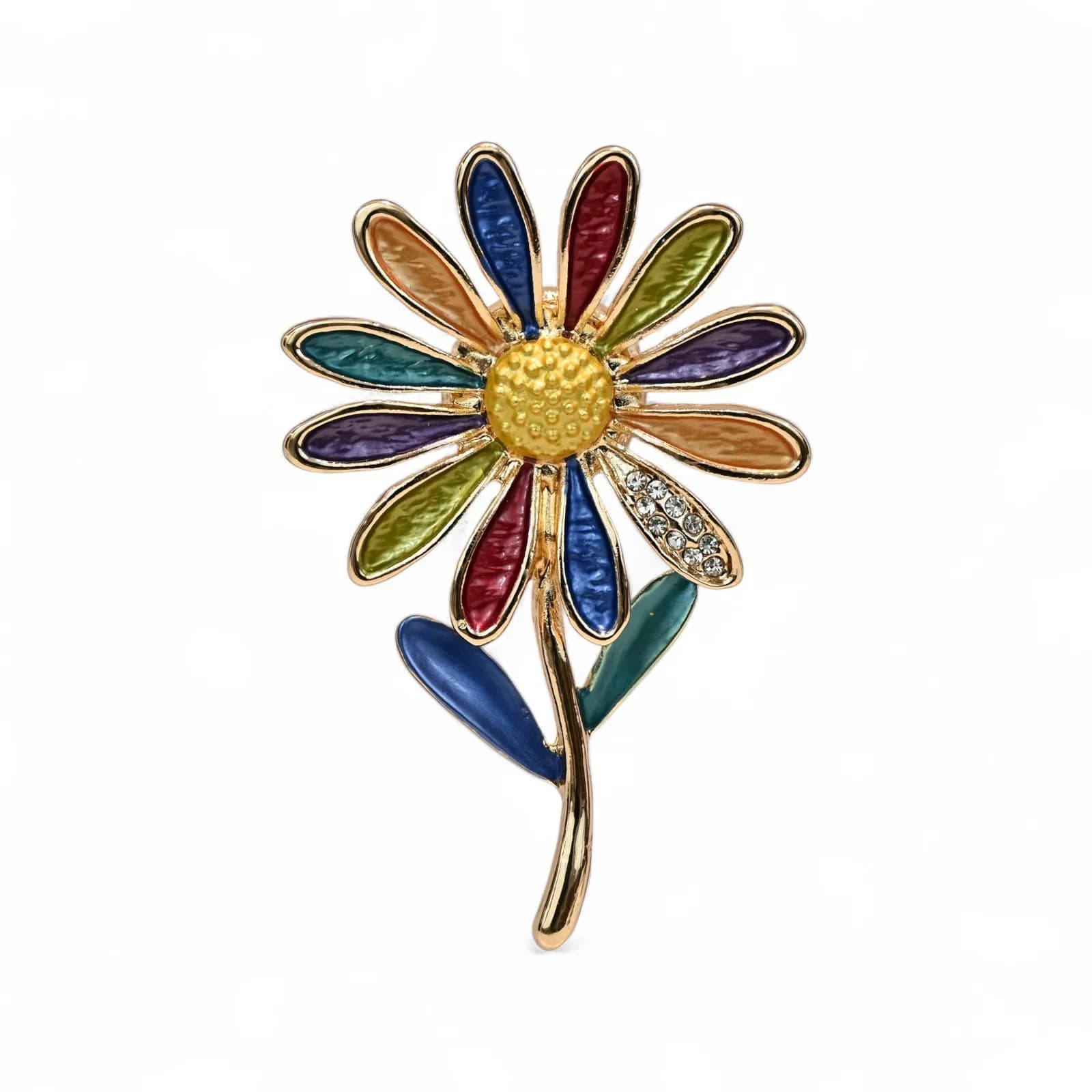
- multicoloured enamel petals set with rhinestones, on a gold-coloured setting;
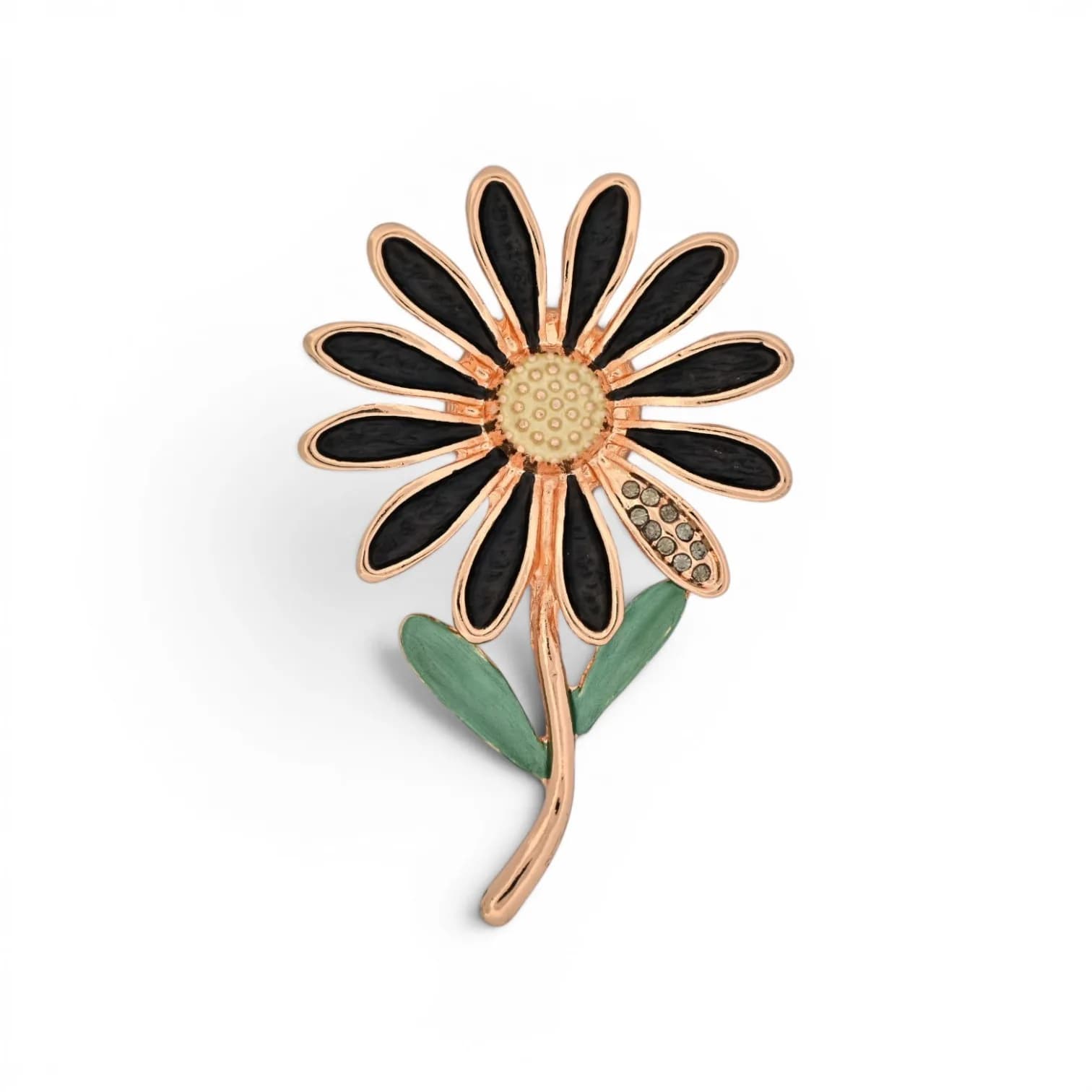
- a black daisy with twelve petals, a raised cream centre and two green leaves;
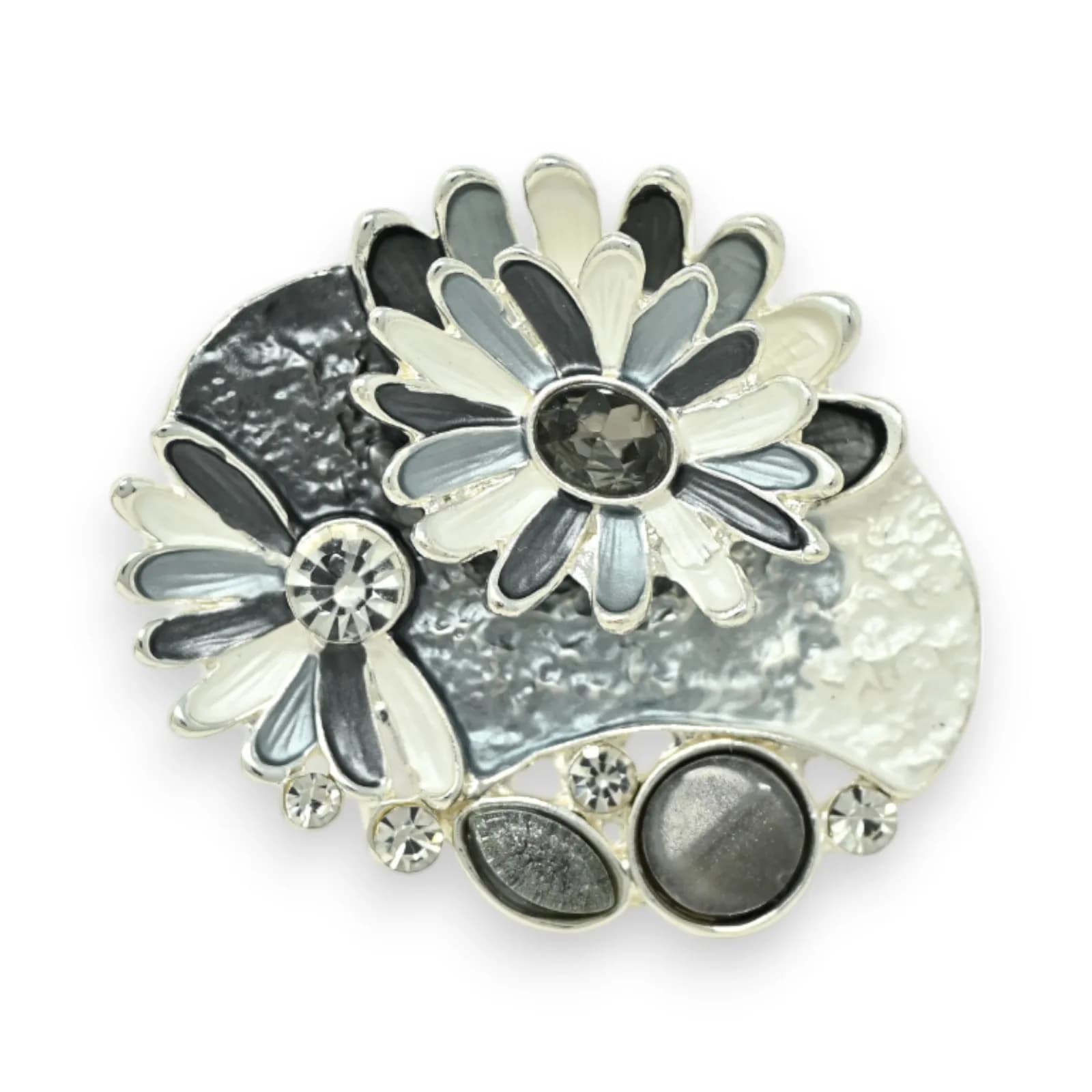
- two stacked daisies in silver-coloured steel, with cream, grey and black petals;
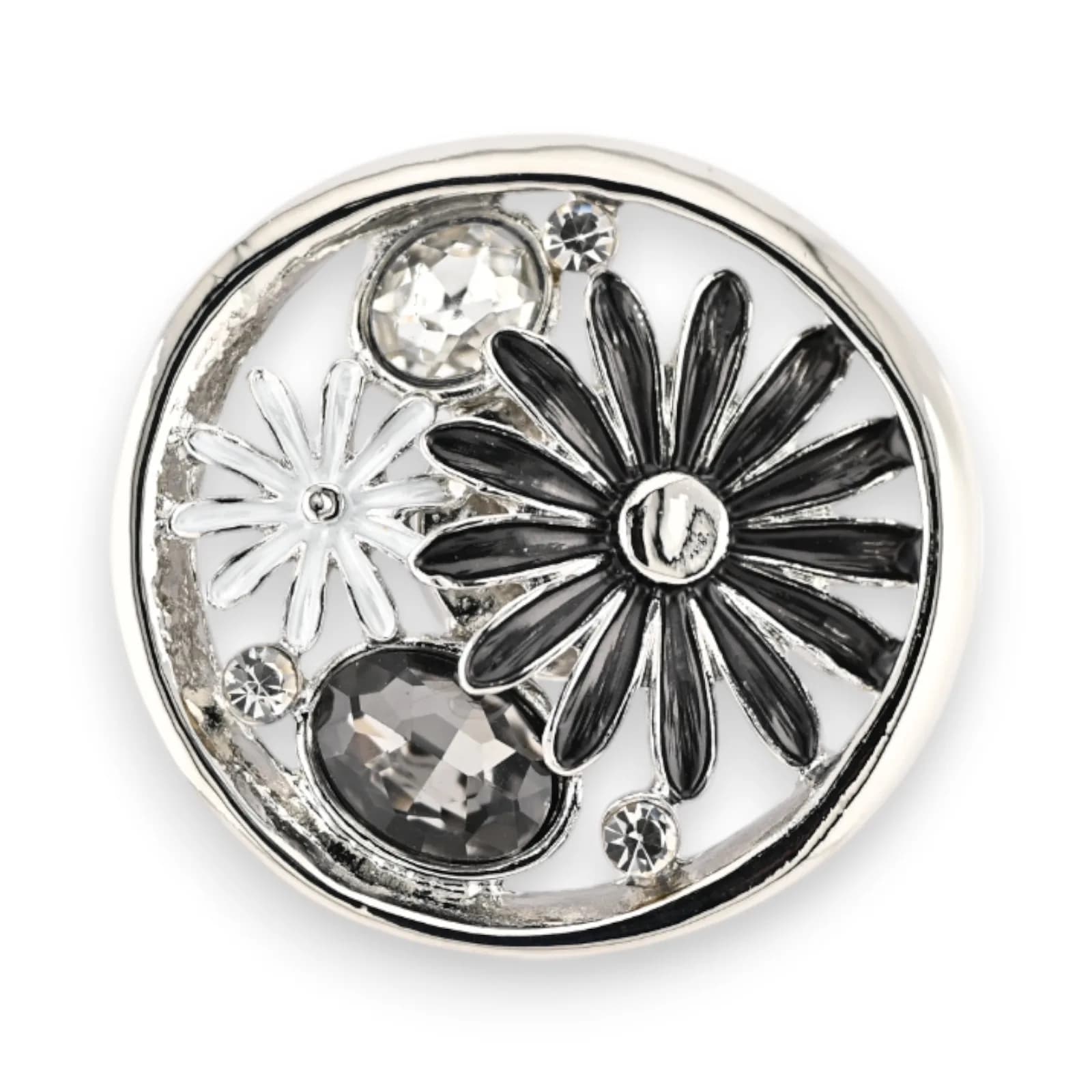
- a black daisy and a white one, side by side in an openwork medallion.
All of them fasten with a magnetic clasp. Wear one on a jacket lapel, a jumper or a scarf: the black and white pair suits a simple outfit, while the multicoloured one brightens up a plain coat. To pick yours, browse our flower designs to wear.
Fancy a little bouquet? Add a poppy brooch: this wildflower has its own story too, told in our article on what a poppy means.
Daisy meaning at a glance
In the 19th-century language of flowers, the daisy means innocence and a love that hesitates; its French name first meant “pearl”, and its English name means “day’s eye”. The table separates facts (botany, names), the conventions of the 1819 book and reported traditions:
| Field or source | What it tells us |
|---|---|
| Botany | A flower head: yellow disc florets in the centre, white rays around them |
| English name | From Old English dæges eage, “day’s eye”: the lawn daisy closes at night |
| French name | From Latin margarita, “pearl”; used for the flower from the 13th century |
| Margaret and Daisy | Daisy is a pet name for Margaret, through the French marguerite |
| Little daisy (Charlotte de La Tour, 1819) | Innocence, “the flower of the newborn” |
| Meadow daisy (1819) | “I’ll think about it” |
| He loves me, he loves me not | Uncertain love; origin unknown |
| Louis IX (reported tradition) | A ring of lilies and daisies for Marguerite of Provence |
| Spiritual meaning | No documented ancient tradition |
Frequently asked questions
What does a double daisy mean?▾
In Charlotte de La Tour’s Le Langage des fleurs (1819), the double daisy answers “I share your feelings”. Good news for patient suitors: after the meadow daisy’s “I’ll think about it”, the doubt is over.
What does the China aster mean?▾
In the same 1819 book, the China aster (in French, reine-marguerite, the “queen daisy”) means variety. Note that it’s a different plant from the daisy: it came from China and reached France thanks to Father d’Incarville, a missionary who sent its seeds to the King’s Garden in Paris around 1730.
Is the daisy a national flower?▾
Yes, in Denmark: in 1987 it replaced red clover as the national flower, and Queen Margrethe II is nicknamed “Daisy” by those close to her. France has no official national flower, although the cornflower, the daisy and the poppy are sometimes linked to the three colours of the French flag.
Was Marguerite a popular name in France?▾
Yes. From the Middle Ages to the 18th century, Marguerite was one of the most frequently given first names in France. Saint Margaret of Antioch is the patron saint of women in childbirth, another link with birth, like the “flower of the newborn” of the language of flowers.
Who was “the Marguerite of Marguerites”?▾
Marguerite of Angoulême (1492-1549), sister of King Francis I of France and Queen of Navarre, was a writer nicknamed “the Marguerite of Marguerites”. Her collection published in 1547 is called Les Marguerites de la Marguerite des princesses: the title plays on pearl, flower and princess all at once.