
What Does a Poppy Mean? Remembrance, Symbolism and Gifting
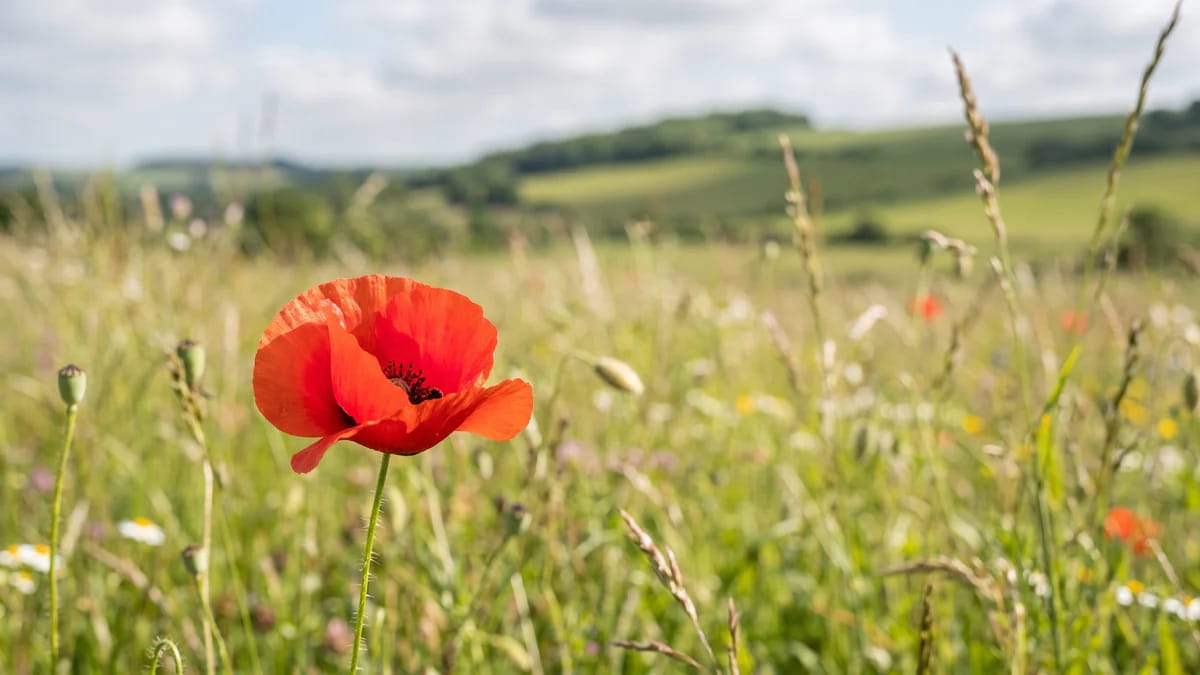
A UK guide to the meaning of the poppy: its role in Remembrance, the common flower behind the symbol and how to make a personal gesture thoughtful.
The short answer: a poppy can mean different things
In the UK, a red poppy is most immediately recognised as a sign of Remembrance. It can honour people who served, acknowledge loss and show support for the Armed Forces community. Away from that setting, the flower may also bring to mind a summer verge, a walk through open fields or the quick flash of red that makes a landscape feel alive.
The meaning is shaped by context. A paper poppy worn in November, a flower in a garden and a poppy motif chosen for a gift can all feel meaningful, but they do not say exactly the same thing. That distinction makes it easier to choose words that are considerate rather than relying on a symbol to do all the speaking.
Why the red poppy matters in the UK
The red poppy has a public place in British Remembrance. The Royal British Legion explains the meaning of the poppy as remembering sacrifice, supporting today’s Armed Forces community and hoping for a peaceful future. It is tied to the landscapes of the First World War and, for many people, to Remembrance Sunday and 11 November.
Its remembrance meaning deserves care. It is not a decorative shorthand for any kind of sadness, nor a badge that someone is required to wear. The Legion is clear that wearing a poppy is a personal choice. If you are giving or wearing a poppy near a commemorative occasion, think about what the recipient will understand from it and whether a few honest words would make your intention clearer.
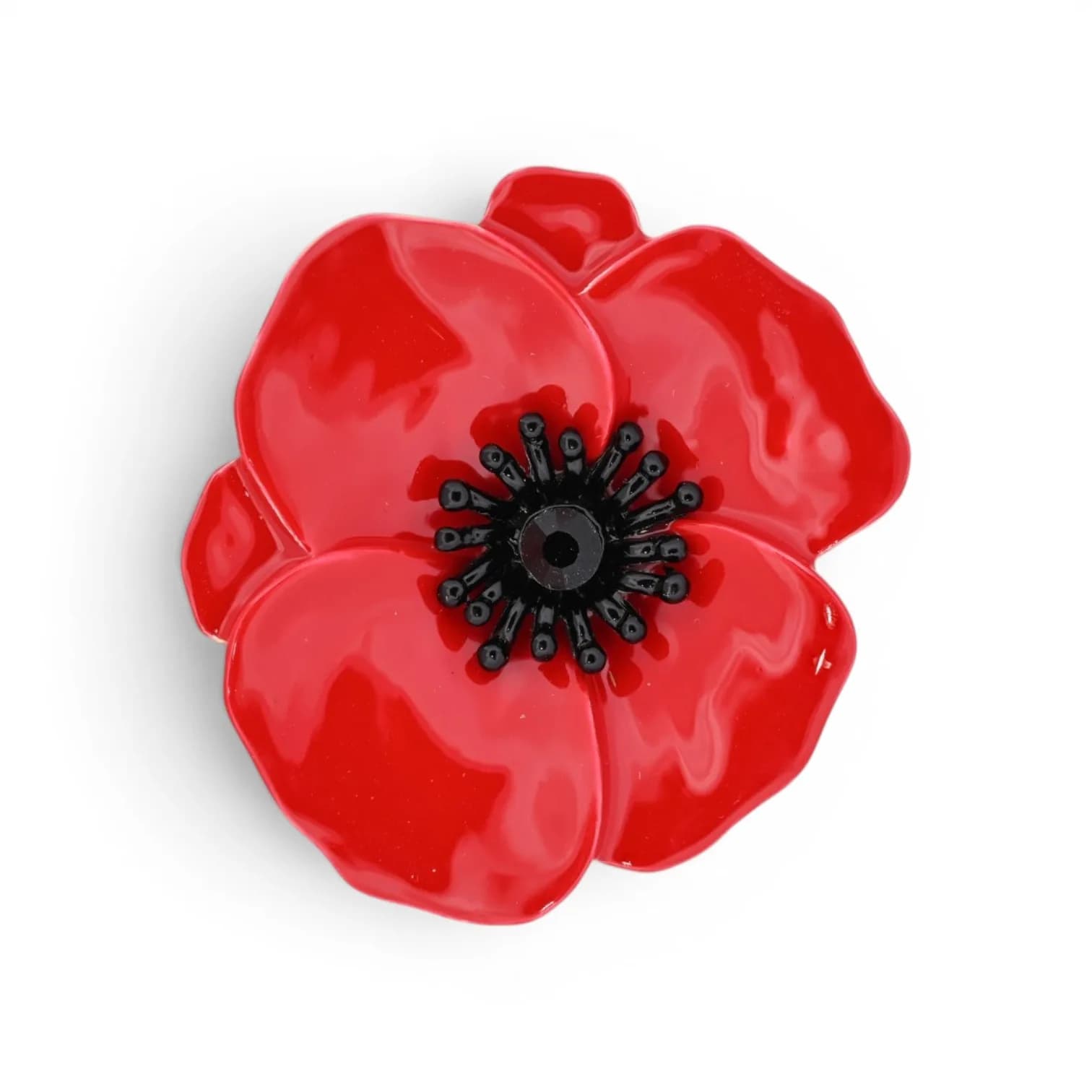
A living flower, a remembrance poppy and a motif are not identical
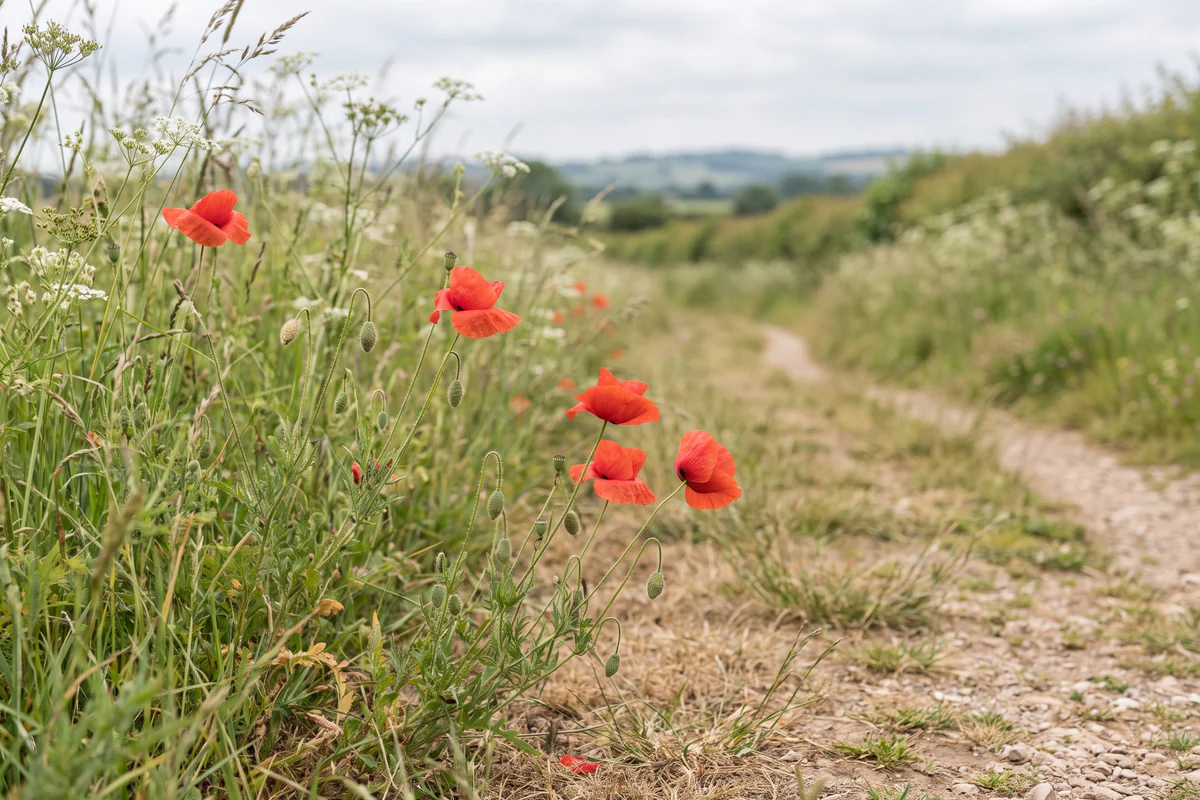
One reason poppies invite mixed meanings is that the same word is used for several things. There is the flower growing in a field, the artificial red poppy associated with Remembrance, and the stylised flower used in art, jewellery and clothing. They overlap visually, but their social setting changes the message.
| Setting | What it may communicate | What helps most |
|---|---|---|
| Remembrance event | Respect, memory and support | Follow the occasion and keep the gesture understated |
| Garden or countryside image | Season, colour and a sense of place | Share the memory the scene brings back |
| Personal gift | Attention, a shared walk or a love of wild flowers | Add a note that explains why you chose it |
| Everyday accessory | Colour, a floral preference or a private association | Let the wearer decide what it means to them |
Not every red flower is a Remembrance statement. A poppy design can simply be a floral choice, especially outside the Remembrance season. Equally, a person may have a strong family, military or personal association with it at any time of year. The sensible approach is to avoid assuming that your own reading is universal.
The common poppy behind the symbol
The flower usually meant in this context is the common poppy, Papaver rhoeas. Kew describes it as an annual plant with delicate, papery petals, commonly bright red and often marked dark at the base. Its botanical profile also notes the flower’s role as a cultural icon of wartime remembrance. You can see the identifying details in Kew’s common poppy profile.
The common poppy is Papaver rhoeas. Naming the plant matters because “poppy” covers more than one species and more than one cultural story. In an article about meaning, the useful point is not to turn a flower into a fixed personality. It is to recognise why its thin petals, field setting and vivid colour have been remembered in so many different ways.
What a poppy can mean in a personal message
Outside formal Remembrance, a poppy can be a thoughtful choice for someone who notices wild flowers, paints, gardens or places that feel open and bright. It can suggest a particular journey, a favourite patch of countryside or the pleasure of a colour that is impossible to miss. Those are personal readings, not rules in a flower dictionary.
There is no single private code. Some people may read a poppy as a lively, optimistic flower. Others may connect it with absence, consolation or a person they want to remember. Before making a big declaration with a poppy, ask yourself what the other person already associates with it. A shared reference will always be more convincing than a borrowed symbolic label.
Three messages that keep the meaning personal
- “This made me think of that walk when the fields were full of red.”
- “I chose this because you always stop to notice wild flowers.”
- “I wanted to give you a small reminder of a place we both care about.”
These examples do not prescribe what a poppy should mean. They show how an ordinary observation can make the gesture specific. Personal words outrank symbolic shorthand.
How to keep the message considerate
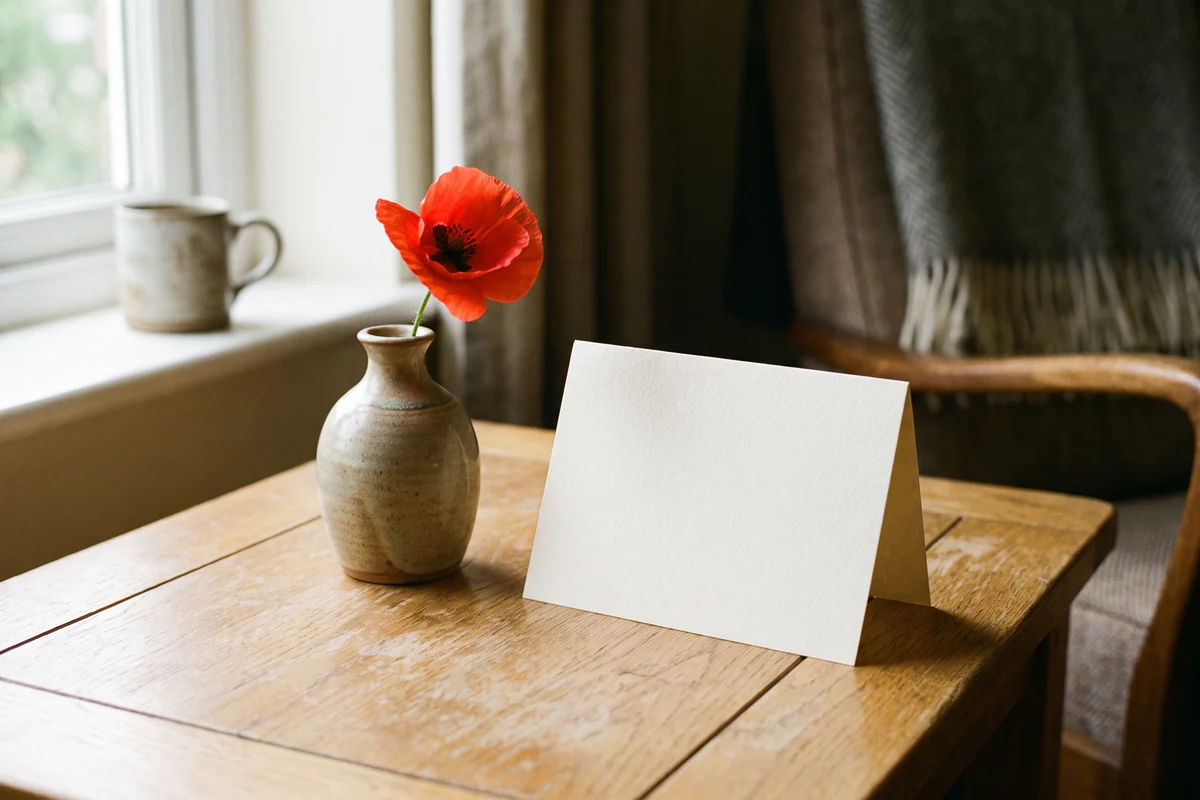
Because the poppy is so familiar in Britain, it is easy to assume everybody reads it in the same way. In practice, people bring their own experiences to it. One person may see an autumn act of Remembrance. Another may think first of a childhood garden, a painting or a loved one who always noticed flowers. Neither response needs correcting.
What matters is the setting you create around the motif. A personal gift can stay light when you name the shared memory behind it. A gift connected with loss can be more appropriate when you acknowledge the feeling directly and do not expect the flower to speak for you. At a public commemorative event, simplicity and respect are safer than trying to make the symbol feel fashionable or novel.
Four ways to avoid an unintended message
- Do not assume red means romance, grief or Remembrance in every private situation.
- Do not treat a decorative poppy as a substitute for listening to someone’s own experience.
- Do not use a formal memorial occasion as a backdrop for an unrelated announcement.
- Do say plainly whether your choice is about memory, a place, a colour or a shared interest.
A symbol can open a conversation, but it cannot settle every feeling. That is why a poppy is often strongest when it is paired with a modest, personal explanation instead of a grand claim about what it must mean.
When a poppy makes a thoughtful gift
A poppy-inspired gift can work well when it starts from the person rather than the occasion. It may suit someone who enjoys botanical patterns, wears vivid red, keeps a garden journal or has mentioned a particular landscape. It can also mark a shared summer memory without turning it into an overly serious statement.
There are times to pause. If the recipient is close to a recent bereavement, has a direct service connection or if the gift falls around a Remembrance event, a poppy may carry more weight than you intend. That does not automatically make it inappropriate. It simply means the gesture benefits from care, a conversation or a different motif if you are unsure.
A quick check before you choose one
- Does this person already enjoy poppies, wild flowers or red accessories?
- Is there a shared memory that makes the motif feel natural?
- Could the timing make the message feel more solemn than you mean?
- Would a short note remove any uncertainty?
Ask what the person will recognise. A good gift does not need an elaborate explanation, but it should leave room for the recipient’s own feelings. That is particularly true of a flower with such a visible public role in the UK.
Wearing a poppy motif with intention
A floral accessory can keep the image of the poppy close without pretending to be an official Remembrance poppy. If you are looking for that kind of design, explore the poppy motif collection and choose it for the colour, the form or the memory it evokes for you. The product block on this page is there to help you compare the available option without turning the article into a product claim.
Placement also changes the feel of the motif. A lapel makes it visible and formal. A scarf, bag or coat collar can feel more like an everyday personal detail. If you would rather not pierce a delicate fabric, the pin-free floral accessories offer a practical alternative. Always check the fastening on the material you plan to wear.
For more motifs, colours and shapes, browse the wider world of brooches. A different flower may be the better choice when the poppy’s remembrance connection does not match the message you want to send.
Give the symbol a sentence of its own
The poppy has a powerful public history in Britain, yet it can still belong to an ordinary personal moment. The clearest approach is simple: respect the Remembrance meaning when it is relevant, and be specific when your reason is private. The message belongs to the relationship. A few words about a walk, a person or a place can make the motif feel both thoughtful and true.
That leaves room for the flower to be vivid, gentle or reflective without forcing every wearer into the same story. The most respectful meaning is the one you can explain honestly.
Frequently asked questions
What does a red poppy symbolise in the UK?▾
In the UK, the red poppy is closely associated with Remembrance. It can honour those who served, acknowledge sacrifice and show support for the Armed Forces community.
Are poppies only connected with Remembrance?▾
No. A living poppy can also bring to mind a garden, a field, a season or a personal memory. The setting determines whether its public Remembrance meaning is likely to be central.
Is it appropriate to wear a poppy motif outside November?▾
A decorative poppy motif can be worn whenever it suits the wearer. It helps to recognise that some people may still associate it strongly with Remembrance, so a personal explanation can be useful.
Which flower is the Remembrance poppy based on?▾
The flower commonly associated with the red poppy of Remembrance is the common poppy, Papaver rhoeas. It is also known as the corn poppy or field poppy.