
How to Clean Costume Jewellery Without Damage
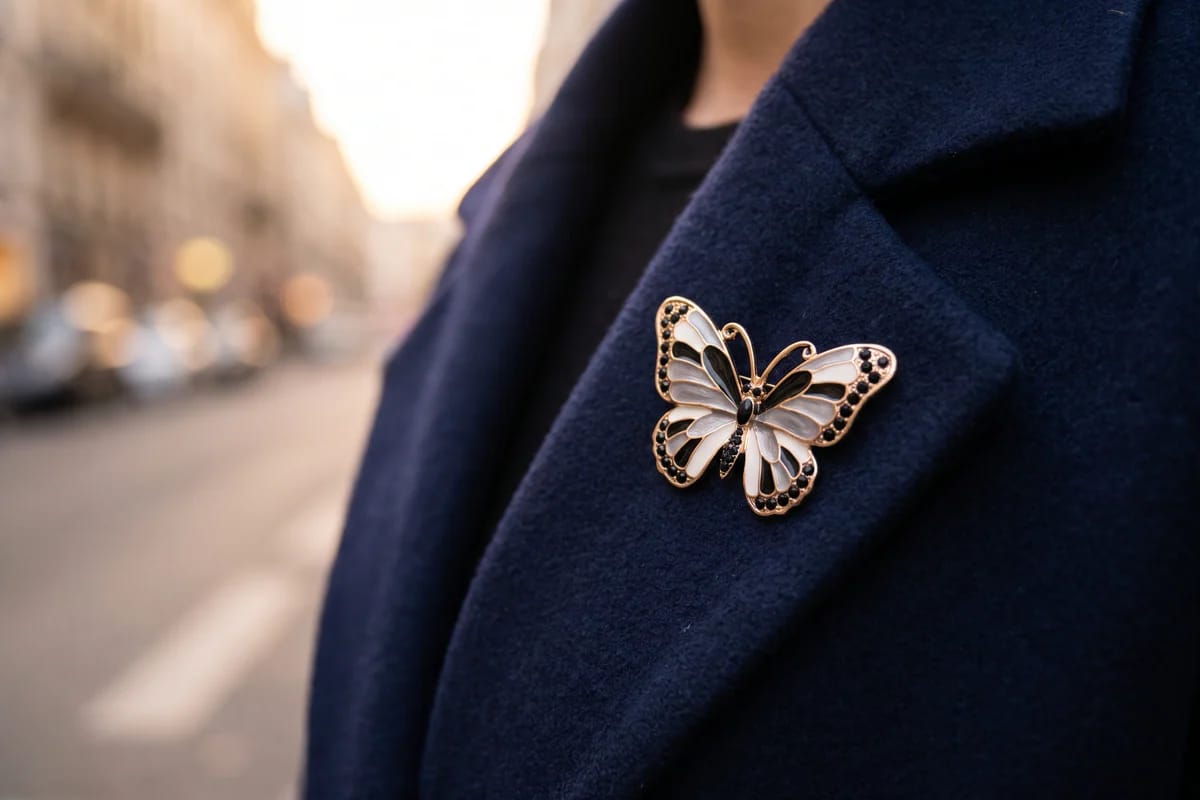
A soft dry cloth, no water, stored flat and dry: the simple way to keep costume jewellery bright, and what really harms steel, rhinestones, enamel and resin.
The rain has followed you all the way home. You hang up your wool coat, still damp at the shoulders, and notice the brooch on the lapel: a few drops sit on the enamel, a fingerprint clouds the little stones. Your first instinct is to rinse it under the tap. That's exactly what not to do.
To learn how to clean costume jewellery such as our brooches, the safest method is also the simplest: a soft, dry cloth, no water, no perfume or household cleaner, then store it flat and dry. That's what our brooches' product pages ask for, whether the design is enamelled, made of resin or set with rhinestones. If the rain has caught your brooch, the same cloth does the job: dab it dry, never soak it. Below, we explain why these simple steps work, material by material, and why a magnetic brooch adds a rule of its own.
How to clean costume jewellery in four steps
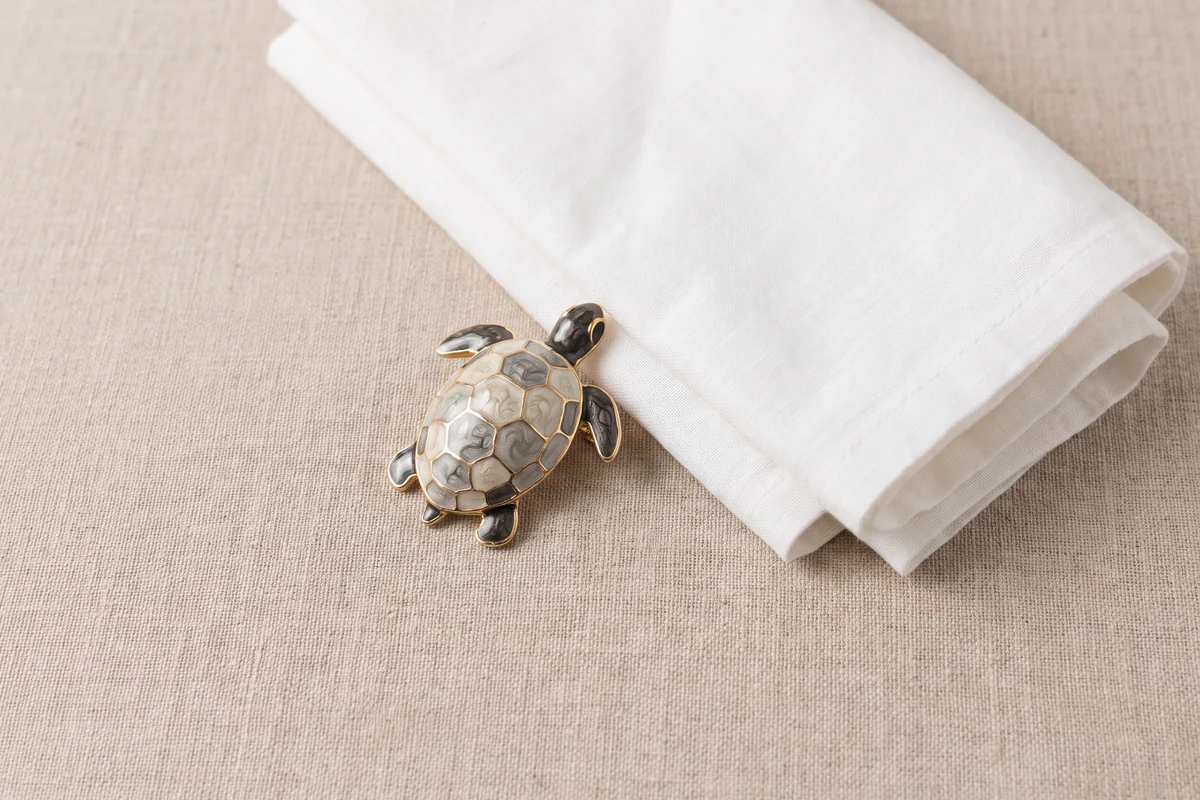
You don't need a cupboard full of products. We compared the care instructions of three of our brooches, an enamelled turtle, a rhinestone butterfly and a resin portrait, with those of our women's brooch collection. The three product pages share one care method: wipe with a soft, dry cloth, avoid water and household products, handle the solid part, then store the brooch flat and dry.
- Wipe: after each wear, run a clean, soft, dry cloth over the decorated side.
- Keep away: no water, perfume, cream, cosmetics or household products on the piece.
- Hold the body: pick the design up by its solid part (a turtle's shell, a butterfly's body) rather than by an antenna or a tip.
- Store: flat, dry, with nothing heavy resting on the decoration.
One habit follows naturally: put on your perfume before your brooch, never after. These steps come from our brooches' product pages; for any other piece, go by the care advice given for its own material and finish.
Costume jewellery: many materials under one name
Good care starts with knowing what a piece is made of. The English-language Wikipedia entry on costume jewellery describes decorative pieces made ‘to complement a particular outfit or garment’, at lower cost than fine jewellery. Among the materials, it lists plated brass, plastic, acrylic, leather and wood, with rhinestones among the simulated stones.
That mix is the key to caring for it. The three brooches compared in this guide combine a steel structure with enamel, resin or rhinestones. Each material reacts in its own way to water, rubbing or chemicals. So the right routine is the one that suits the most delicate part of the piece, not the toughest.
Steel is not always stainless: a lesson from Sheffield
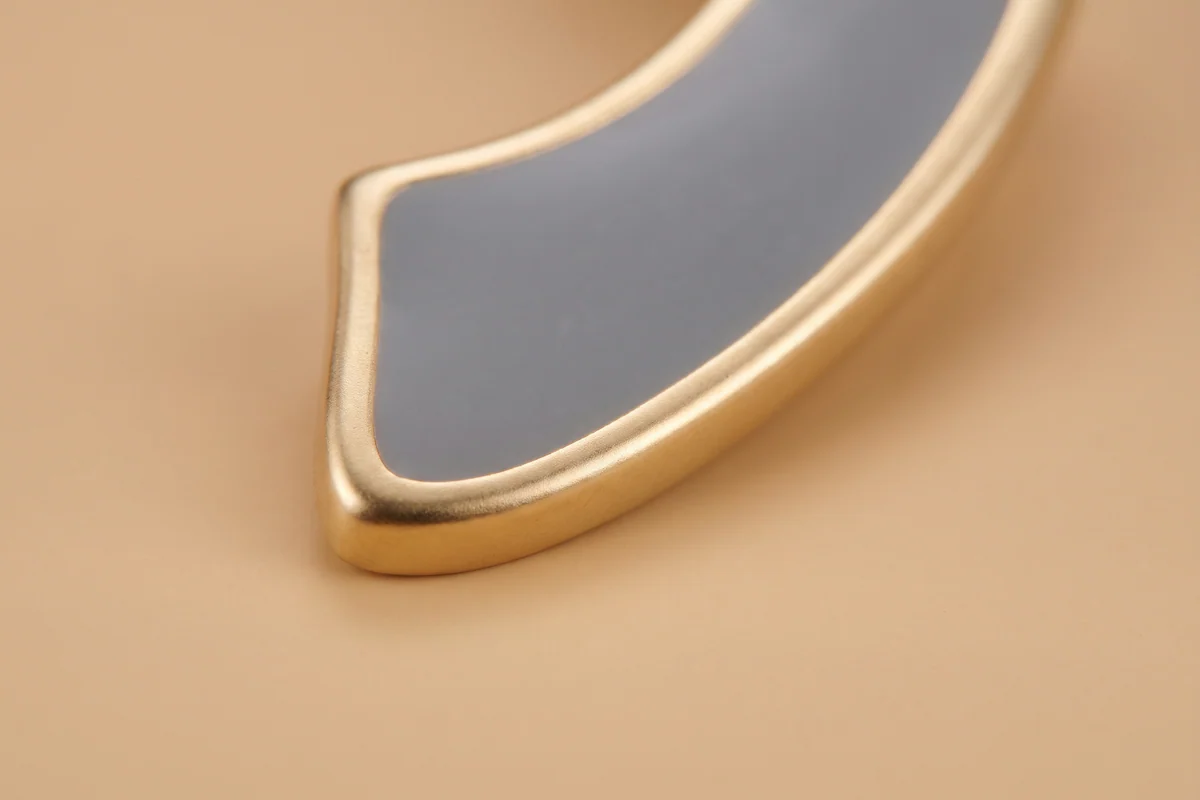
The three brooches examined here have a steel structure with a gold-coloured or silver-coloured finish, and you'll find the same colours across our range, from gold-tone designs to silver-coloured pieces. Steel has a reputation for not rusting. It owes that reputation to one particular family: stainless steel. Yet ‘steel’ and ‘stainless steel’ are not the same thing, and our product pages say ‘steel’, with no mention of stainless.
A Sheffield laboratory, 1913
The story of that family is a British one. According to the English-language Wikipedia article on stainless steel, Harry Brearley, of the Brown-Firth research laboratory in Sheffield, discovered and then industrialised a martensitic stainless steel in 1913. He first called his alloy ‘rustless steel’. The name still sums up what everyone expects of it.
The invisible film that does the work
The same article explains where that resistance comes from: a chromium content ‘of 10.5% or more’. The chromium reacts with the oxygen in the air and forms a microscopically thin film of chromium oxide on the surface. This passive film protects the metal and ‘can self-heal when exposed to oxygen’. It is this film, not a coating, that keeps rust from settling in.
Why salt is the quiet enemy
That protection has its limits. The article notes that localised attacks on stainless steel ‘are most common in the presence of chloride ions’. Ordinary table salt is a chloride: sodium chloride. If even stainless steel can be attacked by chlorides, a brooch whose product page simply says ‘steel’ is better kept well away from salt and from the cleaning sprays under the sink.
But a piece of costume jewellery is rarely metal alone. Its colours and decoration usually need more care than its frame.
Paste, strass, rhinestone: sparkle dressed up as a gem

In Britain, the sparkling stones of costume jewellery go by more than one name. The English-language Wikipedia article on rhinestones gives two of them, rhinestone and paste, and notes that many European languages simply say strass. Whatever you call them, they imitate gemstones, and since the 19th century they have been made from crystal glass or from polymers such as acrylic.
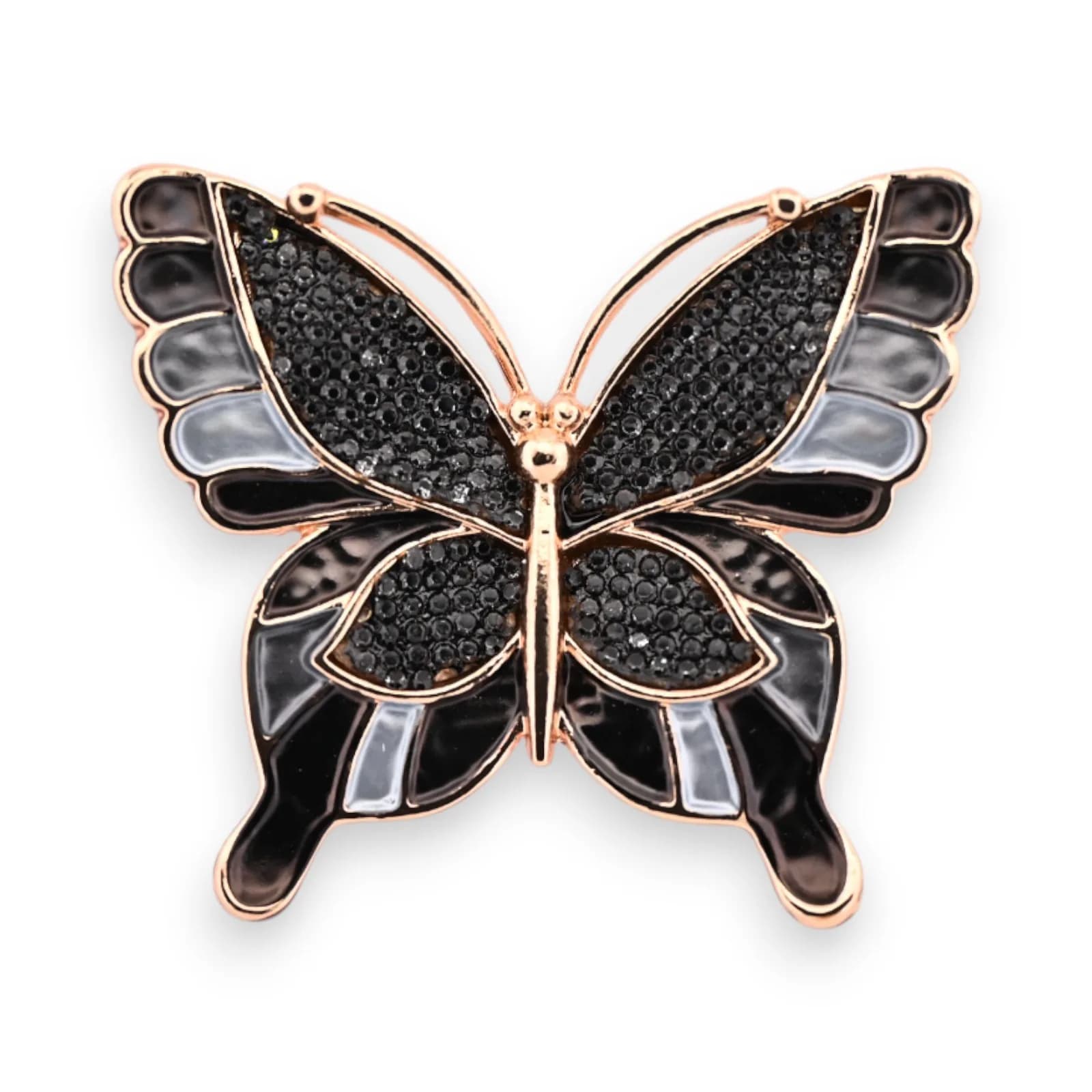
Whether made from glass or acrylic, the small surfaces catch the light the moment you move and can show fingerprints or traces of cream, which dull their shine. For our rhinestone butterfly, the product page recommends a clean, soft, dry cloth. It also asks you not to put anything heavy on the rhinestones, the antennae or the wing tips.
Enamel, resin and glitter: always dry
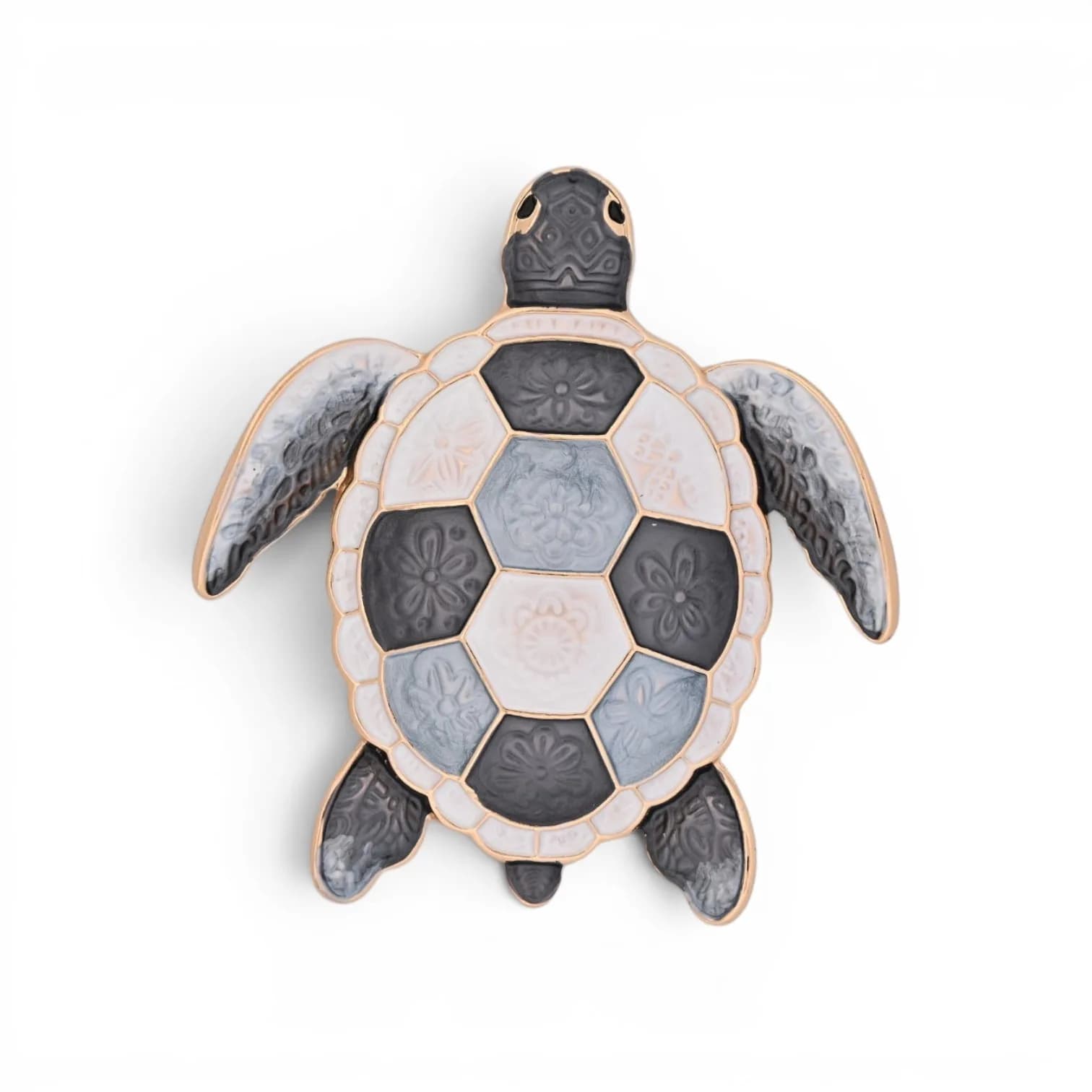
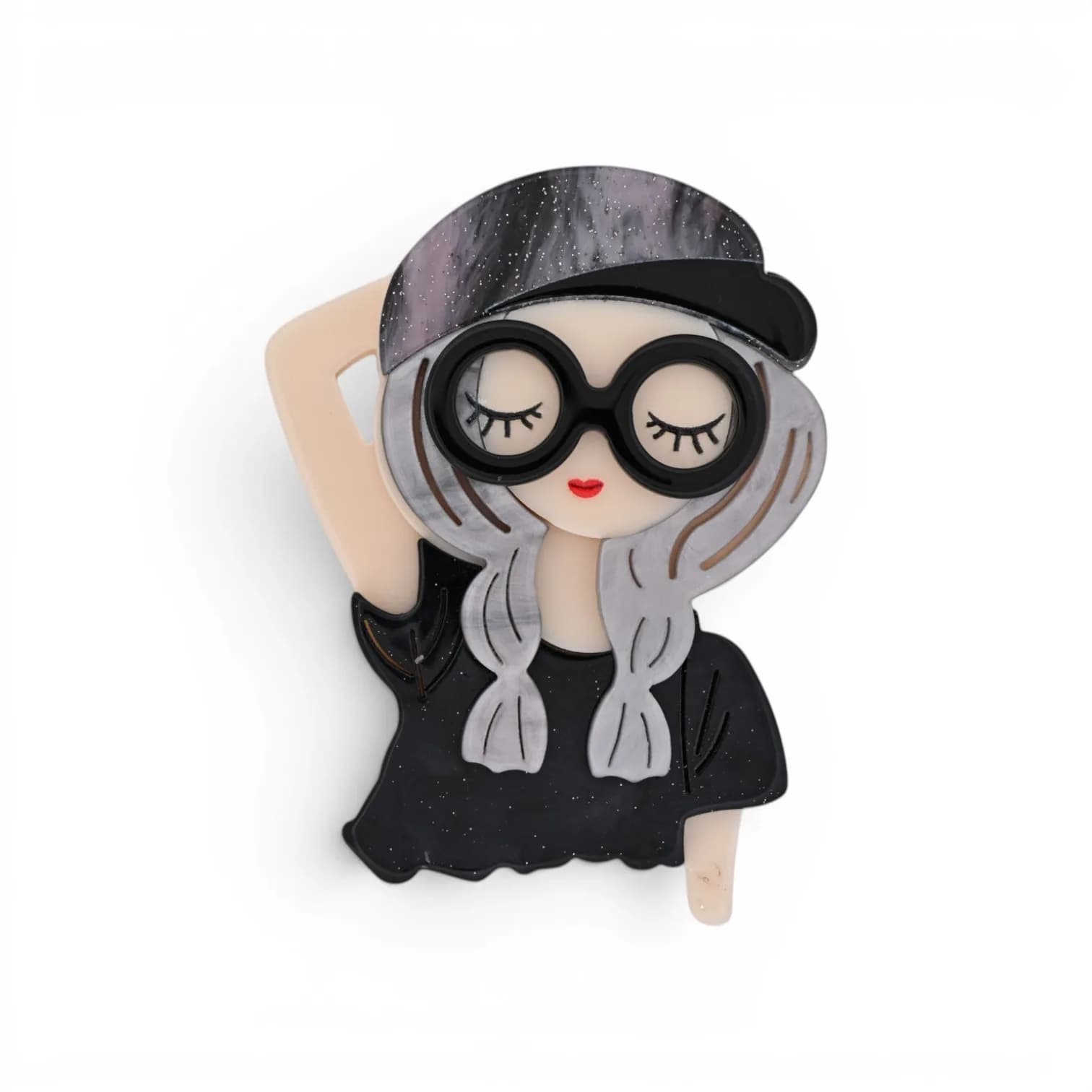
Our turtle is enamelled in light grey, off-white and charcoal. The portrait of a woman in a grey cap is made of resin. For both materials, our product pages give the same instruction: wipe with a soft, dry cloth, and keep water, perfume, cosmetics and household products away.
A glitter finish, like the portrait's cap, is cleaned the same way. No brush, no soaking: one pass of the cloth, and that's it.
Vinegar, bicarb, toothpaste: old wives' tales?
Look up how to clean costume jewellery and the same home remedies keep cropping up: soak your pieces in white vinegar or in water with bicarbonate of soda, or rub them with toothpaste. They are passed from site to site, often billed as miracle fixes.
Time to sort fact from habit:
- what is documented: chlorides attack even stainless steel, and our product pages rule out water and household products on enamel, resin and rhinestones;
- what is habit: the idea that a soak ‘revives’ any piece of costume jewellery. None of our sources confirms it for a piece with coloured decoration.
On a piece that mixes metal, colour and glass, the careful rule is also the simplest: keep it dry.
A magnetic brooch means two pieces to look after
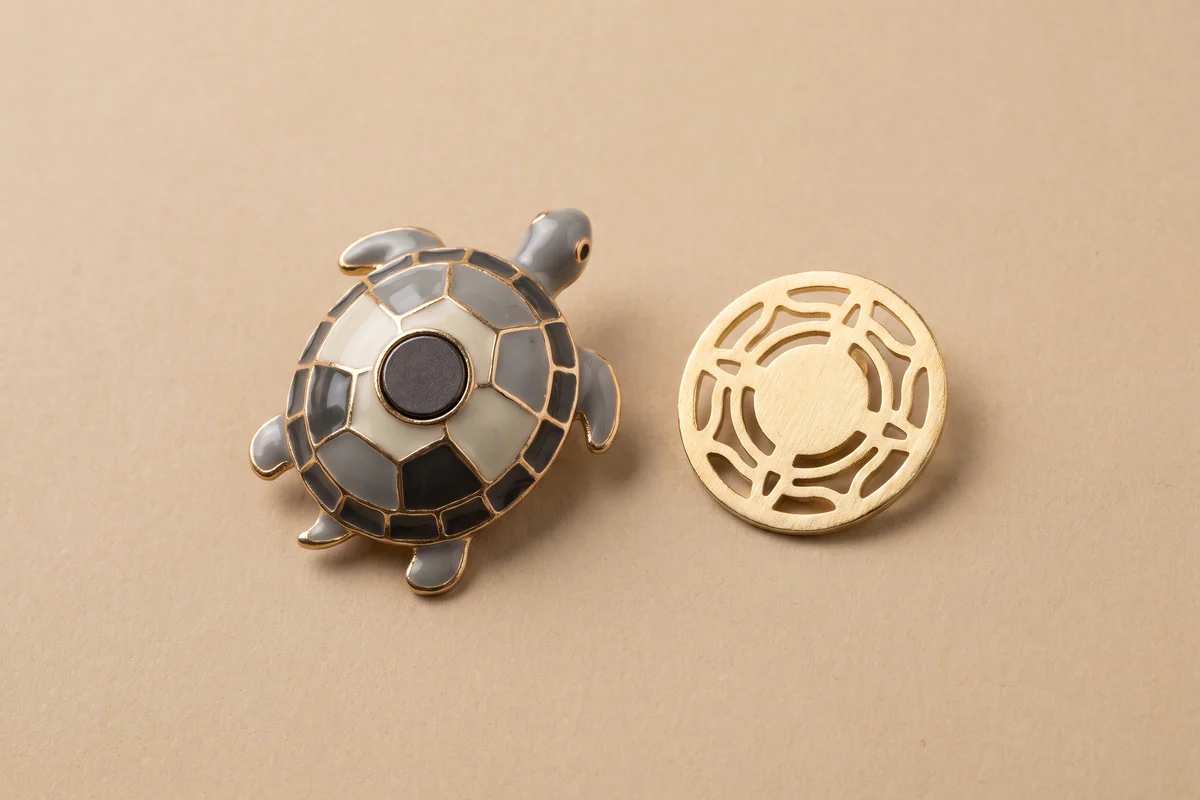
A brooch with a magnetic fastening isn't pinned on. A disc fixed to the back of the design attracts a separate plate placed on the other side of the fabric. This little system has its own rules:
- keep the design and its plate together, in their packaging, so the plate never goes missing;
- store them away from bank cards and anything sensitive to magnets;
- before wearing the brooch again, check that the contact surfaces are clean, dry and properly lined up;
- separate the two parts gently, without jerking and without pulling on the decoration.
The system has one advantage for delicate fabrics: there is no pin, so no hole in the cloth. You'll find every model of this kind among our magnetic brooches. And to wear one on a silk square, see how to wear a scarf with a brooch.
Where your brooches live between outings
A piece of jewellery spends far more time in a drawer than on a jacket, so storage matters as much as cleaning. A few rules are enough:
- flat, as our product pages recommend, so nothing presses on a tip or a raised detail;
- dry, away from perfume bottles and jars of cream;
- each piece in its own place, with nothing heavy on top, and magnetic pieces always with their plate.
A compartment box, a fabric-lined tray or simply the original box will do nicely. What matters is that your pieces don't pile up on one another.
Giving a brooch, with its care card
A gift lasts longer when it comes with its instructions. Slip a little card in with the gift, with three short tips: ‘dry cloth, no water, store flat’. It's a small touch that shows you've thought of everything. Our brooches are packaged to be given, and that packaging later doubles as a ready-made storage box.
To find the right design, our guide to choosing a brooch as a gift helps you start from the person rather than the object. You can then browse our selection of brooches for women. Three models bring these materials together: the magnetic turtle brooch in gold-coloured steel with grey-white enamel; the magnetic black and gold-coloured rhinestone butterfly brooch; and the magnetic woman portrait brooch in resin, with a grey glitter cap and black glasses. And to see everything else, explore all our costume brooches.
Costume jewellery care at a glance
The safest routine for the three brooches compared here is to keep every part dry, clean it gently and prevent pressure during storage. The table summarises the instructions by component.
| Part of the brooch | What our product pages say | Why |
|---|---|---|
| Metal (steel) | Soft, dry cloth, no household products | Even stainless steel is attacked by chlorides such as salt |
| Rhinestones | Wipe gently with a dry cloth, with nothing heavy placed on top | Their surfaces can retain fingerprints and traces of cream |
| Enamel | Dry, no water or perfume | As stated on our product pages |
| Resin, glitter | Dry, no cosmetics, no soaking | Care advice on our product pages |
| Magnet and plate | Stored together, away from bank cards, contact surfaces clean and dry | As stated on our product pages |
| Storage | Flat, dry, each piece in its own place | Nothing presses on tips or raised details |
Costume jewellery needs no special products and no complicated ritual. Just a cloth, a little attention, and a box where it waits quietly for the next outing, rain or shine.
Frequently asked questions
What was stainless steel first developed for?▾
Gun barrels. In 1913, Harry Brearley was looking for a corrosion-resistant alloy for gun barrels when he discovered the steel he first called ‘rustless’, according to the English-language Wikipedia.
Who made costume jewellery fashionable?▾
Coco Chanel greatly popularised faux jewellery, and Elsa Schiaparelli brought surrealist influences into its design, according to the English-language Wikipedia.
Why are rhinestones called rhinestones?▾
The first ones were rock crystals gathered from the river Rhine, hence the name, although some also came from the Alps, where the Rhine rises.
Who was Strass, the man behind the word?▾
Georg Friedrich Strass, an Alsatian jeweller. He made imitation stones by coating the underside of lead glass with metal powder, which is why many European languages call rhinestones strass.
How can I tell whether a brooch is magnetic or pinned?▾
Check the product page: each one states the type of fastening, magnet or classic pin.