
How to wear a scarf with a brooch: start with the fold
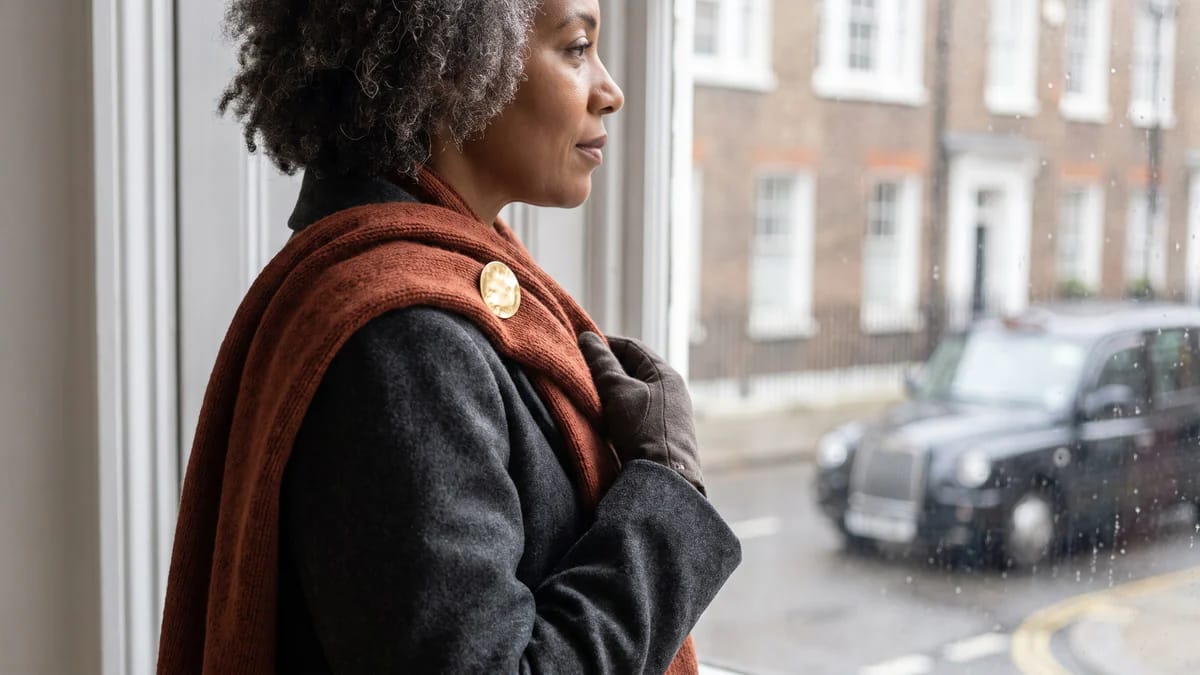
A practical EN-GB guide to placing a brooch on a scarf, checking the fabric and choosing the fastening without forcing the fold.
To wear a scarf with a brooch, arrange the scarf first. Then look for a spot where the fabric already sits in a soft fold or where two layers meet. A brooch can finish the shape you have made; it should not be asked to carry the full weight of a loose scarf. That one habit makes the result look calmer and gives you a sensible place to check the fastening.
This guide is for a scarf you want to wear, not a general lesson in tying every kind of scarf. The useful question is simpler: do you want the brooch to be a visible accent, to keep two layers together, or to stop one end from slipping? Once you know that, the placement becomes much easier to choose.
Start with the job you need the brooch to do
Put the scarf on as you normally would. Stand in front of a mirror, move your shoulders and see which part changes first. If one end keeps falling forward, you may only need a small point of support near the shoulder. If the scarf looks flat, the brooch may simply add a focal point. Those are different jobs, and they do not need the same position.
For a decorative finish, choose a flat, visible area where the brooch will not disappear under a fold. For a little support, bring two parts of the scarf together first, then place the fastening through or around those layers according to the model. Do not pull the scarf taut to make a brooch do more than its fastening and the fabric can comfortably manage.
A short scarf at the neck, a square silk scarf and a long winter scarf all behave differently. There is no single position that works on every material. What matters is that the scarf is already comfortable before the brooch goes on. If you have to keep adjusting the scarf to make the brooch look right, change the fold rather than forcing the placement.
Three placements that are easy to test
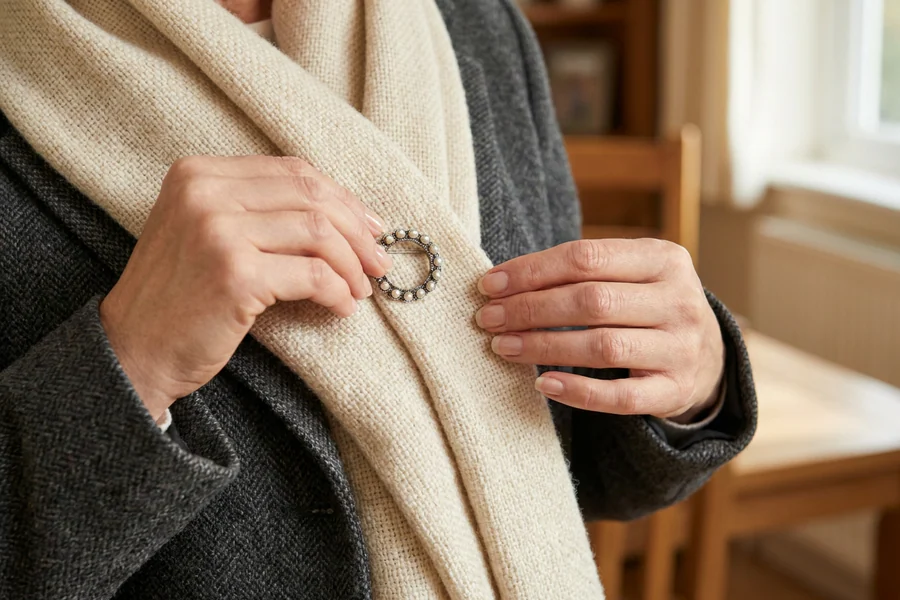
1. At the shoulder, on a loose drape
Lay a long scarf around your neck and let one side fall slightly longer. Bring the longer side across your chest without tightening it. Where it meets the shoulder, you will often find two light layers of fabric. That is a practical place for a brooch because the fabric has already chosen its direction. It also keeps the motif in view when you are wearing a coat or a plain knit.
This placement works especially well when the scarf is part of the outfit rather than a heavy outer layer. Keep the brooch a little away from a thick seam, a bulky tassel or the very edge. The aim is to support the drape, not to trap a large amount of material in one place.
2. Beside a relaxed neck fold
With a square scarf folded into a triangle or a narrow band, leave the fold soft around the neck. Instead of fastening in the centre under the chin, move the brooch slightly to one side. This gives the face some space and makes the scarf feel less formal. A smaller motif can sit near the collarbone; a larger one needs a little breathing room from a necklace, lapel or shirt buttons.
Check the position while looking down as well as straight ahead. If the brooch pulls the scarf into your throat when you lean forward, loosen the fold and move it outward. Comfort is a better guide than copying a picture.
3. Where two scarf ends cross
For a longer scarf, cross the ends gently at the front, then bring them together below the collarbone. A brooch can mark that meeting point if the layers are not too thick. The result is tidy without looking tightly tied. It is useful on a fine wool scarf, a pashmina or a soft woven wrap when you want the ends to stay closer to the body.
Keep the crossing low enough that it moves with you. If it sits very high, the fabric can bunch under the chin. If it sits too low, the weight of the ends may pull at the fastening. Start with a loose cross, take a few steps, then decide whether that point is really stable.
Check the fabric before choosing the fastening
The same brooch can look secure on one scarf and feel unreliable on another. That is not a fault in the outfit. It is simply the difference between a fine silk layer, a springy knit and a thick brushed wool. Look at the actual point where you plan to wear it, rather than judging only by the scarf as a whole.
| Scarf situation | A sensible starting point | What to watch for |
|---|---|---|
| Fine silk or a light square scarf | A small, flat fold with little tension | Avoid catching the very edge or pulling the fabric tight. |
| Soft woven wool or pashmina | Two layers where the ends naturally cross | Test whether the weight of the ends changes the position. |
| Chunky knit or very thick scarf | A thinner fold, or a decorative placement on the coat instead | Too much depth can reduce how well a fastening reaches through. |
| Slippery satin-style fabric | A relaxed side fold with no strain | Move around before leaving, because smooth fabric can shift. |
For every material, make a small real-world check: wear the scarf, place the brooch, turn your head, lift your bag and take a few steps. A fastening that looks fine on a table may sit differently once the scarf is moving. That check is more useful than a promise that any brooch will hold on any fabric.
Magnetic brooch or pin brooch: use the model as intended
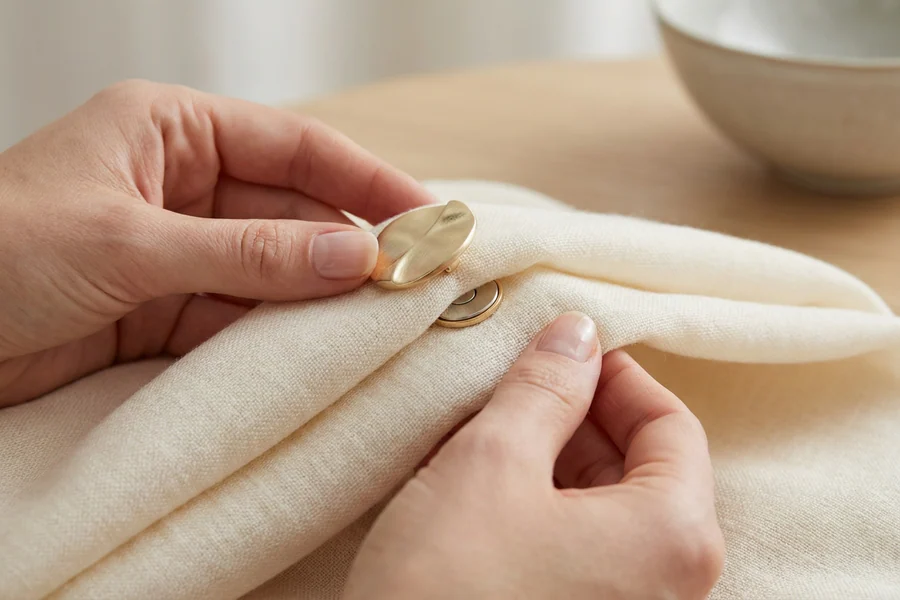
A magnetic brooch has a decorative front and a separate magnetic back. It can be useful on a scarf because it does not pierce the cloth. On this site, the magnetic brooch collection is a good place to compare motifs, but always read the information for the exact model and test it where you plan to wear it. A magnet does not turn every thick or heavily layered scarf into a suitable support.
A traditional pin brooch passes through the fabric and is generally better suited to a stable, denser support when you are happy for the fabric to be pierced. If that is the style you prefer, see the pin brooch collection. On a delicate scarf, do not assume that a pin is the stronger answer simply because the scarf feels slippery. The visible result and the fabric itself both matter.
It also helps to separate three things that are often called the same name: a brooch, a scarf ring and a clip. A scarf ring shapes the fabric by passing it through an opening. A clip grips the material. A brooch is primarily an accessory with its own fastening. Choose the object for its job rather than expecting one piece to replace all three.
Choose a motif after the placement works
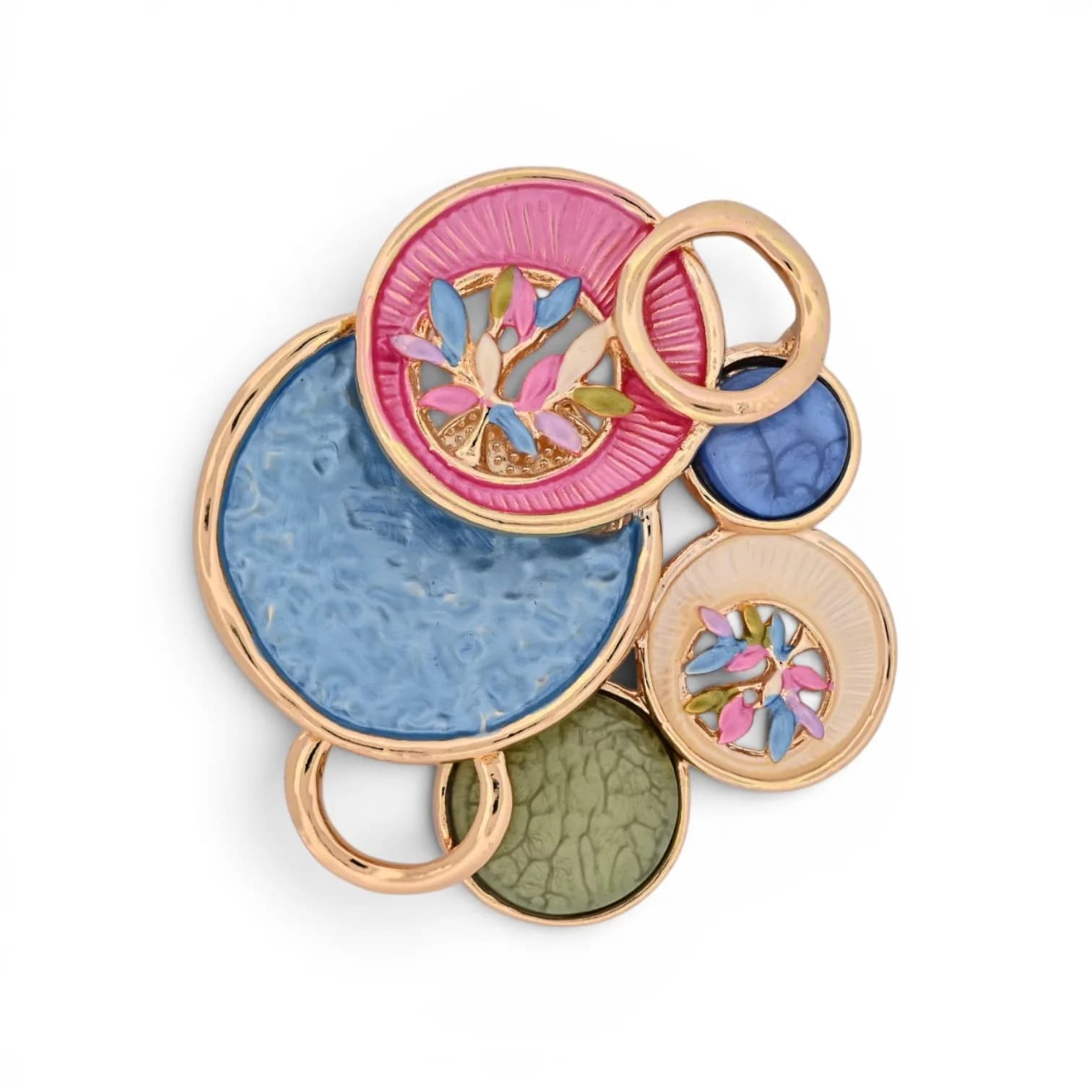
The motif is the enjoyable part, but it is easier to choose after you know where it will sit. On a plain navy, charcoal or camel scarf, an animal or flower gives the eye a clear stopping point. On a printed scarf, a smaller, simpler shape often reads better than a busy design.
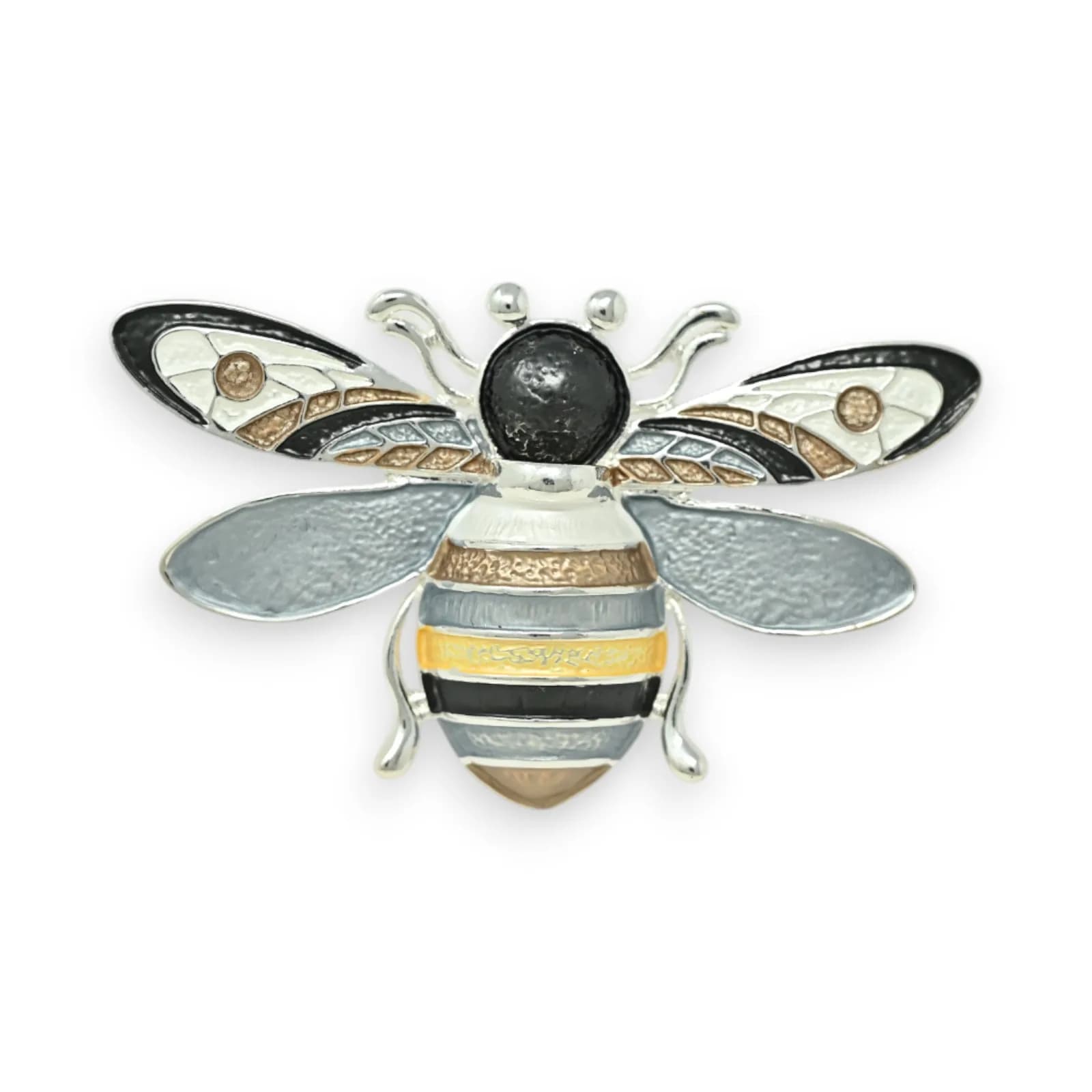
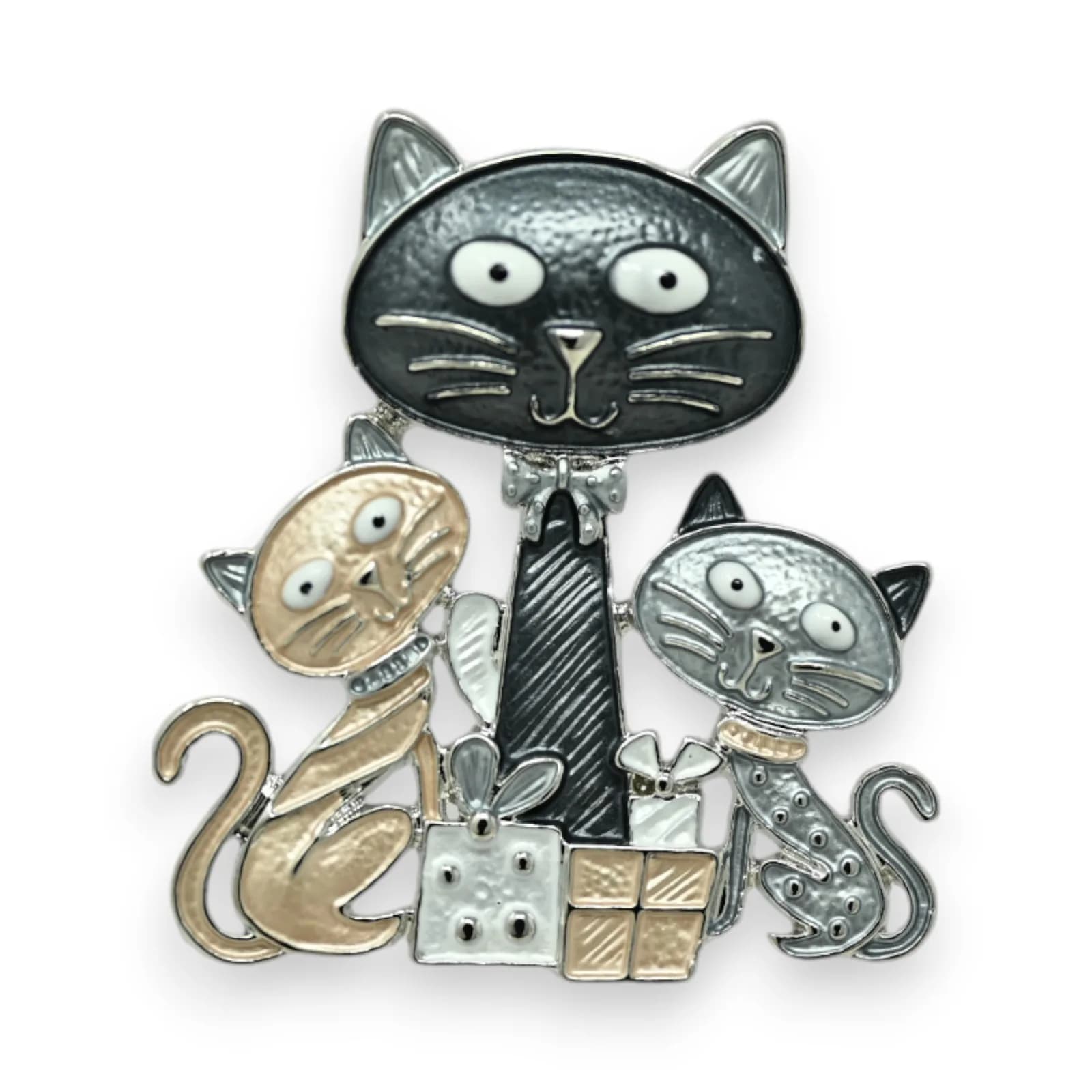
For a softer look, browse floral brooch designs. A floral shape can echo a colour already present in the scarf without matching it exactly. If you prefer something more playful, an animal-inspired piece gives you a recognisable detail on a plain fold. You can also begin from the wider brooch collection for women and narrow the choice by colour, size and fastening.
- Choose one clear focal point when the scarf has a print.
- Let a simple scarf carry a more detailed motif.
- Keep metal tones close when your coat buttons or jewellery are already noticeable.
One useful rule is to make the scale feel deliberate. A small brooch near the collarbone looks neat on a narrow scarf. A larger one can work on the shoulder of a broad wrap, where it has enough fabric around it. When the motif seems to float or disappear, it is usually a scale issue, not a reason to add more accessories.
A five-minute check before you leave
- Put on the scarf and outer layer you will actually wear together.
- Make the fold or cross first, without the brooch.
- Place the brooch on the exact layers you chose.
- Look in a mirror, then turn, sit and lift one arm.
- If it moves, reduce the amount of fabric or choose another spot. Do not keep tightening the scarf.
This is also the moment to check what the brooch touches. A rough zip, a bag strap or the collar of a coat can keep nudging it out of position. Moving it just a few centimetres often solves the problem. Your scarf should still feel like a comfortable part of the outfit, not a piece of clothing that has been pinned into place.
Take it off without tugging the scarf
At the end of the day, hold the fastening rather than pulling at the fabric. With a magnetic model, support the decorative front in one hand and separate the back carefully with the other. With a pin, open the clasp fully before you draw it out. This small step protects the fold you have made and is kinder to a fine weave.
Keep magnetic brooches away from bank cards and sensitive electronic devices. If you have a pacemaker or another implanted cardiac device, do not treat a fashion accessory as generic advice: follow the instructions from your own clinical team. Great Ormond Street Hospital notes that strong magnets can affect pacemakers and advises precautions around magnetic fields, so this is a situation for medical guidance from a UK hospital, not a styling test.
Keep the scarf comfortable, then add the detail
A scarf and brooch work well together when the brooch follows a fold that already feels right. Start with the scarf, decide whether you need decoration or a little support, then test the fabric and fastening in the exact place you will wear it. A comfortable fold comes first; the motif is there to make it your own. For more ways to choose a piece that suits your wardrobe, return to the Ma Broche collection.
Frequently asked questions
Can a magnetic brooch hold a scarf in place?▾
It depends on the exact model, the fabric and the number of layers. Arrange the scarf first, then test the brooch at the point where you plan to wear it before going out.
Where should I place a brooch on a scarf?▾
Choose a flat or gently folded spot where two layers already meet, away from a bulky seam or heavy tassel. The brooch should support the shape of the scarf, not carry all of its weight.
Should I use a pin brooch on a thick scarf?▾
Not automatically. A pin can suit some stable, dense fabrics, but it pierces the material. Choose according to the scarf, the fastening and the look you want, then check the result while wearing it.
How do I remove a brooch from a scarf without pulling the fabric?▾
Hold the fastening rather than the scarf. Separate the two parts of a magnetic model carefully, or open a pin clasp fully before easing it out of the fabric.