
Heart Symbolism: Why the Heart Means Love
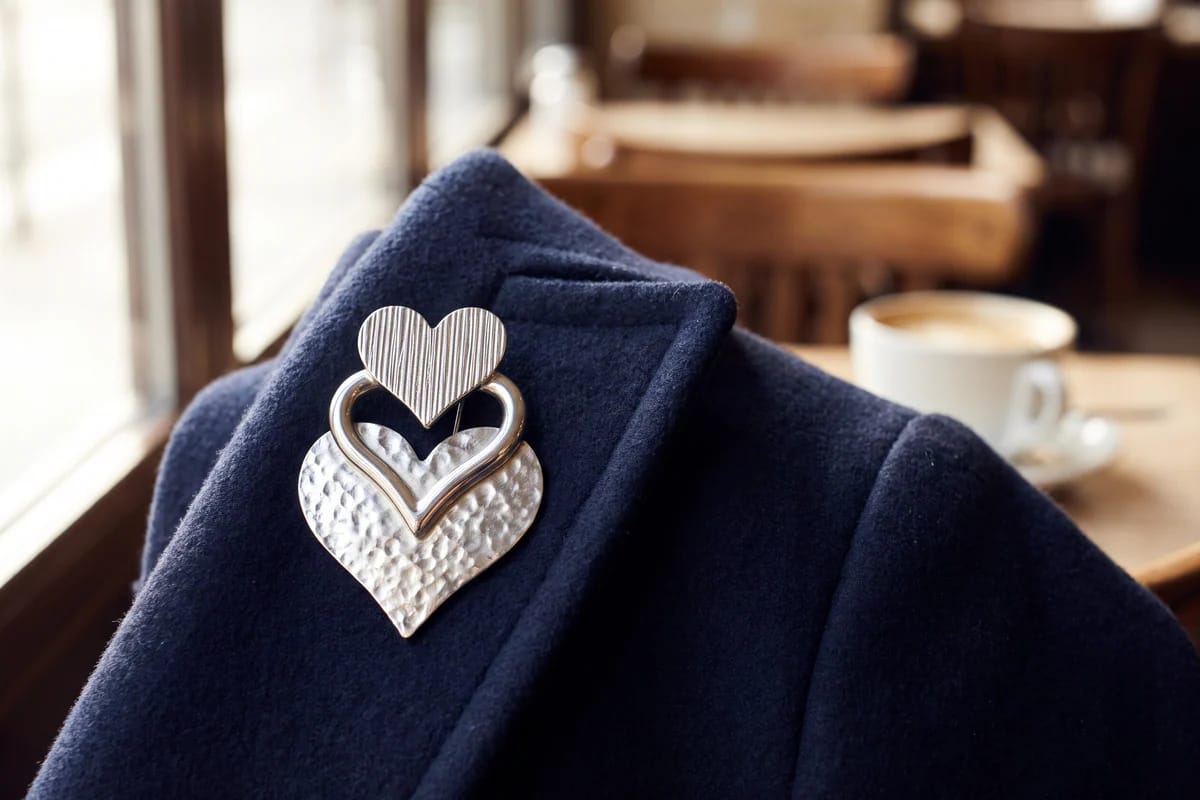
Love, courage, conscience, memory: what the heart means, where its two-lobed shape comes from, what its colours say and how to give one without being misread.
Somewhere in Britain this week, a child is learning a poem by heart. Not by brain, not by head: by heart. The phrase sounds perfectly ordinary, and yet it carries a very old idea, one that also explains the little red shape at the end of your text messages, the hearts in a pack of cards and the I ♥ NY logo.
Heart symbolism comes down to one belief: for centuries, the heart was seen as the centre of our inner life. That is why it stands for love, but also for courage, conscience and memory. Its drawn shape, two rounded lobes above a point, is another story: the earliest known picture of a heart as a sign of romantic love dates from the 1250s, and nobody knows for sure where the outline comes from. Here is how a part of the body became a symbol of love.
What does a heart symbolise?
Depending on the period and the context, the same little shape can say quite different things. These are the meanings that history and the English language back up:
- love and affection;
- friendship and support, when you send a heart to someone going through a hard time;
- courage, a word built on the Latin for heart;
- conscience: the ancient Egyptians weighed the heart on a pair of scales;
- memory, as in everything you know by heart;
- devotion, in the religious image of the Sacred Heart.
Behind all of them sits the same old conviction: the heart was where people felt, and even where they thought.
When people thought with their hearts
The English-language Wikipedia article on the heart symbol puts it simply: the heart ‘denotes the center of emotion, including affection and love’. Long before the first Valentine’s card, that idea was already shaping how people pictured the end of a life.
In Egypt, a heart on the scales
The ancient Egyptians gave us one of the most striking scenes in this story. In the Book of the Dead, the dead person stands before Osiris and the divine judges. Their heart, the seat of their conscience, is placed on one side of a pair of scales. On the other side lies the feather of Maat, the goddess of truth and justice.
If the heart is no heavier than the feather, the way to the afterlife is open. If it is heavier, weighed down by wrongdoing, a creature waiting beside the scales swallows it: Ammit, the Devourer, part crocodile, part lion, part hippopotamus. Spells inscribed on scarabs were there to stop the heart from testifying against its owner. Here the heart is not a sign of love at all: it is the record of a whole life, good or bad.
Courage and ‘by heart’: words that remember
English still carries traces of this belief. The word ‘courage’ came into English from the Old French corage, which goes back, through Latin, to cor, meaning heart. So when you tell someone to take courage, you are, without realising it, telling them to take heart. Giving a heart can mean exactly that: be brave.
Then there is ‘by heart’, already found in Middle English as by herte. Wiktionary suggests it may be a loan translation of the French par cœur, and it reflects an older view of the heart, rather than the brain, as the place where memory lives. The poem that child is reciting is stored, in a sense, where everything that matters is kept.
Ivy leaf or lost seed: where the shape comes from
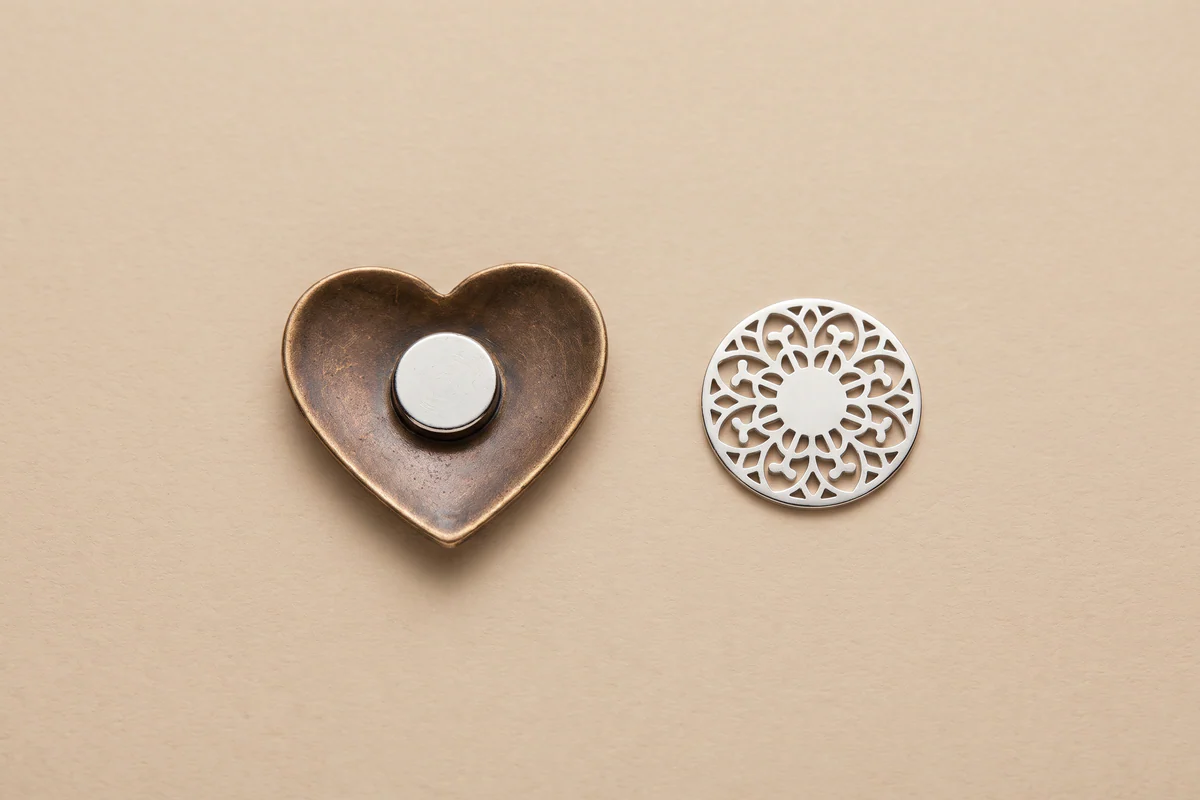
The heart we draw, with two curves at the top and a point at the bottom, looks nothing like the organ. Where it comes from is still uncertain, and historians put forward two main theories.
Two theories, no certainty
The first is botanical: in medieval imagery, the shape is often an ivy leaf. The second is more surprising. It links the outline to the seed of silphium, a plant used in ancient times as a contraceptive and long since lost. Nobody knows who drew the first heart, or why.
A love token from the 1250s
How the shape met love is easier to trace. The earliest known picture of a heart standing for romantic love appears in the 1250s, in a manuscript of the Roman de la poire, a French poem by ‘a certain Thibaut’. In the early 14th century, the scalloped outline settles into the two-lobed heart we know today. Seven centuries later, it's still the one you scribble on a birthday card.
The hearts in your pack of cards
Pick up a pack of cards in a pub or at the family table and you're holding a small piece of French history.
The first European cards carried no hearts at all. The Latin suits (coins, clubs, cups and swords) are the oldest system in Europe, the one you still see on Spanish packs. German card makers settled on hearts, bells, leaves and acorns. Around 1480, the French drew their own four suits from the German ones: trèfles, carreaux, cœurs and piques, known in English as clubs, diamonds, hearts and spades. That French system went on to become the standard in English-speaking countries.
Ever since, the red heart has been one of the four suits, and a major suit in bridge. Every time you lead a heart, you are playing with a pattern that took shape at the end of the 15th century.
A heart on fire: the Sacred Heart
Around two centuries later, the heart found a very different home: prayer. In 17th-century France, the priest John Eudes wrote liturgical prayers for the Sacred Heart and promoted a feast in its honour. Then, between 1673 and 1675, in the Burgundian village of Paray-le-Monial, Margaret Mary Alacoque said she had received revelations from Christ.
The image that spread from there is hard to forget: a heart in flames, wrapped in a crown of thorns and topped with a cross. The heart still speaks of love here, but of a self-giving love.
I ♥ NY: when the heart became a word
In the 20th century, the heart stopped being only a picture and started standing in for a verb. In 1977, the I ♥ NY campaign, created to promote tourism in New York State, introduced a logo drawn by the graphic designer Milton Glaser. It has since been printed on countless T-shirts, and the red heart has become a way of writing ‘love’.
Hearts on your phone
Emoji took the idea further. Researchers at the University of Michigan studied messages typed on the Kika emoji keyboard by users in 212 countries and regions. Their finding, reported by Futurity: the French, more than anyone, reach for icons linked to hearts. A word of caution: the data came from a single keyboard app, so it does not speak for every phone user.
What each heart colour says
With emoji, the colour of a heart has taken on a meaning of its own. These meanings, gathered by the French telecoms operator Orange in an article on heart emoji, are not rules, more like shared habits:
| Colour | What it most often suggests |
|---|---|
| Red | Love, affection, strong support |
| Pink | Tenderness, gentleness, friendship |
| Blue | Trust, calm, support |
| Yellow | Good humour, friendship, joy |
| White | Tenderness, peace, loyalty |
| Black | A rock-and-roll take on love, dark humour, sometimes mourning |
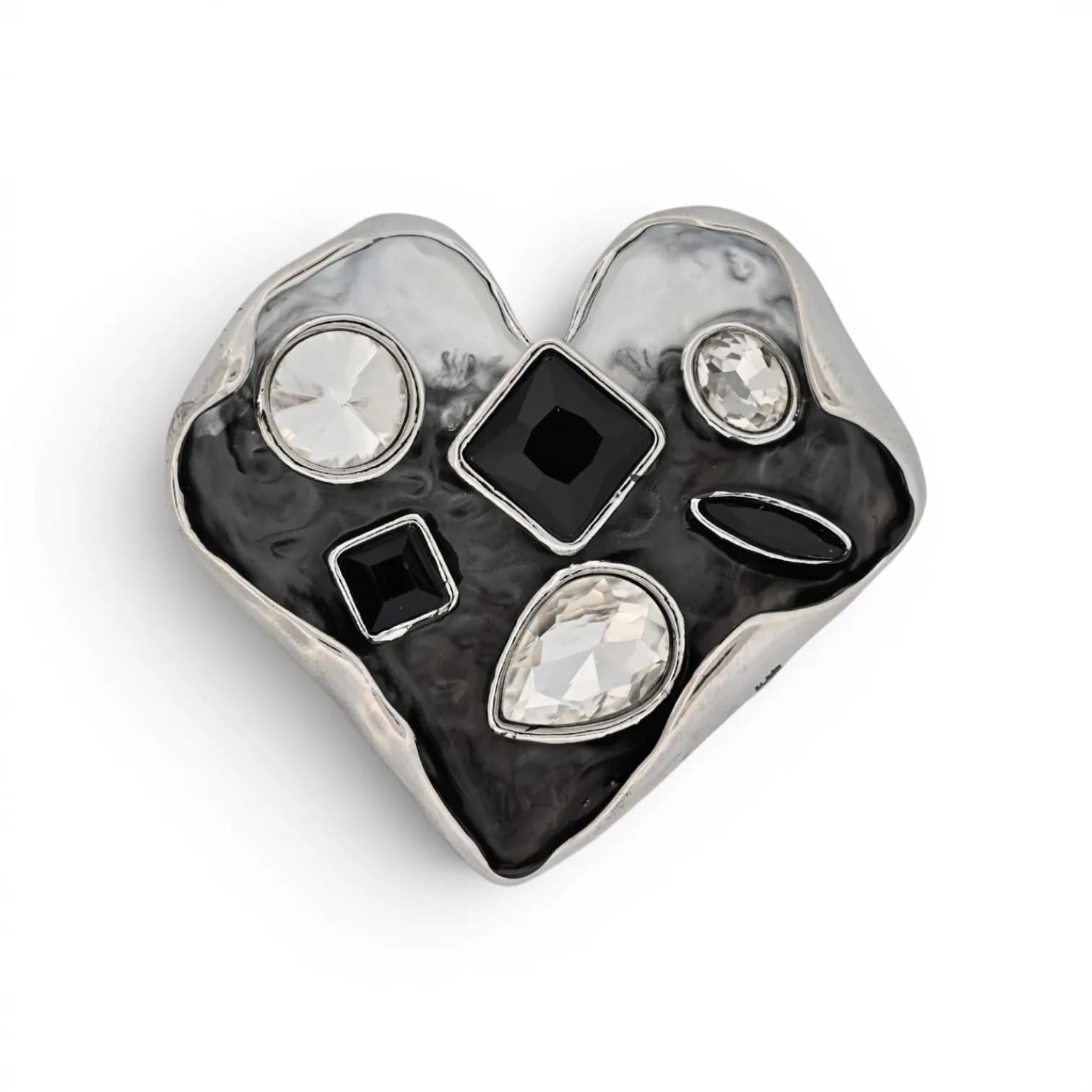
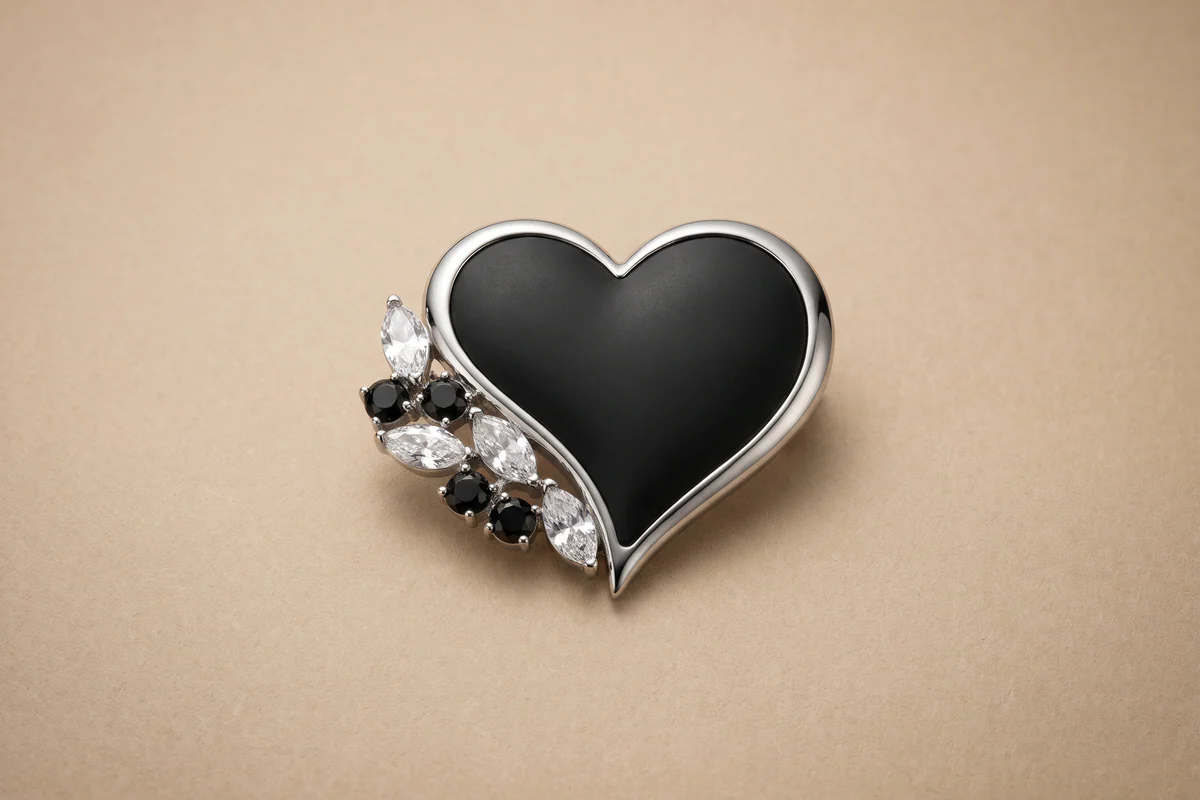
Nothing stops you borrowing these codes for a piece of jewellery. A pale pink heart says tenderness rather than passion, and a blue one leans towards trust. A black heart, like our design set with faceted stones, has a graphic, slightly rock-and-roll edge.
A heart you can wear
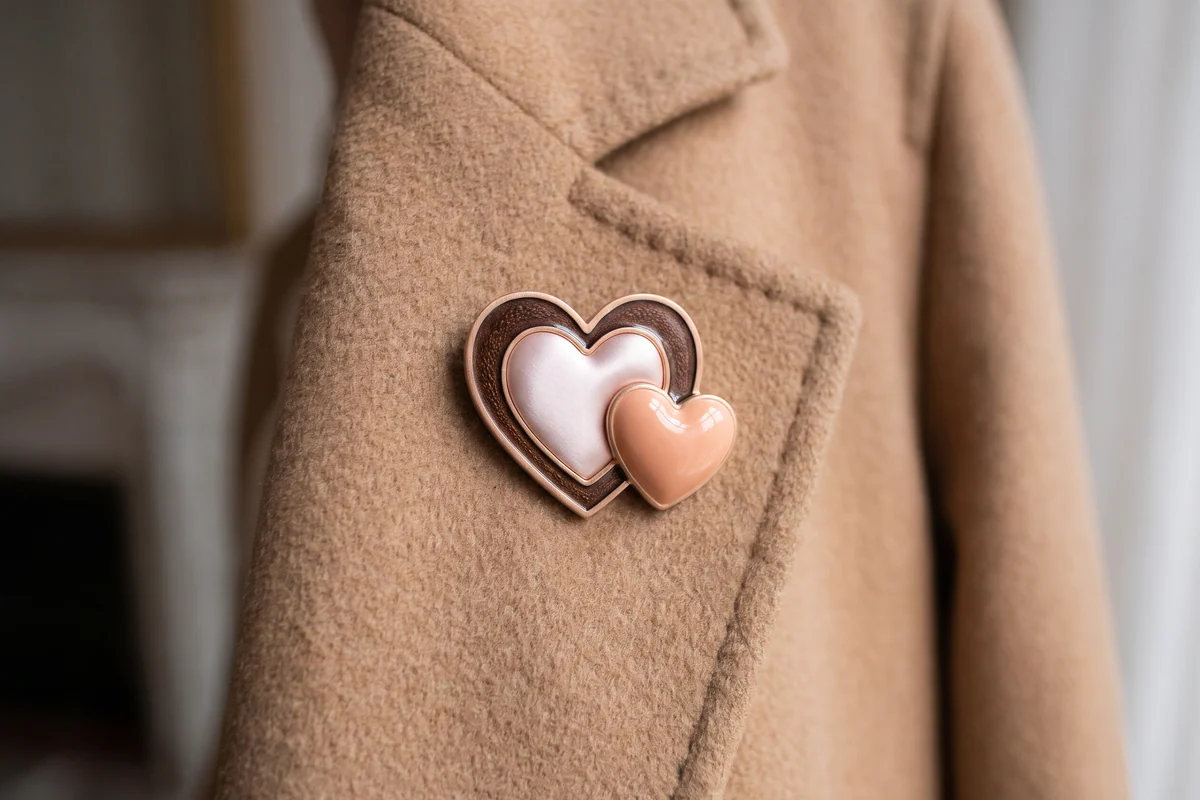
On clothing, the heart takes many forms. Our heart-shaped brooches take several of them:
- a single heart, solid, openwork or an open outline around a rhinestone;
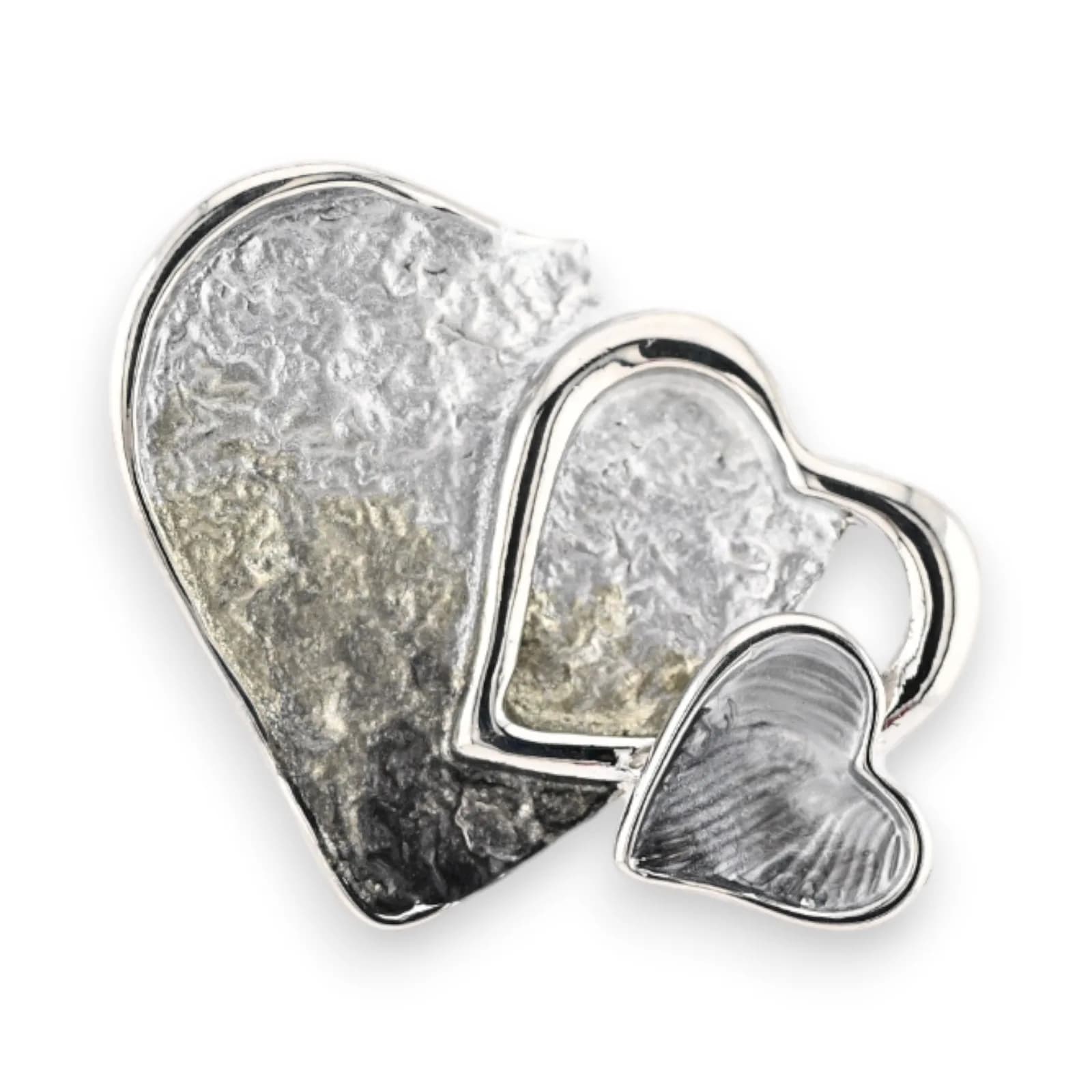
- clusters of two or three hearts, like the silver-coloured trio that layers a large hammered heart, an open heart with a smooth outline and a small ridged heart;
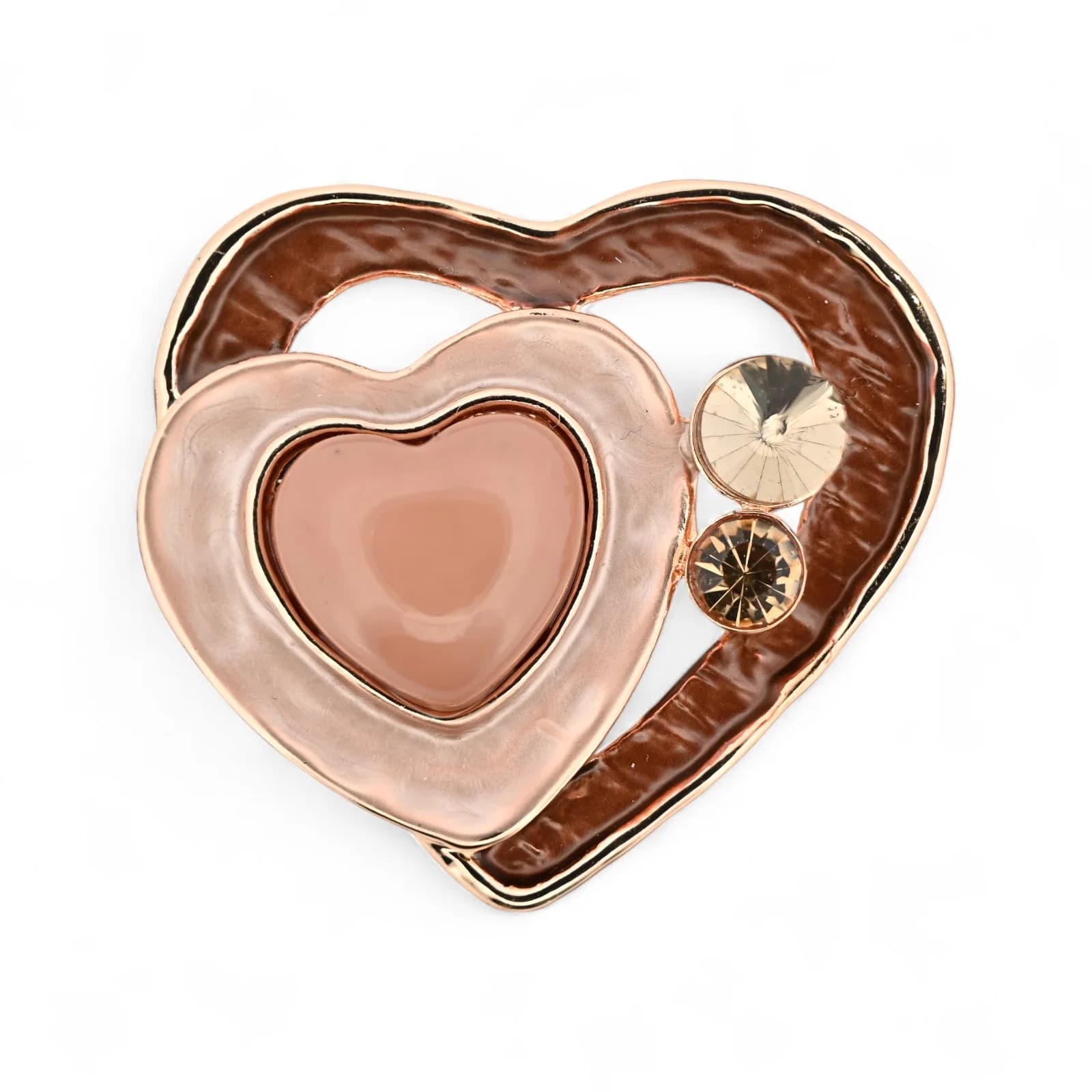
- soft tones, like the rosy gold-tone double heart that pairs a chocolate-brown outline with a satiny pale pink heart and a small peach one;
- openwork hearts framing a tiny stylised tree, a nod to another symbol we explore in our article on what the tree of life means.
Depending on the design, three finishes are on offer: gold-coloured, rosy gold-tone and silver-coloured. If that little tree appeals to you, you will also find it standing alone among our tree-shaped pieces. As for the finish, warm tones flatter pink and brown hearts (have a look at our warmer metal finishes), while a silver-coloured finish sets off blue, black and white hearts, as in our silver-coloured designs.
Our heart brooches fasten with a magnet, so there's no need to pierce the fabric: you'll also find them among our brooches that clip on without a pin. For help choosing the right spot, our guide on how to wear a brooch goes through it garment by garment.
Giving a heart without being misread
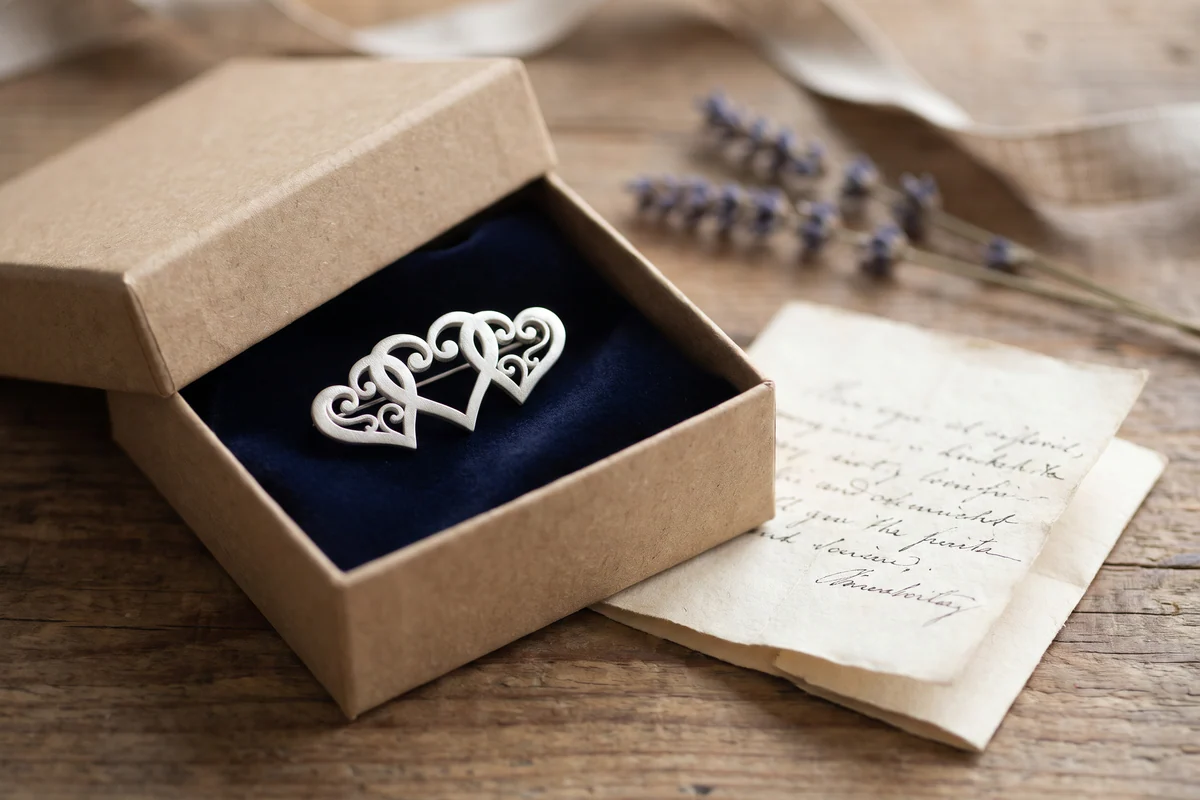
A heart is the obvious gift for Valentine’s Day. Yet its history shows that it says far more than romance: courage, gratitude, friendship. It works just as well for Mother’s Day, a birthday, Christmas or simply to thank a friend.
It all comes down to the note that goes with it. A few words help make your intention clear:
- ‘Thank you’, for a colleague who gave you a hand;
- ‘Be brave’, for a friend facing an exam or going through a rough patch, a nod to the word courage;
- ‘Happy birthday’, for your mum, your sister or your godmother.
If you are still unsure about the design, our guide to picking a brooch for someone else helps you start from the person rather than the object. And to see every other motif, from animals to portraits, browse all our brooches.
Heart symbolism at a glance
| When | Where you find the heart | What it says |
|---|---|---|
| Ancient Egypt | The weighing of the heart, Book of the Dead | Conscience, a whole life |
| In everyday English | ‘Courage’ and ‘by heart’ | Bravery, memory |
| 1250s | The Roman de la poire | Love, in pictures |
| Around 1480 | French playing-card suits | One of the four suits |
| 17th century | The Sacred Heart | Devotion, self-giving love |
| Since 1977 | I ♥ NY, then emoji | The verb ‘love’, friendship, support |
The next time you doodle one at the bottom of a card, or pin one to your coat, you'll know how much it has carried over the centuries. Which meaning it carries this time is up to you.
Frequently asked questions
What does a heart symbolise?▾
Above all love, but also friendship, support, courage, conscience and memory. These meanings come from an old belief: the heart was seen as the centre of our inner life.
What is the origin of the heart symbol?▾
Its two lobes and point are not anatomical. Historians suggest two possible origins: an ivy leaf, or the seed of silphium, a lost plant. Neither is certain. The earliest known picture of a heart as a sign of love dates from the 1250s.
What does a black heart mean?▾
In messages, a black heart suggests a rock-and-roll take on love, dark humour and sometimes mourning. On a piece of jewellery, it mostly has a graphic look.
What do the different heart colours mean?▾
Red usually means love, pink tenderness and friendship, blue trust and calm, yellow good humour and joy, white peace and loyalty. These are shared habits rather than fixed rules.
Can you give a heart brooch to a friend?▾
Yes. The heart also says friendship, gratitude or courage. A short note with the gift, ‘thank you’ or ‘be brave’ for example, helps make your intention clear.