
Tree of Life Meaning: Symbols, Origins and Stories
The tree of life can represent roots, family, renewal or the relationship between living things. This British guide separates its many traditions and explains how to read the symbol with care.
Few symbols feel as immediate as a tree. Roots disappear into the ground, a trunk holds firm, and branches reach into open space. That shape can suggest ancestry, resilience and possibility before anyone explains it. Yet the meaning of the tree of life is not fixed. It changes between religions, works of art, scientific diagrams and personal gifts.
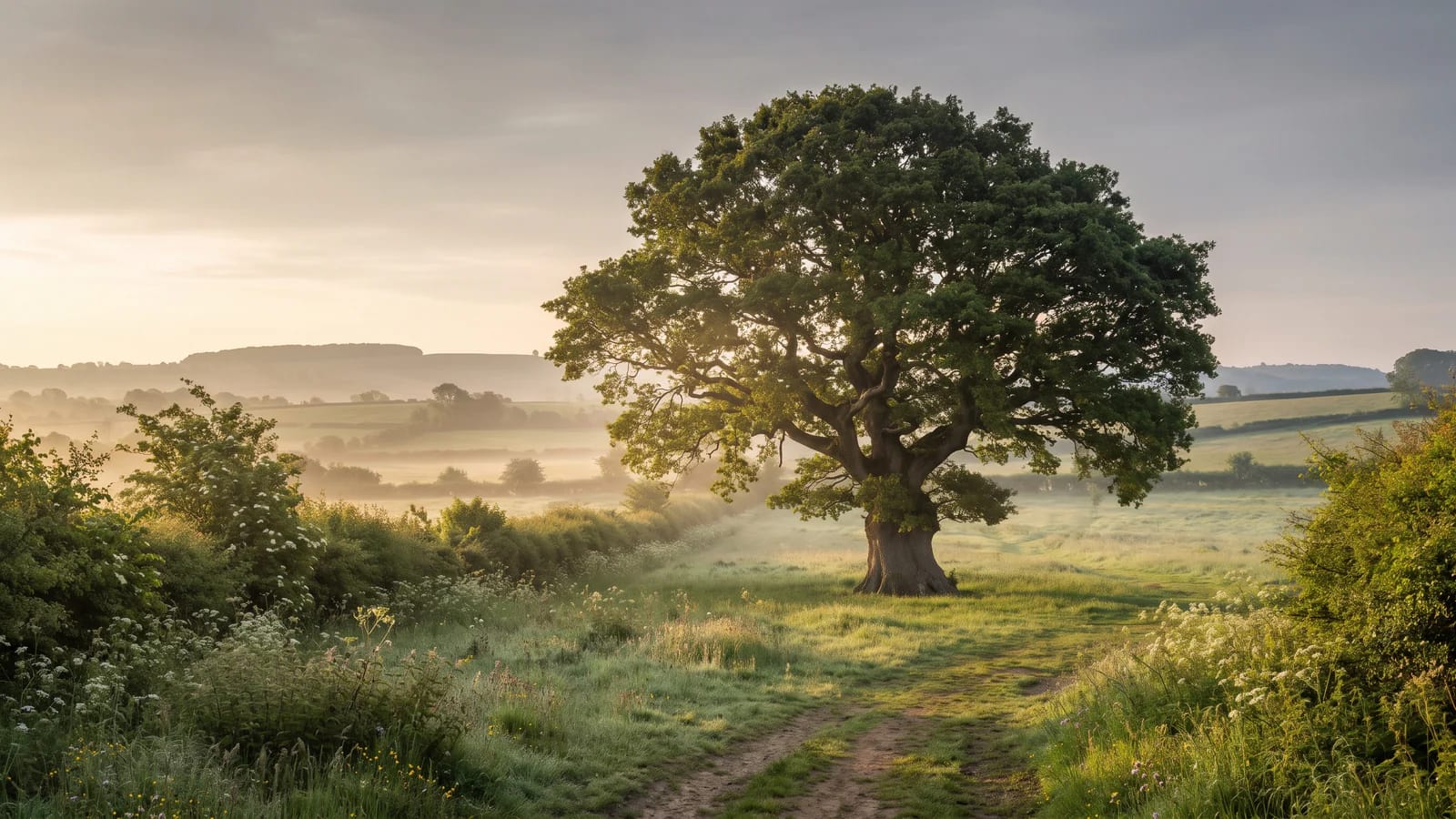
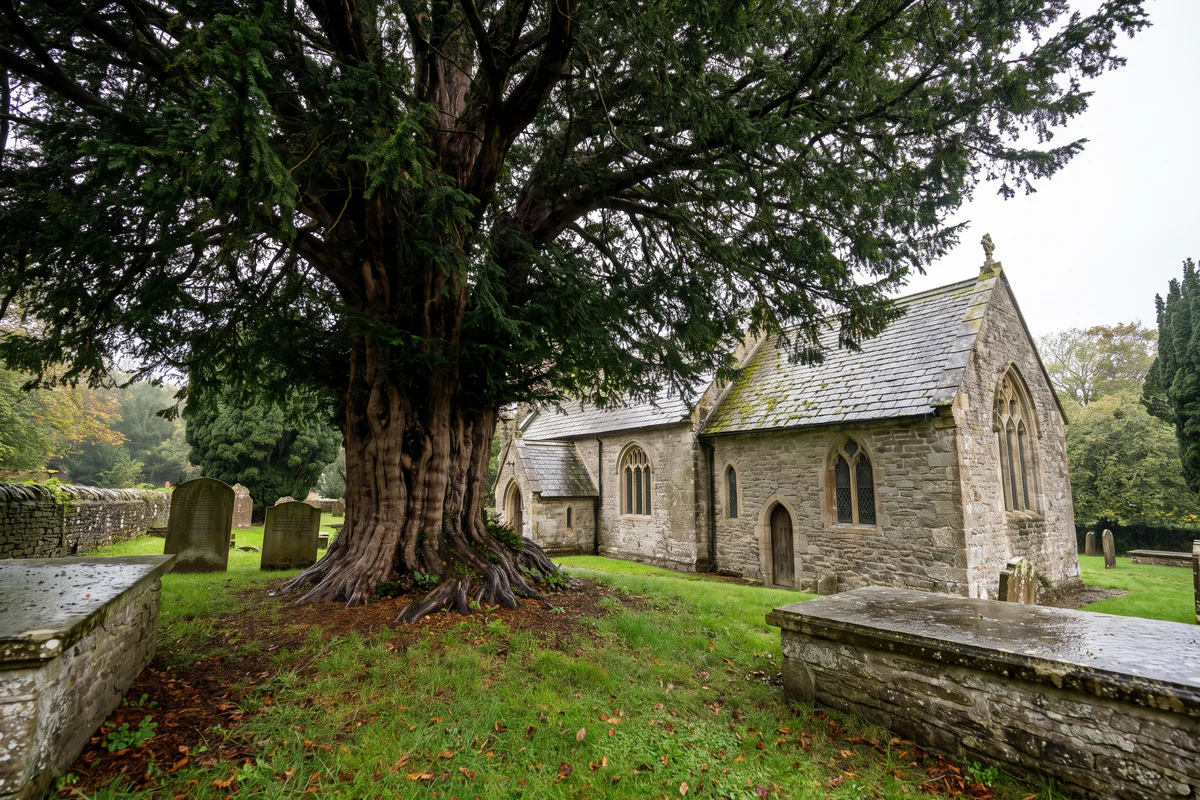
For readers in Britain, the image also sits beside familiar trees with stories of their own. Oaks are associated with strength and long life, while ancient yews in churchyards evoke death, continuity and renewal. These local associations do not provide the single origin of the Tree of Life. They show why the wider symbol still feels natural and powerful. At Ma-Broche.fr, we approach it as both a cultural image and a personal emblem, not as a claim that every tradition says the same thing.
Tree of life meaning in one clear answer
The Tree of Life usually represents connection across time. Its roots suggest origins, its trunk suggests the self or a supporting centre, and its branches suggest growth, family or different paths. The complete tree can therefore hold the past, present and future within one image.
Common modern readings include:
- Roots and belonging: home, ancestry, memory and identity.
- Strength: the ability to remain grounded during change.
- Growth: learning, healing and the start of a new chapter.
- Family: many lives connected through a shared history.
- Interdependence: the idea that no living thing exists entirely alone.
These meanings are useful, but they are a starting point rather than a dictionary definition. A religious Tree of Life, an Assyrian sacred tree and Darwin's evolutionary tree belong to different contexts. Their shared branching form does not erase those differences.
What do the roots, trunk and branches symbolise?
The parts of the tree create a visual grammar. Artists and wearers can emphasise one part to change the message, even when there is no written explanation.
| Part of the tree | Common association | Personal message |
|---|---|---|
| Roots | Origins, memory, home and ancestors | I know where I come from |
| Trunk | Stability, character and endurance | I have a firm centre |
| Branches | Choices, descendants and possibility | There is more than one way forward |
| Leaves | Vitality, learning and renewal | Life can begin again |
| Outer circle | Wholeness, protection and continuity | Every stage belongs to the same story |
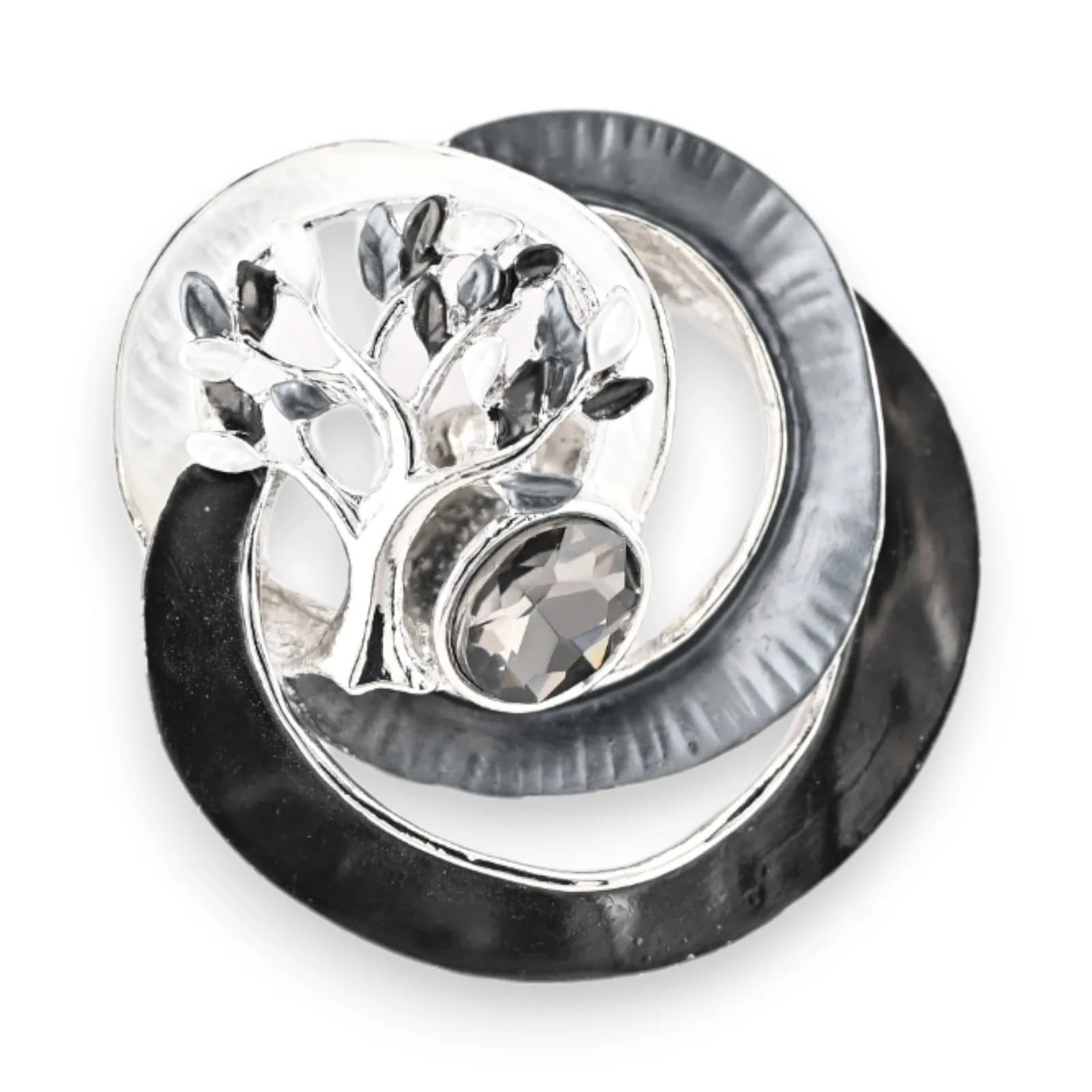
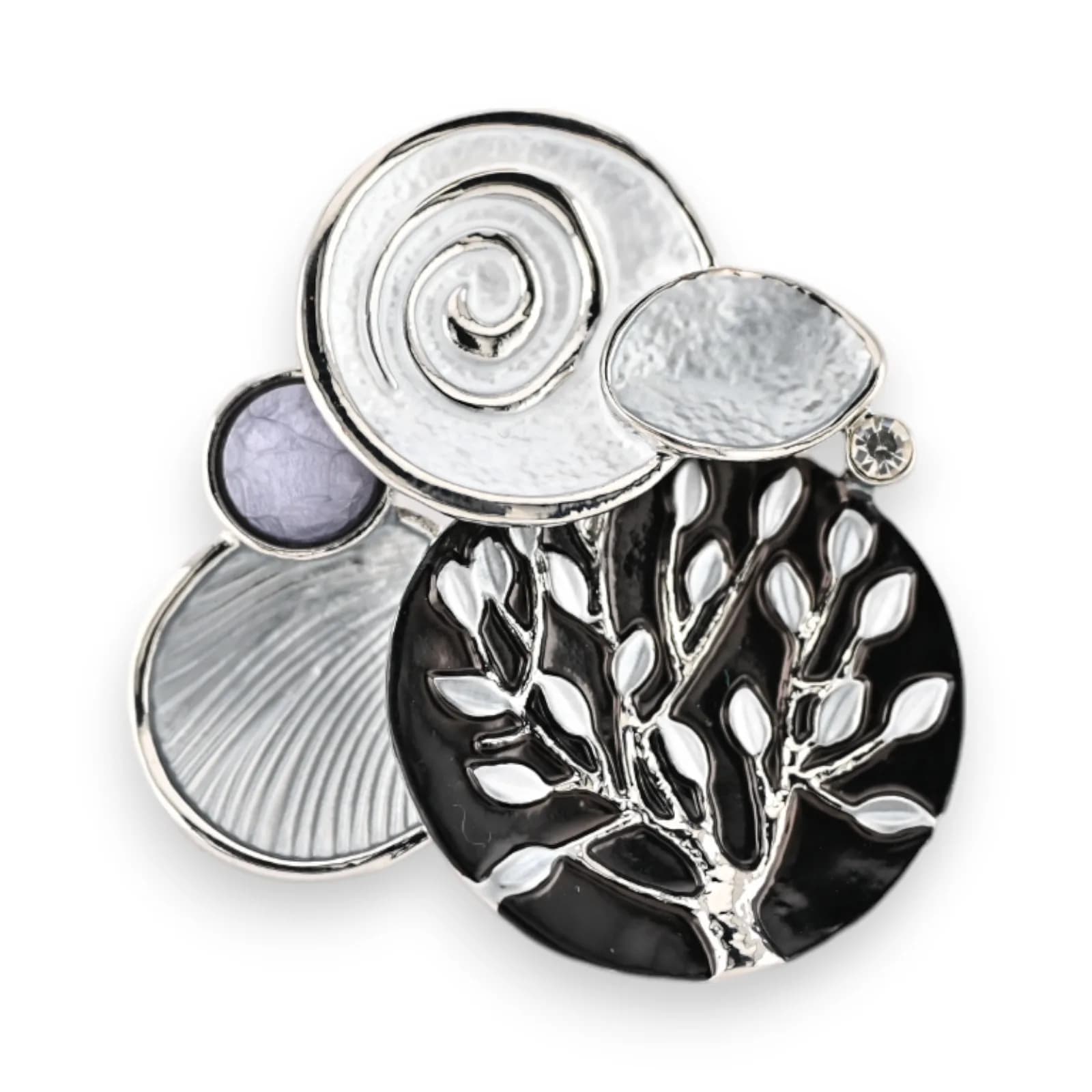
Many contemporary designs curve the roots and canopy into a circle. The beginning and the outermost growth then appear to meet. This can express continuity between generations or the return of one season after another. A sparse tree feels reflective, while a full canopy can suggest abundance and energy.
Why the Tree of Life has no single origin
It is tempting to ask which culture invented the Tree of Life, but that question assumes that every sacred or cosmic tree is the same symbol. Trees became powerful images in many places because people depended on them for shade, fruit, timber and orientation. Similar shapes could emerge within very different belief systems.
A Neo-Assyrian palace relief held by the British Museum places a highly ordered sacred tree between royal and protective figures. The museum describes the tree as a symbol of great importance and connects related examples with fertility and protection. This is not simply the modern family tree in ancient dress. It belongs to the political and religious imagery of Assyria.
Biblical texts use the Tree of Life in another way. It appears in Eden and returns in the final vision of Revelation, where life and healing are restored. Norse tradition has Yggdrasil, the immense world tree that connects different realms. These examples share the language of roots and branches, but each must be read within its own story. The most accurate origin is therefore plural rather than singular.
What does the Celtic Tree of Life mean?
In British and Irish shops, the phrase Celtic Tree of Life often describes a round design with roots and branches woven into knot-like lines. Today it commonly stands for balance, ancestry, nature and the continuity of life. That modern meaning is clear and valid as a design language, but claims about one fixed ancient Celtic emblem deserve caution.
Historical Celtic-speaking communities valued particular trees and groves, yet surviving evidence does not give us a universal logo with a single authorised meaning. Modern designs often combine tree imagery, later knotwork traditions and current ideas about family. It is better to call this a living interpretation than to present every detail as an unchanged message from antiquity.
Why oak and yew matter in Britain
Kew Gardens describes the English oak as an icon of the British landscape and records its place in several mythologies. The yew brings a different mood. Because it is evergreen, exceptionally long-lived and frequently found in churchyards, it became associated with everlasting life, death and rebirth. Neither species is automatically the Tree of Life, but both help British readers understand why a tree can carry spiritual weight.
The Tree of Life in Christianity
In Christian interpretation, the Tree of Life is closely linked with life in God's presence. In Genesis it stands in Eden and access to it is lost. In Revelation it appears again beside the river of life, with leaves associated with healing. The movement from a guarded tree to a restored tree gives the image a meaning of hope, reconciliation and eternal life.
The churchyard yew is related but not identical. British customs around yew trees developed through a mixture of landscape, longevity, burial places and religious practice. A real yew beside a parish church should not be treated as a literal copy of the biblical tree. The connection is symbolic: evergreen foliage and extraordinary age made the yew a compelling image of continuity beyond one human lifetime.
Darwin gave the tree a scientific meaning
Britain also gave the phrase a famous scientific life. Charles Darwin used a branching tree to think about relationships between species. The Natural History Museum explains that the tips can represent living species, while lost branches represent groups that became extinct. In this context, the tree does not promise spiritual immortality. It shows descent, divergence and common ancestry.
The metaphor works because a branch can divide without losing its connection to the trunk. Closely related organisms sit on nearby branches, while more distant relationships meet further back. Modern evolutionary trees are built with far more evidence than Darwin had available, including genetic data, but the branching logic remains powerful.
This scientific use adds an important answer to the question of interconnection. The Tree of Life can mean that living species share a deep history. It is a different claim from family symbolism or religion, yet it uses the same visual ability to hold unity and difference together.
Branches and leaves in British art and design
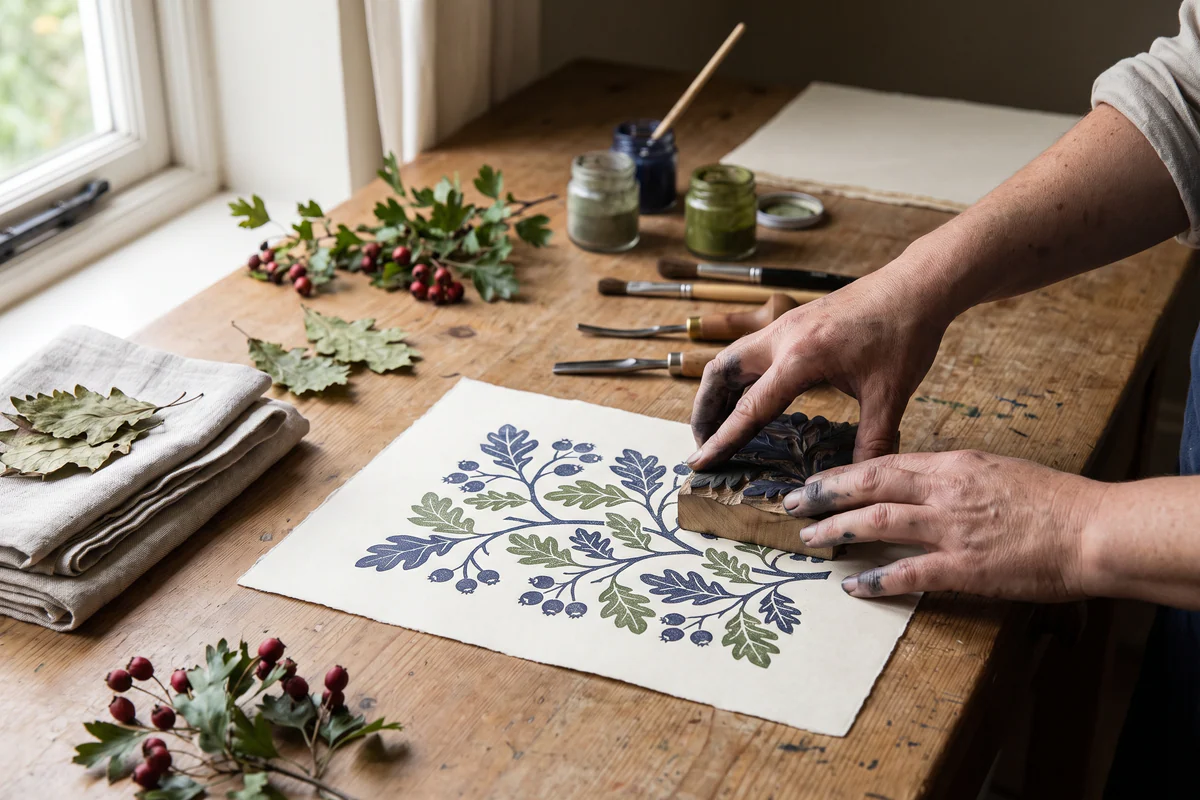
British decorative art repeatedly returns to climbing stems, leaves and branching structures. William Morris is an obvious example. The Victoria and Albert Museum shows how closely he studied historical textiles and how he built rich patterns from ordinary garden plants. His work is not a universal key to the Tree of Life, but it explains why organic forms became so at home in British interiors, textiles and personal decoration.
An Arts and Crafts pattern often removes the empty boundary between plant and background. Stems guide the eye, leaves repeat with variation, and flowers make the whole surface feel alive. A Tree of Life motif can work in a similar way: one central structure creates order while every branch remains individual. This balance between pattern and freedom helps the symbol move easily from architecture to fabric and jewellery.
A note on Klimt's Tree of Life
Gustav Klimt's famous tree belongs to the decorative scheme for the Stoclet Palace in Brussels. Its curling branches fill the surface and connect the figures around it. It is often interpreted through growth, connection and fulfilment, but viewers should separate what is visible in the work from later claims that every spiral has a secret code. The tree's importance lies partly in how completely it turns branching growth into ornament.
Why the Tree of Life represents family
A family can be imagined as many branches growing from shared roots. That is why the Tree of Life has become a natural emblem for parents, grandparents, siblings and chosen family. Unlike a formal family tree, it does not require names or dates. It can express belonging without defining exactly who belongs where.
The image can also make room for change. Trees lose leaves, survive damaged branches and continue growing in new directions. For someone who has moved home, welcomed a child or rebuilt life after difficulty, the symbol can say: your roots travel with you, but they do not limit your future.
What does a Tree of Life gift mean?
As a gift, the Tree of Life usually communicates lasting affection, support and confidence in the recipient's future. It can mark a birth, a graduation, a new home, recovery, retirement or a family milestone. The best message comes from the relationship, not from a generic promise of luck.
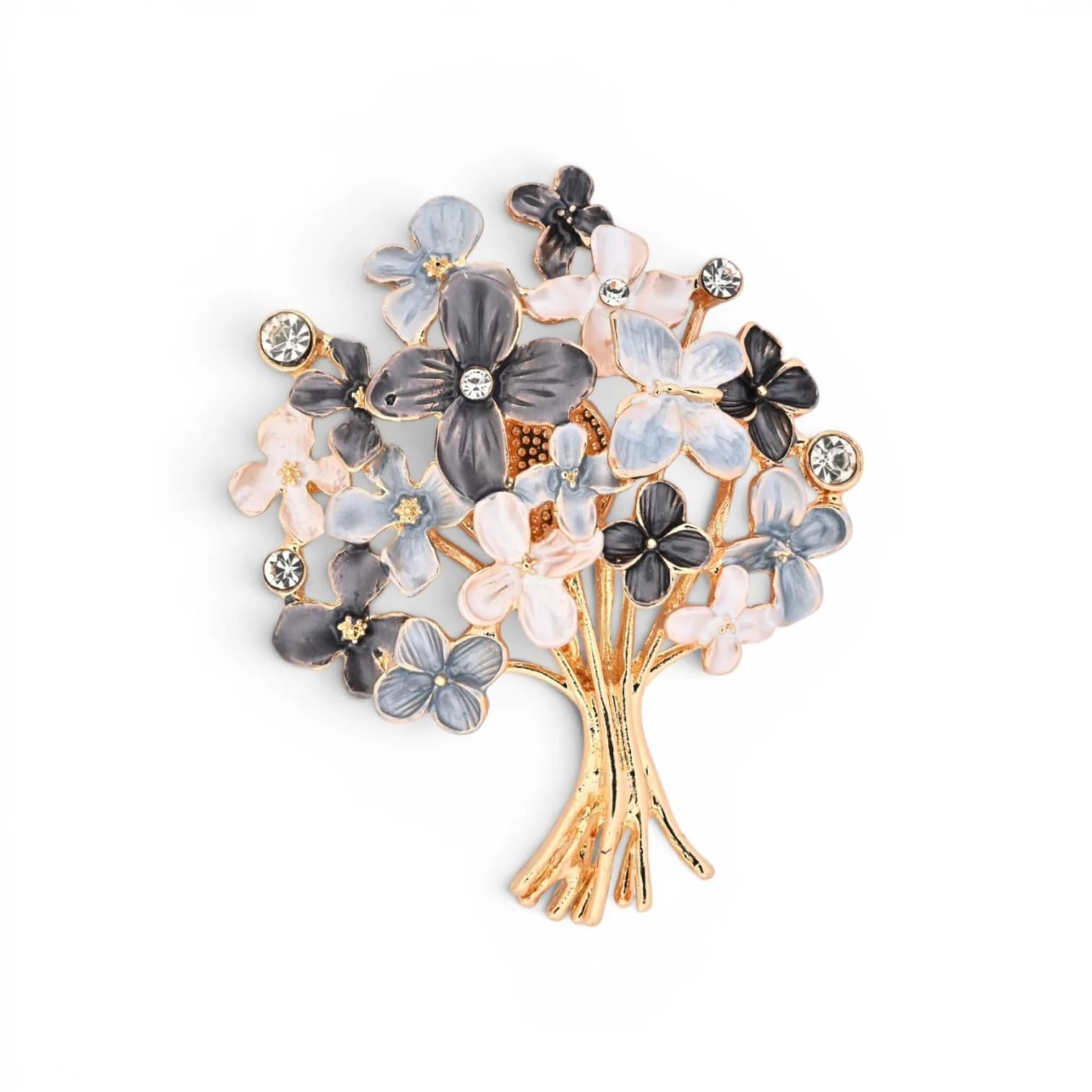
A short note can connect the symbol to something real: a grandmother who holds a family together, a friend starting again, or a person living far from home. This turns a familiar motif into a private message. For a wearable option, our Tree of Life brooches keep the symbol close without tying this guide to individual products that may change over time.
How to choose and wear the symbol
Begin with the part of the design that carries the meaning you want. Strong visible roots suit a message about ancestry. An open canopy feels optimistic. Coloured leaves can suggest variety within a family, while a simple metal outline feels quieter and more reflective. A surrounding circle strengthens the idea of continuity.
On a plain coat, blazer or scarf, the branches remain easy to read. The motif also sits naturally among other brooches chosen by shape, where a heart, portrait or geometric form creates a different message. Anyone comparing styles more broadly can explore our brooches for women without turning an informational article into a product catalogue.
A symbol that can hold more than one story
The Tree of Life lasts because it offers a clear structure without demanding a single interpretation. It can represent a family, a sacred promise, the relationship between species or the simple determination to keep growing. Its history becomes confusing only when those meanings are flattened into one invented origin.
A careful reading keeps both richness and accuracy. Ask which tradition, artwork or personal moment gives the tree its context. Then return to the image itself: roots for memory, a trunk for support, and branches for possibility. That combination explains why the Tree of Life still feels at home in British landscapes, museums, design and the objects people choose to give.