
Fish Symbolism: From the Jesus Fish to Japan’s Flying Carp
The fish on the back of a car, a Chinese wish for plenty, a carp that becomes a dragon in Japan: what the fish symbolises, from one culture to the next.
You have probably seen it in a car park: two curved lines on the boot of a car, crossing at one end to make a simple fish. No words, no picture of a church. To most passers-by it is just a little sticker. To the driver, it says something precise. That is the thing about fish symbolism: the same small shape can carry faith, plenty, courage or rescue, depending on who drew it.
So what does a fish symbolise? It depends on where you stand. For the first Christians, it is a sign of faith: in Greek, the letters of the word for “fish” are the initials of “Jesus Christ, Son of God, Saviour”. In China, it is a wish for plenty, because “fish” sounds just like the word for “abundance”. In Japan, the carp that swims upstream stands for perseverance. Add a Hindu god who became a fish to save humanity from a flood, a goddess and her son turned into stars, and an old French prank for the first of April, and the fish turns out to have plenty of stories to tell.
For each tradition, we’ll separate what the texts and objects actually say from what people read into them.
Why there’s a fish on the back of that car
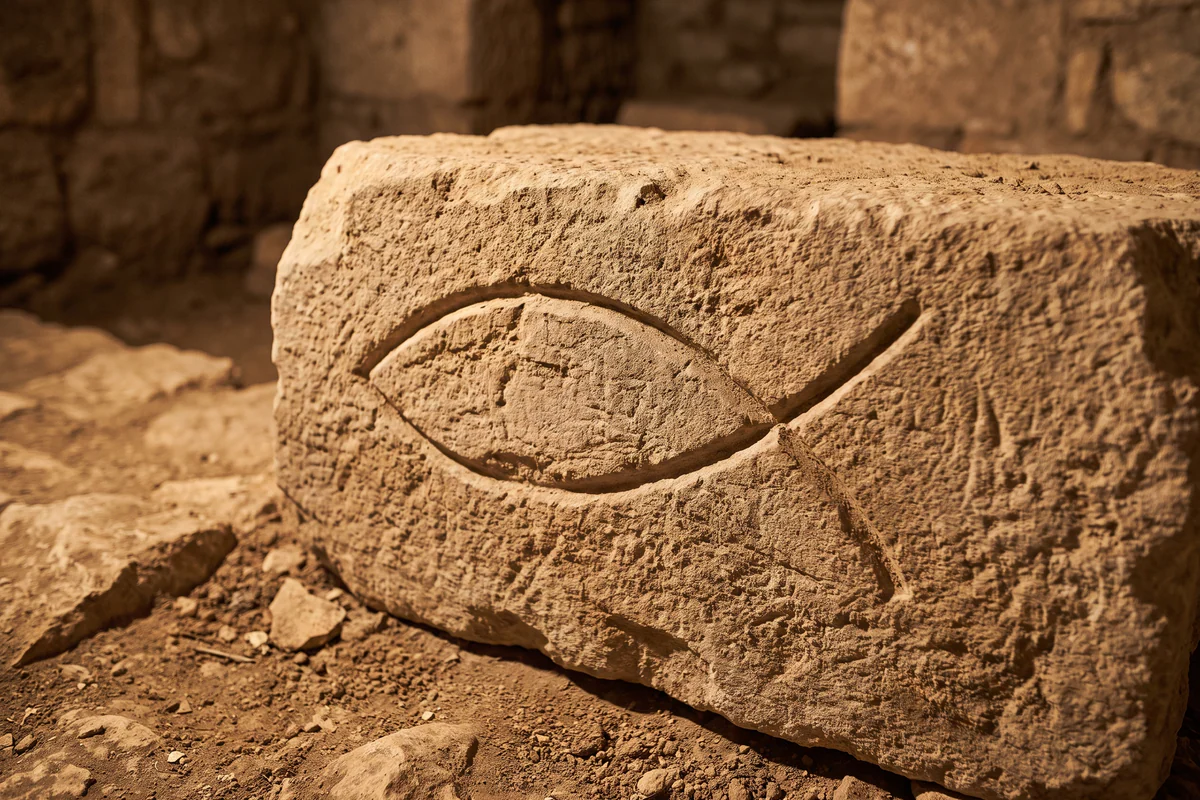
The sticker has a name: the ichthys, also spelt ichthus, from the ancient Greek word for fish. And it is far older than the car.
Five Greek letters, one creed
In ancient Greek, the word for fish is ichthys (ἰχθύς). Early Christians read a hidden message in it, letter by letter:
- I for Iēsous, Jesus;
- CH for Christos, Christ;
- TH for Theou, of God;
- Y for Huios, Son;
- S for Sōtēr, Saviour.
One short word, and a whole statement of faith fits inside it. The Wikipedia article on the ichthys explains the acrostic and its history.
A password in times of persecution?
The ichthys became a way for Christians to identify themselves. According to tradition, in times of persecution believers used it as a code to recognise one another, and it was scratched on the walls of Rome before Easter to show the way to the crypts. It is a lovely story, but it remains a story: as the English Wikipedia points out, no early Christian source links the fish to persecution.
What is certain is that early Christian writers loved the image. Tertullian compared believers to little fish who take their name from the ichthys and are born in water. Saint Augustine, in The City of God, discusses the acrostic and sees in it a mystical name for the Saviour. And Clement of Alexandria, in his Paedagogus, lists the fish among the images Christians may wear. Wearing a fish is clearly nothing new.
Back on the road
In the 1970s, the symbol found a new lease of life in the United States, thanks to the Jesus Movement. Since then it has turned up on pendants, badges and, as you will have noticed, the backs of cars, as a sign of Christian faith.
Five loaves and two fishes
The fish has such a prominent place in Christian imagery partly because it swims all through the Gospels. The best-known story is the feeding of the five thousand. With five loaves and two fishes, Jesus feeds a crowd of “about five thousand men, besides women and children”. All four evangelists (Matthew, Mark, Luke and John) tell the story.
Today the Church of the Multiplication at Tabgha stands near the spot where tradition places the miracle. Two fish that feed thousands of people: it is hard to find a better picture of sharing.
A pun that wishes you plenty: the fish in China
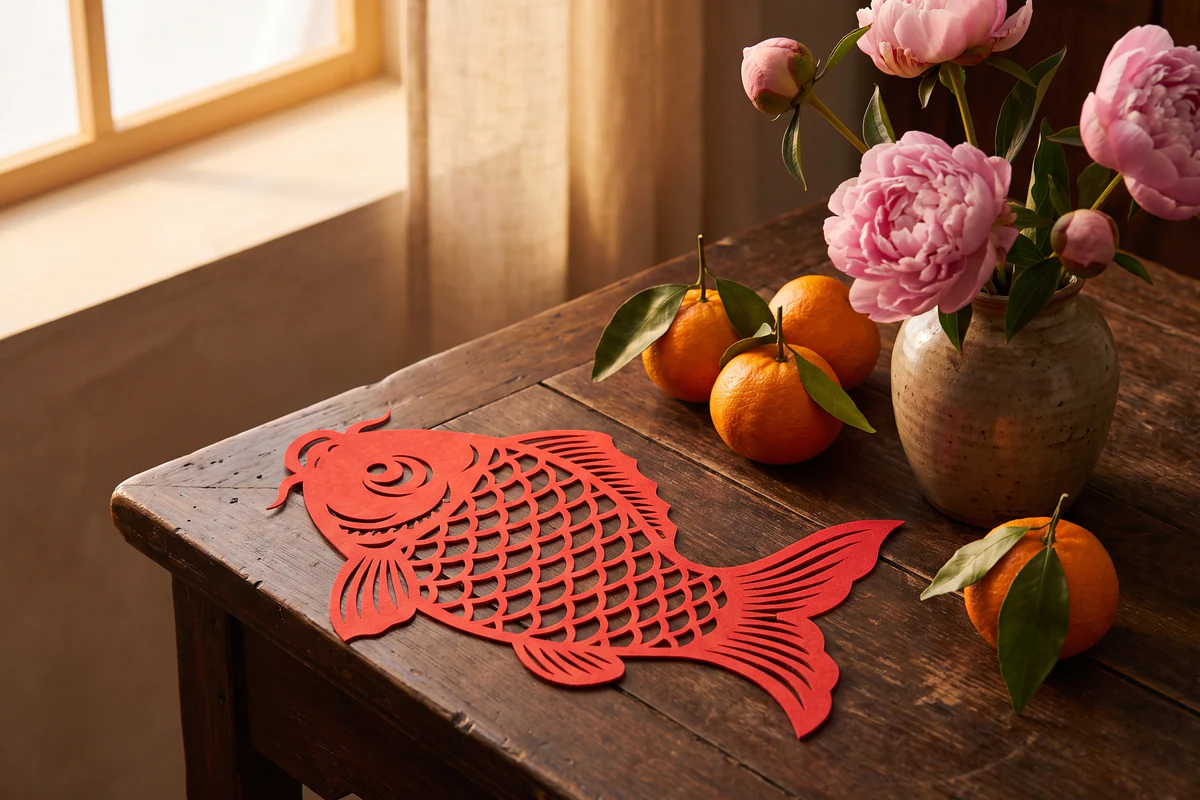
Travel to China, and the fish stops talking about faith. Here it is all about prosperity, and it starts with a pun.
The character 魚, “fish”, is pronounced yu. The character 餘, meaning “abundance” or “surplus”, is pronounced yu too. Hence a New Year greeting: lian nian you yu (連年有餘), “prosperity and abundance year after year”. To draw a fish is to wish that the household never goes short of anything.
The French School of the Far East (École française d’Extrême-Orient) keeps a folk print that illustrates this wish. A 20th-century woodblock print by Yang Luoshu, from Yangjiabu in Shandong province, it shows a woman holding peonies and a child holding a fish. It was one of a pair: the two prints were pasted on the doors of the daughter-in-law’s bedroom to celebrate the New Year.
Koinobori: the carp that swims against the wind
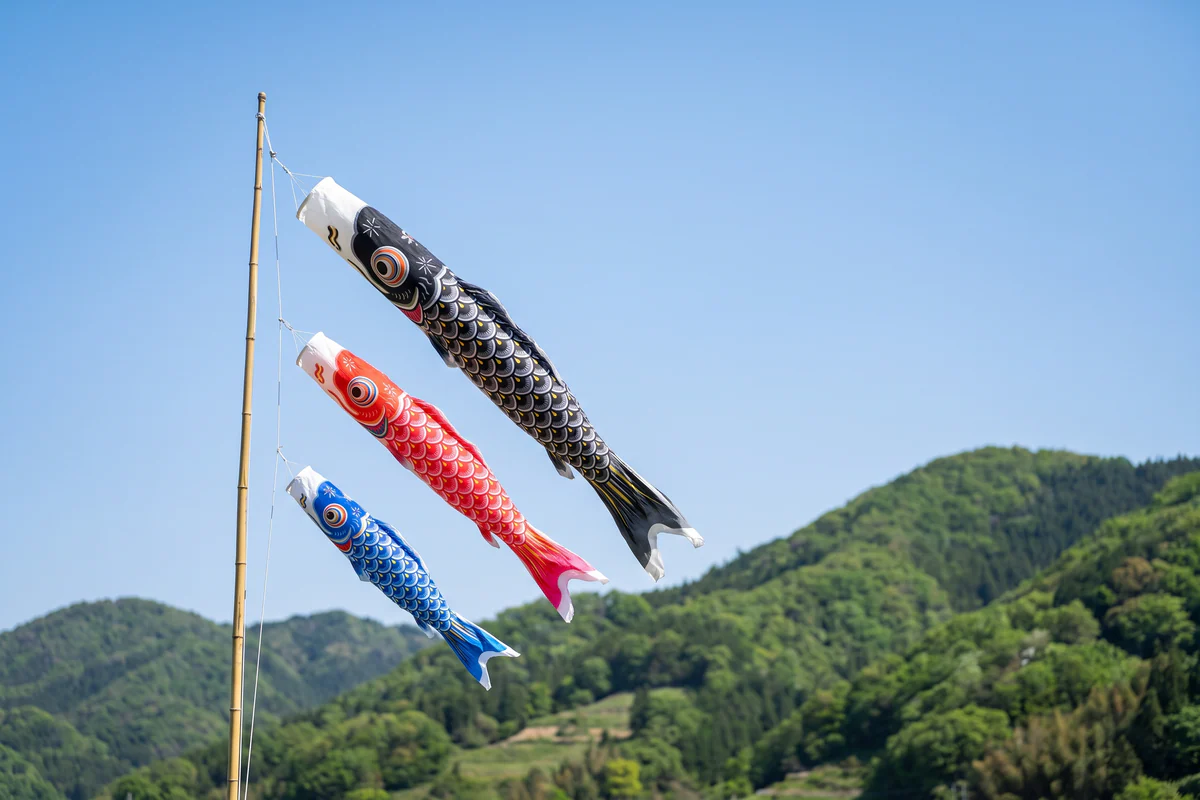
Every year on 5 May, fabric carp fly from tall bamboo poles across Japan. These are koinobori, carp streamers raised for Kodomo no hi, Children’s Day. The holiday took the place of the older Tango no sekku, held on the fifth day of the fifth lunar month.
A legend borrowed from China
Why carp? Because of a Chinese legend. Carp that swim up the Yellow River, the story goes, end up flying into the sky as dragons. The streamers celebrate the strength and perseverance of carp that fight their way upstream, through rivers and waterfalls. The Wikipedia article on koinobori traces the custom.
The message is simple enough for anyone: keep swimming against the current and, in the end, you rise. Of all the meanings of the fish, it is probably the easiest one to give, whether on a card or as a fish to pin on a coat.
Matsya, the fish that saved humanity
In Hinduism, Matsya, whose name means “fish” in Sanskrit, is presented as the first avatar of Vishnu.
In the Shatapatha Brahmana, the story begins with a tiny fish that Manu finds in a river. The fish warns him: a flood is coming, and he must build a boat. When the waters rise, the little fish, now enormous, guides the boat up into the Himalayas. Manu, his family and the animals are saved. The Mahabharata tells a similar version, in which Manu takes with him “the seeds of all that lives on earth”. The story has been compared to the story of Noah’s Ark.
A pair of fish for good fortune
The fish also appears among the eight auspicious symbols, the ashtamangala, as a pair of gold-coloured fish. Originally they stood for two sacred rivers, the Ganges and the Yamuna. In Buddhism, they suggest that living beings can move towards liberation without drowning in samsara, the cycle of rebirth. The Shvetambara branch of Jainism also counts them among its eight symbols.
Moving forward without being swallowed up: it echoes the Japanese carp, and it brings to mind turtle symbolism and its link with long life.
Pisces: two fish tied together in the sky
The fish even made it to the stars. The constellation of Pisces shows two fish joined by a cord. The Latin author Hyginus, drawing on Greek sources, explains why. Chased by the monster Typhon along the banks of the Euphrates, Aphrodite and her son Eros were changed into fish. Their tails were tied together with a cord, so that they would not lose each other in the water.
You can read it as a bond that holds in the face of danger: a mother and her child, tied together so they never drift apart.
April Fools’ Day, the French way
In the UK, April Fools’ Day has its own rule: the tricks stop at noon. And the most famous British hoax is probably the 1957 BBC film that showed Swiss farmers harvesting spaghetti.
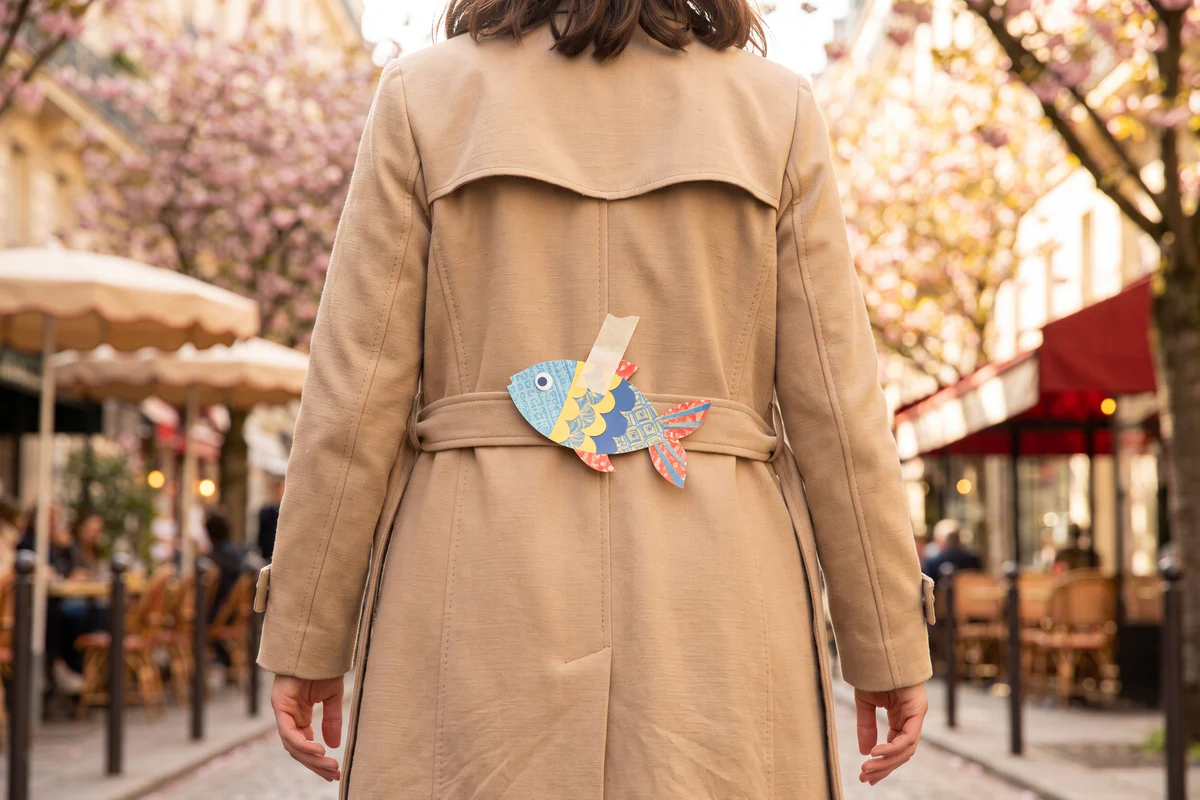
Across the Channel, the joke comes with a fish. The French try to stick a paper fish on a friend’s back without being noticed, then shout “Poisson d’avril!” (“April fish!”). Where does the custom come from? Nobody knows for sure.
The most popular explanation points to the Edict of Roussillon, signed by Charles IX in 1564, which set the start of the year on 1 January. People who kept celebrating New Year on the old date supposedly became the butt of jokes. A neat story, but it does not hold up: the phrase poisson d’avril appears as early as 1466 in a text by Pierre Michault, then in 1508 in the work of Eloy d’Amerval, well before the edict. Its meaning as a 1 April prank is not recorded until the 17th century.
There are other theories. The folklorist Alan Dundes suggested a blend of traditions: old fertility rites, the moment the Sun leaves the sign of Pisces, and the end of Lent, the season when people ate fish. The Wikipedia article on April Fools’ Day covers both the British and the French customs.
What does a fish symbolise spiritually?
Many people look for the “spiritual meaning” of the fish. On this, the major religious traditions have a lot to say, and they say it precisely:
- in the Christian tradition of the ichthys, the Greek word sums up a statement of faith in Jesus Christ, and Tertullian compares believers to little fish born in water;
- in the Hindu story of Matsya, the fish is the saviour who guides humanity through the flood;
- in Buddhism, it swims towards liberation without drowning.
The common thread? Water. A fish lives in water that would drown a human being, and moves through it with ease. Beyond these traditions, if a fish makes you think of freedom, travel or a calm sea, that is a personal reading, and it is yours to keep. The fish is not the only animal whose meaning changes from one country to the next: read, for instance, the story of the lucky cat.
A fish as a gift: who it’s for and what to write
Who it’s for
With all these stories behind it, a fish suits all sorts of occasions:
- a New Year or a new home, to wish for plenty “year after year”, as in China;
- an exam, a new job or a hard patch, with the carp swimming upstream in mind;
- a mother and her child, as a nod to Aphrodite and Eros, tied together so they never get lost;
- someone born under the sign of Pisces;
- a person of faith, for whom the ichthys still means a great deal;
- 1 April, quite simply, for a friend who loves a laugh.
A few words for the card
- “Plenty, year after year.”
- “Keep swimming upstream.”
- “Inseparable, like the two fish in the sky.”
A fish brooch to wear
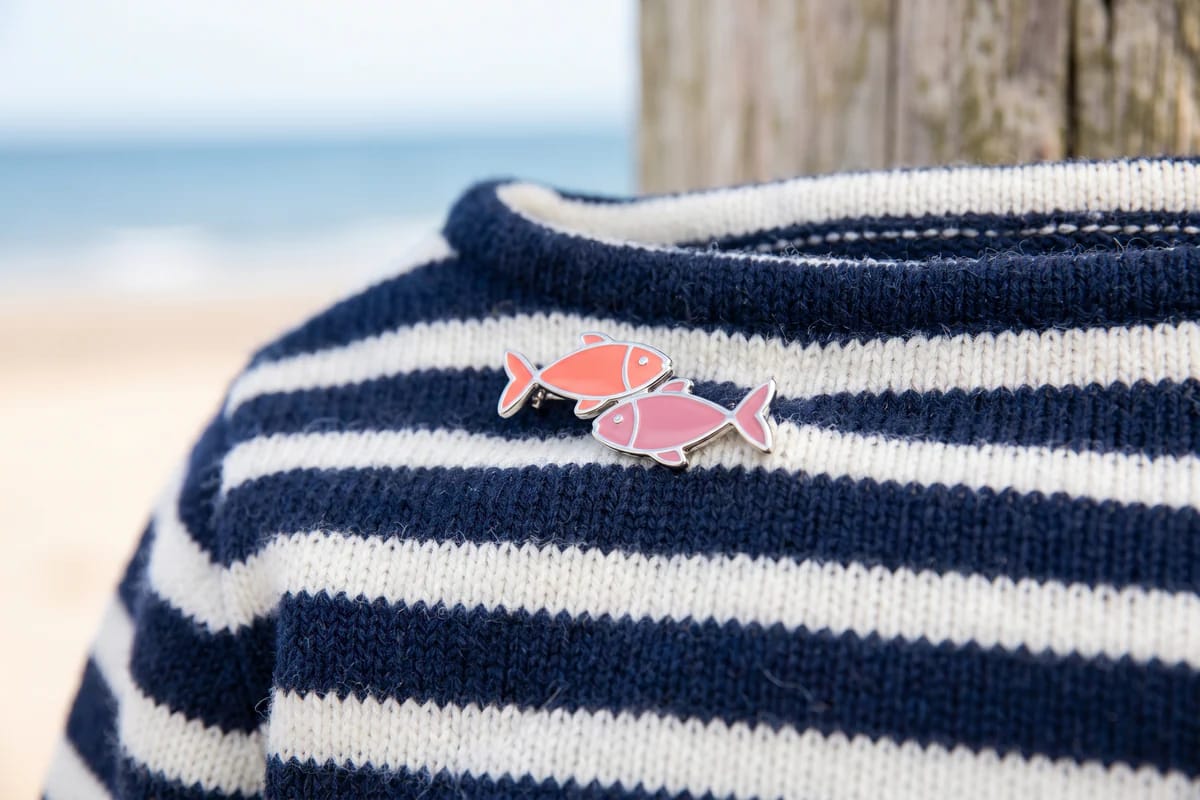
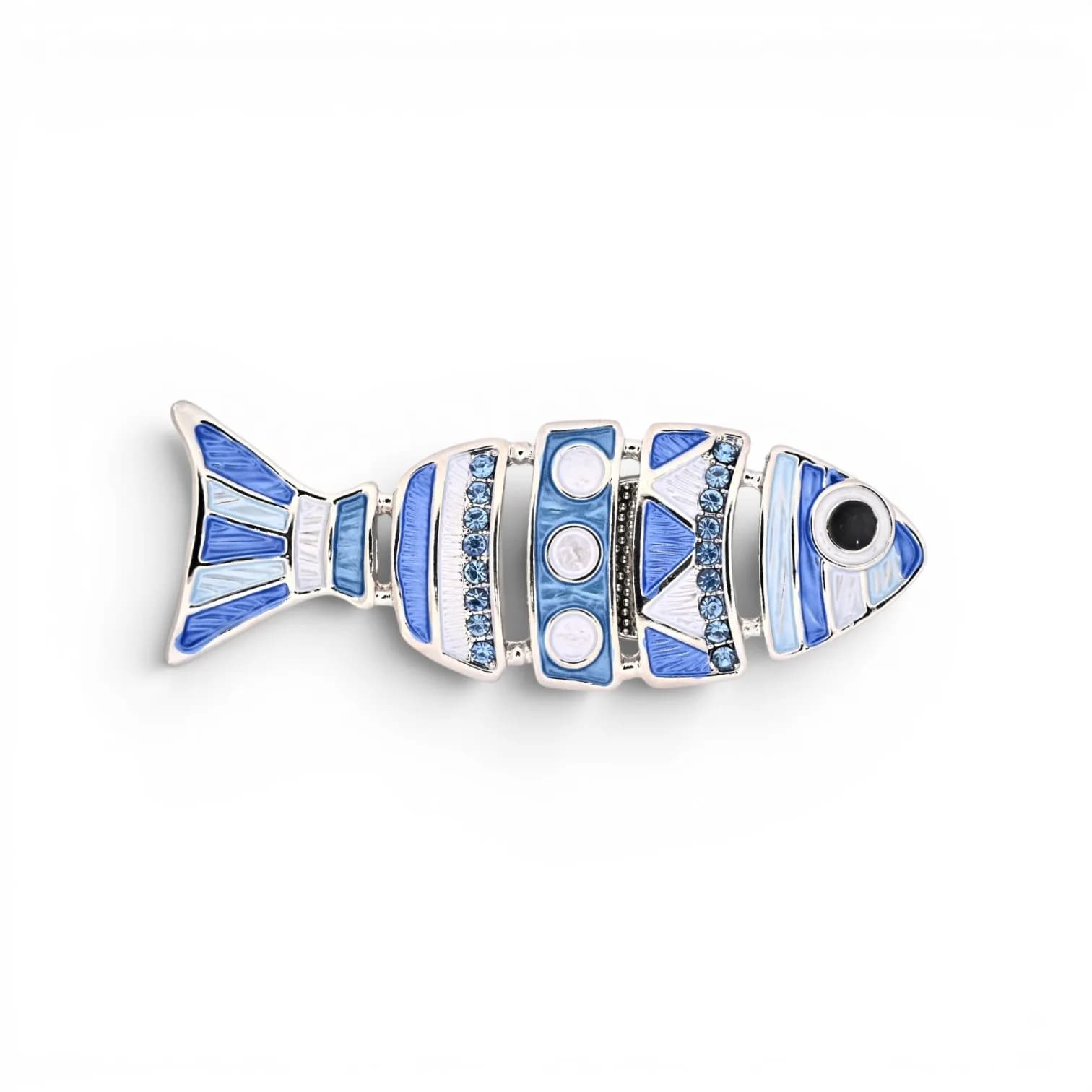
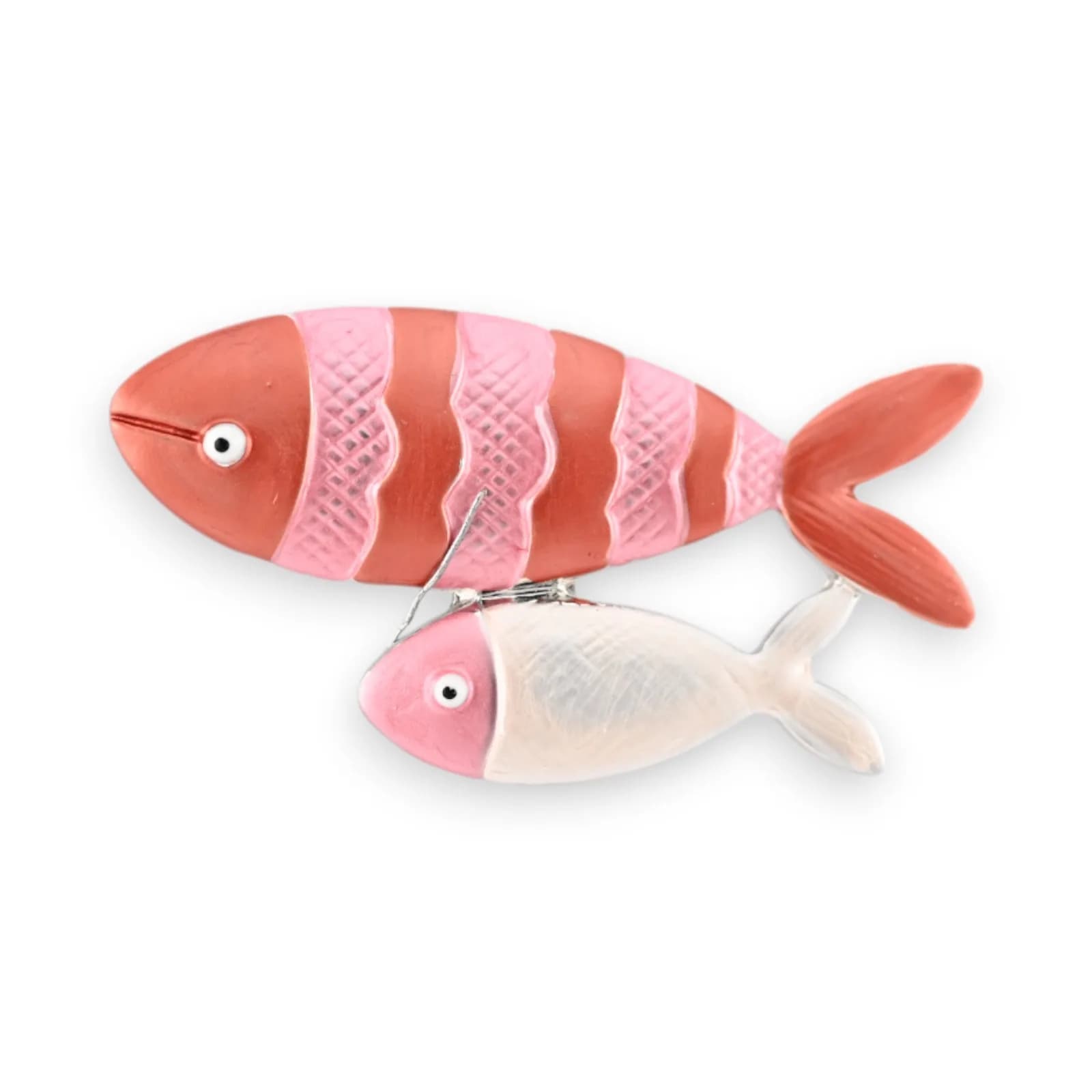
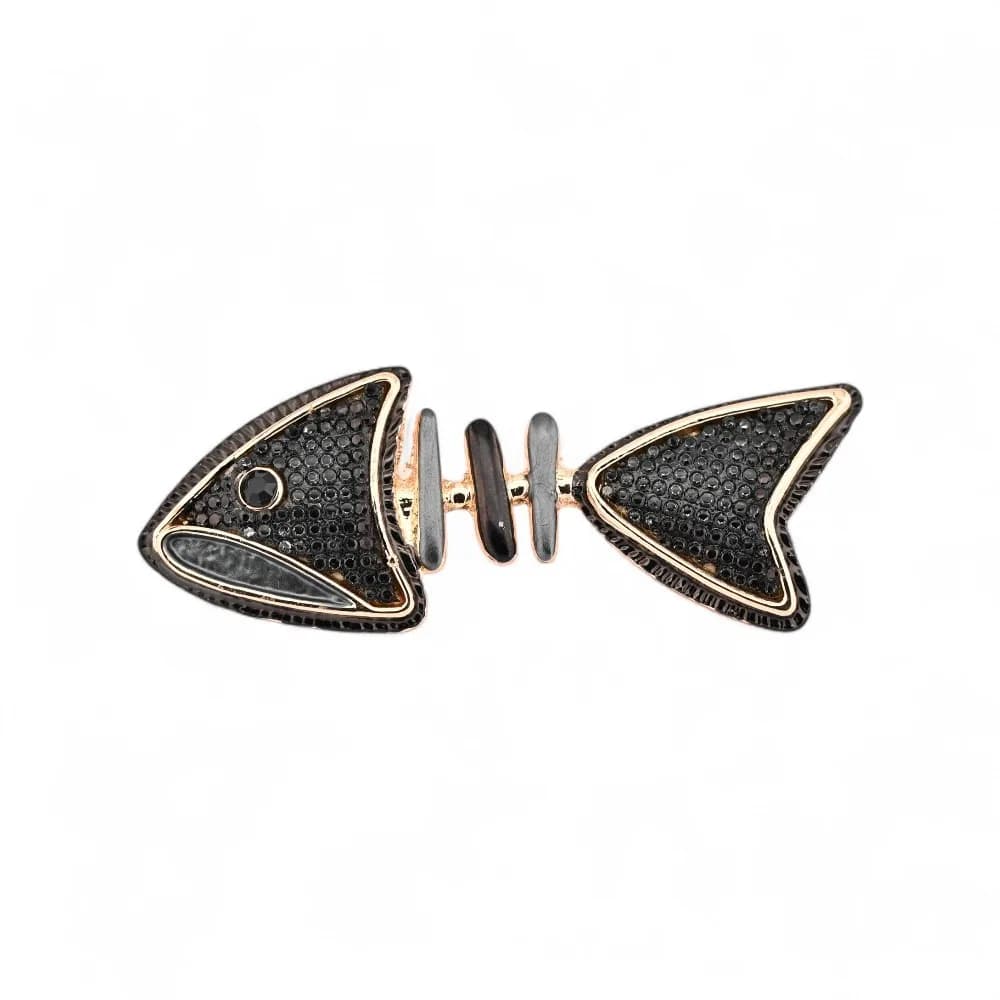
A fish brooch is afraid of neither the current nor the first of April. Among our fashion brooches, several fish designs echo these stories. A coral and pink pair, swimming side by side, recalls the two fish of Pisces. For something more graphic, a fishbone-style fish in gold-coloured steel, with black sections and black rhinestones, plays on contrast. And a blue and white fish with geometric patterns, in silver-coloured steel, has more of a seaside feel. All three are pieces of fashion jewellery with a magnetic clasp.
On a Breton top, the lapel of a denim jacket or a navy coat, a fish looks right at home. To see every design, browse our fish brooches, or meet other creatures among our animal brooches.
Fish symbolism at a glance
Fish symbolism has no single meaning. From one tradition to the next, the fish carries a different message. Here they all are, side by side:
| Tradition or source | What the fish stands for |
|---|---|
| Early Christians (ichthys acrostic) | Jesus Christ, Son of God, Saviour; by tradition, a code to recognise one another |
| Gospels (Matthew, Mark, Luke, John) | Sharing: five loaves and two fishes for a crowd |
| China (lian nian you yu) | Plenty, through a pun on yu |
| Japan (koinobori, 5 May) | The strength and perseverance of the carp that becomes a dragon |
| Hinduism (Matsya, Shatapatha Brahmana) | Rescue: the fish that guides Manu through the flood |
| Buddhism (ashtamangala) | Liberation, without drowning in the cycle of rebirth |
| Pisces (Hyginus) | A bond that holds in danger: Aphrodite and Eros tied to each other |
| April fish (Pierre Michault, 1466) | A French prank of uncertain origin; the phrase is recorded from 1466, the prank only from the 17th century; in the UK, April Fools’ tricks stop at noon |
Frequently asked questions
What are the dates of the Pisces star sign?▾
The sign of Pisces runs from 19 February to 20 March. It takes its name from the constellation of the two fish tied together by a cord.
What does the star name Alrescha mean?▾
Alrescha, the alpha star of the constellation Pisces, takes its name from Arabic and means “the Knot”: the knot in the cord that ties the tails of the two fish together on star charts.
What did “poisson d’avril” mean at first?▾
In the oldest known text that uses it, Pierre Michault’s Doctrinal du temps présent (1466), a “poisson d’avril” is a go-between: the man who carries his master’s love letters. The meaning of a 1 April prank does not appear until the 17th century, with Jean de Labrune in 1691.
Is there a second feeding of the crowd in the Gospels?▾
Yes. Matthew and Mark tell a second story: with seven loaves and a few fish, Jesus feeds four thousand men, besides women and children. Luke and John tell only the first miracle, the one with five loaves and two fishes.
What do the colours of koinobori carp mean?▾
The black carp stands for the father. The red carp once stood for the eldest son and today most often stands for the mother. An extra carp is added for each additional child.