
Dragonfly Meaning: Victory, Love and Old Legends
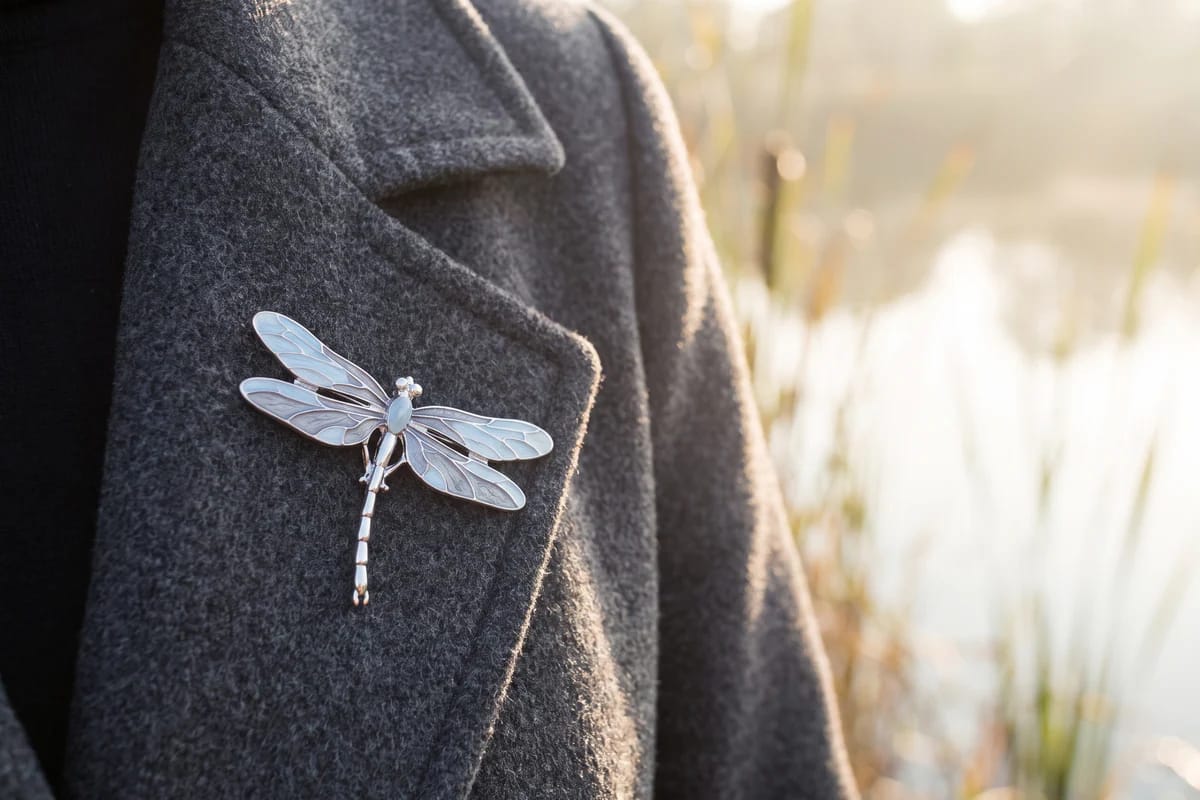
Devil's darning needle in English, insect of victory in Japan, a Lalique jewel in 1900: discover the dragonfly's meaning, from old legends to the ponds of Britain.
Devil's darning needle, horse-stinger, ear cutter: for a creature that does not sting people, the dragonfly has collected some alarming names in English. In Welsh it is gwas-y-neidr, the “adder's servant”. So which is it: a villain, or the shimmering insect that zips over the water on a summer's day?
Dragonfly meaning in a nutshell
What is the meaning of a dragonfly? It depends where you look. In Japan it is the insect of victory and a bringer of luck. In Germanic mythology it was said to carry messages for Freyja, goddess of love. For the Navajo it stands for pure water. Christian Europe, meanwhile, turned it into a creature of the devil.
Victory, love, purity or fear: follow its flight from a hill in ancient Japan to the 1900 Paris Exhibition. Along the way, we'll keep what is documented (biology and history) apart from the stories people tell (legends and folk belief). Both are worth hearing, as long as you don't mix them up.
Darning needles and adder's servants: names from Britain and Europe
Let's start with those names. As the Wikipedia article on dragonflies notes, English vernacular names such as “horse-stinger”, “devil's darning needle” and “ear cutter” link the insect with evil and injury. Welsh ties it to snakes instead: gwas-y-neidr means “adder's servant”.
It wasn't always so. In Germanic mythology, dragonflies were linked with Freyja, goddess of love, and were said to be her messengers. Then Christianity spread, and the dragonfly switched sides: it was demonised. Across the Channel, French nicknames grew just as dark:
- “devil's arrows” and “Satan's needles”;
- “eye-piercer” and “blood-drawer”;
- “snake-pricker”;
- martaî-diale in Walloon, the “devil's hammer”.
Most of these names rest on one mistaken belief: people thought the dragonfly carried a sting. Does it? You'll find the answer in the FAQ at the end.
Tenderness never quite vanished, though. In Savoy, in the French Alps, the dragonfly was called the “love butterfly”. Local lore had it that if you carried a dragonfly home and it died on the way, your love life was in for bad news. In Europe's stories, fear and affection live side by side.
What a dragonfly can really do
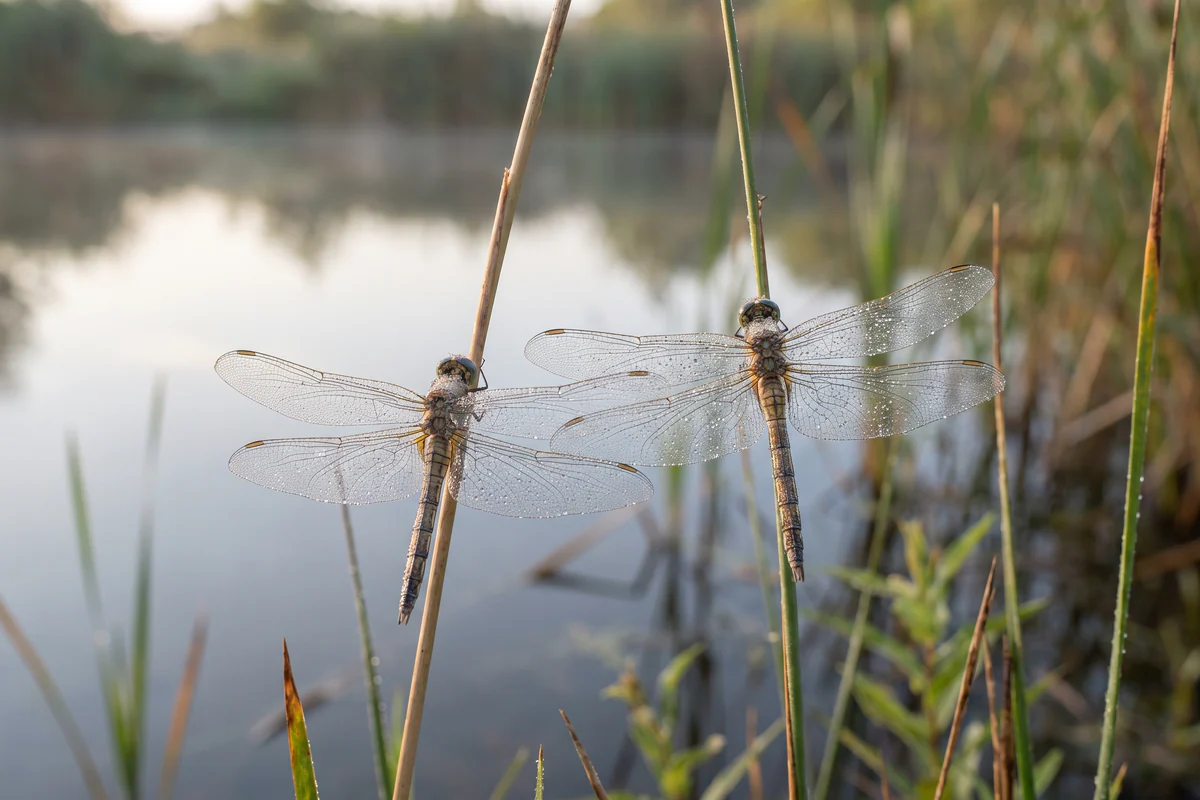
Before the legends comes the animal, and it is remarkable in its own right.
A master of flight
Dragonflies belong to the order Odonata. They have two pairs of wings that work independently of each other. That is the whole trick: a dragonfly can hover, fly backwards and reach top speeds of around 36 km/h (about 22 mph).
Its eyes are just as striking. Each one is made up of a great many facets, and three tiny simple eyes, the ocelli, complete the set. Handy for a hunter: at every stage of its life, the dragonfly is a predator.
A childhood underwater
The insect you see flying is only the final chapter. A dragonfly begins life in water, as a larva known as a naiad. It breathes through gills and hunts with a fearsome weapon, the “mask”: a lower lip that it shoots out in a flash to grab its prey.
To grow, the naiad moults 9 to 16 times. Then one day it climbs out of the water and the winged adult emerges. Unlike a butterfly, it never goes through a motionless pupa stage: it transforms step by step. Worth remembering if you also read our article on butterfly symbolism, because the two insects transform in very different ways.
A life in two worlds, first underwater and then in the air: perhaps that is why dragonflies have fascinated people for so long.
A giant cousin from the coal mines
Dragonflies also have some very distant relatives. In 1880, fossils of an insect that looked like a giant dragonfly came to light in the coal mines of Commentry, in central France. Charles Brongniart named it Meganeura monyi in 1885. It lived in the Carboniferous period, some 300 million years ago, with a wingspan of around 70 cm. It was not a true dragonfly, more of an extinct cousin. Still, what a sight it must have been.
Japan: the insect of victory

In Japan, the dragonfly holds a very special place. The islands are home to about 190 species, and the shared history of people and dragonflies there goes back a very long way. The entomologist Konishi Masayasu tells the story in a 2004 article for the Japanese magazine Nipponia, following three threads: the harvest, the old tales of the Nihon shoki, and the victories of warriors.
Dragonflies on bronze bells
The oldest Japanese images of dragonflies decorate dotaku, ceremonial bronze bells from the Yayoi period. Historians read them as prayers for a good harvest. The dragonfly was seen as an ally of the rice fields.
Akitsushima, the dragonfly islands
The Chronicles of Japan (the Nihon shoki), completed in 720, call the dragonfly by its old name, akitsu. They tell how Jimmu, traditionally regarded as Japan's first emperor (his existence is unproven), looked out over his land from a hill in Yamato. The country, he said, had “the shape of two akitsu mating”.
The same Chronicles record another scene, under Emperor Yūryaku. During a hunt, a horsefly lands on the emperor's arm. A dragonfly darts in and carries it off. The plain was then named Akitsu-no, “dragonfly plain”. This, it is said, is the origin of Akitsushima, “the dragonfly islands”, an ancient name for Japan.
A whole country once named after an insect: no wonder it holds such a place in people's hearts.
Kachi-mushi, the samurai's insect
In Japan the dragonfly is a kachi-mushi, a “victorious insect” that brings luck. It appears on samurai helmets, on family crests and on all kinds of objects.
Why this insect? The Metropolitan Museum of Art in New York, which holds a samurai helmet decorated with a dragonfly, gives the reason: it flies straight at its prey and never veers off course. For a warrior, it's hard to imagine a better role model.
Children love it for other reasons. In Japan, people have been catching dragonflies for centuries: an illustrated encyclopaedia from the early 18th century already explains how it's done.
Navajo, Zuni and Hopi: pure water and a double-barred cross
In North America, the dragonfly has its place too. It's best not to generalise: each people has its own traditions. For the Navajo, it symbolises pure water, a fitting choice for an insect born in water.
It is also a common motif, often stylised as a cross with two bars, on Zuni pottery, in Hopi rock art and on Pueblo necklaces. A Hopi bowl from Sikyátki, Arizona, dated to around 1400 to 1625, even features a dragonfly.
Blue dragonflies you can spot in Britain
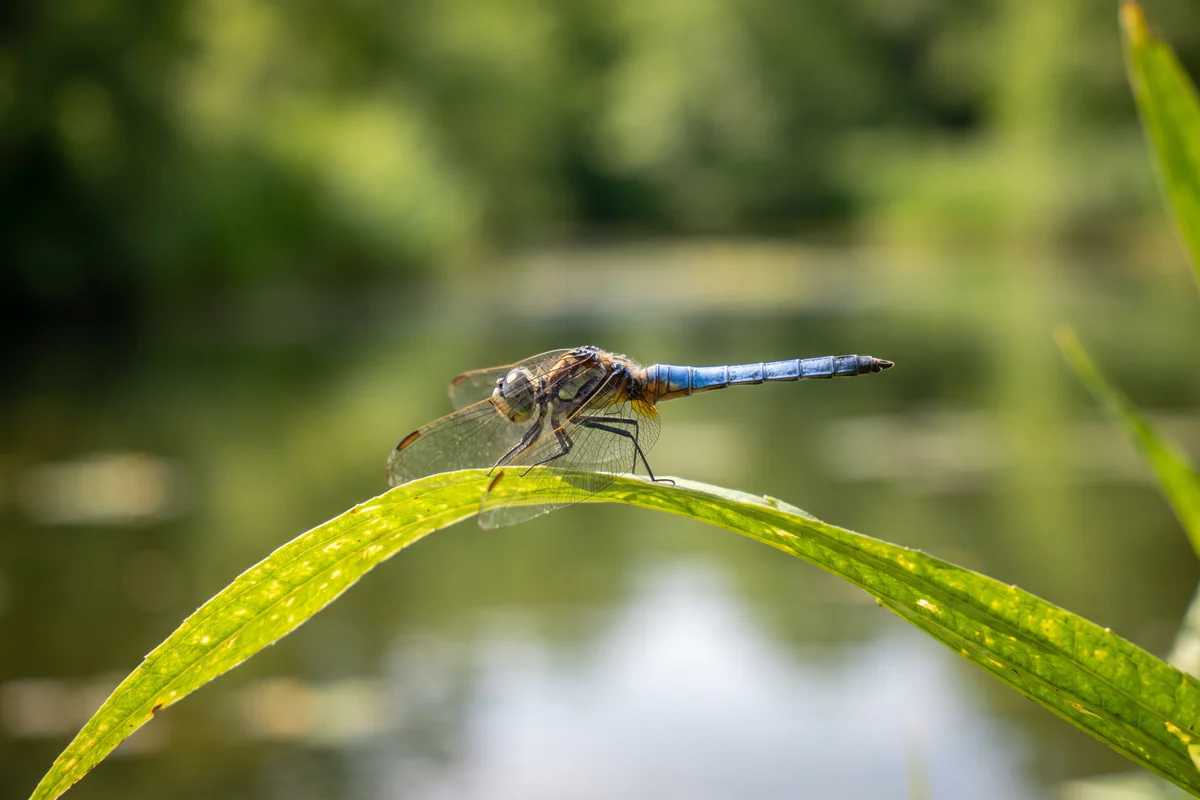
By the water, it is often a blue dragonfly that catches your eye. Before reading anything into it, look at who is wearing the blue. In Britain you may come across several blue species, all described by the British Dragonfly Society:
- the Emperor Dragonfly (Anax imperator), which the society calls “Britain's bulkiest dragonfly”: the adult male has a sky-blue abdomen with a dark central line, while the female is usually green. The male patrols his stretch of water for hours and chases off other hawkers;
- the Black-tailed Skimmer (Orthetrum cancellatum): young males are yellow with black markings, and in adulthood a blue bloom spreads over the male's abdomen;
- the Azure Damselfly (Coenagrion puella), strictly speaking a damselfly: the male is blue and black, the female mostly green and black. The society describes it as very common throughout England, Wales and the lowlands of south and central Scotland.
Notice the pattern? In all three species, blue is mainly the colour of adult males.
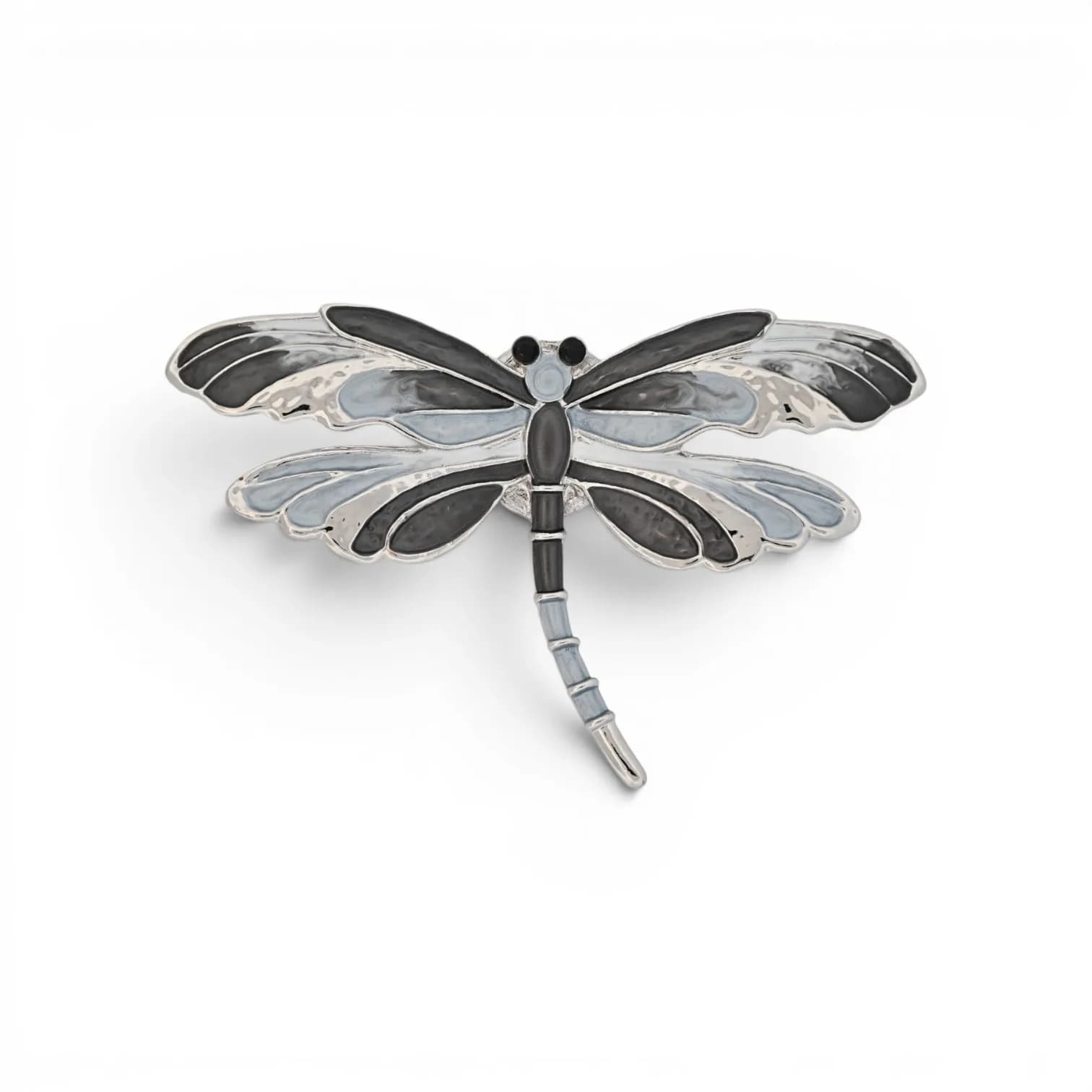
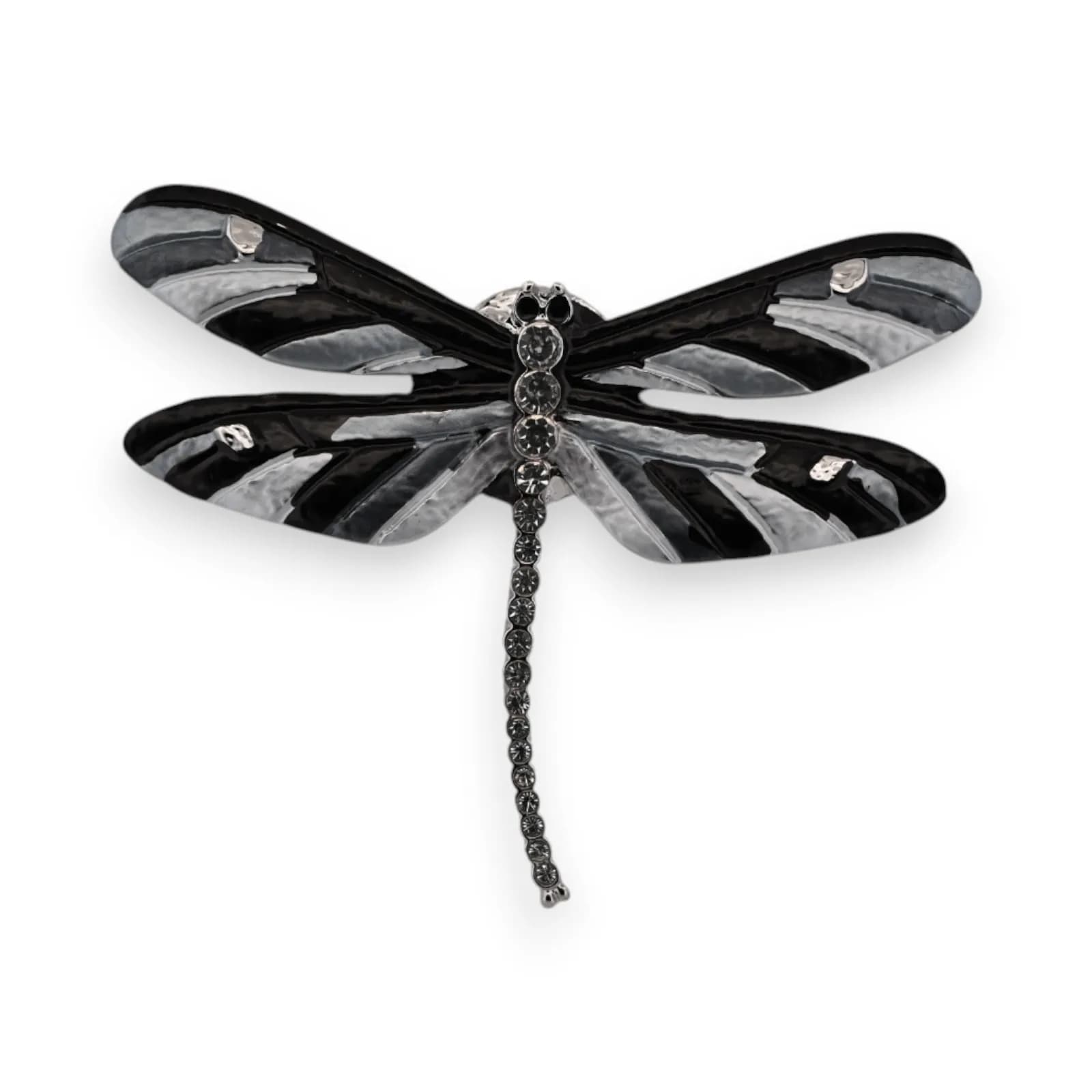
Taken with that blue? One of our dragonfly brooches plays on black, grey and pale blue wings, a little nod to those blue-coated males.
Dragonfly spiritual meaning: what the sources say
So what is the spiritual meaning of a blue dragonfly, or of one that crosses your path? Spirituality websites often attach a special message to it. In the sources we consulted, no ancient tradition supports that reading.
What is documented is victory in Japan, love in Germanic mythology and pure water among the Navajo. Anything beyond that is yours to read as a message, as long as you know it is a personal interpretation. And if you would like a meaning with real history behind it, choose one of those three: each rests on a tradition you can name.
Lalique and the dragonfly in jewellery
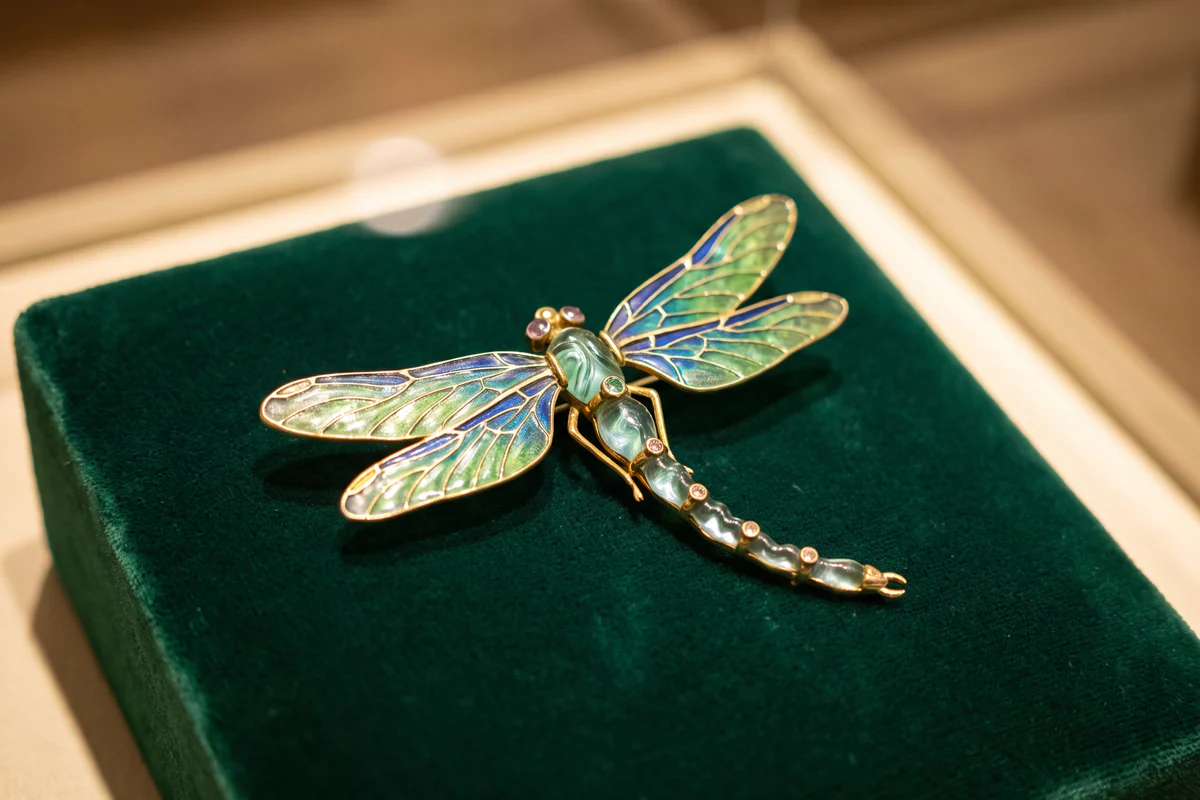
One last trip back to Japan, by an unexpected route. René Lalique, who lived from 1860 to 1945, was a glassmaker and jeweller and ranks among the most important jewellery designers of French Art Nouveau. Crucially, he had discovered Japanese art at the Paris Exhibitions of 1867 and 1878.
Lalique drew on animals and plants, insects included. He dared to use materials then rarely seen in jewellery: glass, enamel, horn, mother-of-pearl. His dragonfly pectoral, created in about 1897 or 1898, was much admired at the 1900 Paris Exhibition. Calouste Gulbenkian, his client and friend, bought it and later lent it to Sarah Bernhardt. Today you can see Lalique jewels at the Calouste Gulbenkian Museum in Lisbon.
After 1920 Lalique turned to Art Deco, and his jewellery was forgotten. It took an exhibition at the Musée des Arts Décoratifs in Paris, in 1991, to bring it back into favour.
Insects still inspire jewellery today: butterflies, bees and dragonflies all feature among our insect brooches. The bee became an emblem too, adopted even by Napoleon: read its story in our article on bee symbolism.
Giving and wearing a dragonfly
A dragonfly doesn't say the same thing to everyone. Let the traditions guide your timing. A dragonfly makes a fitting gift for:
- a passed exam, a competition or a challenge overcome, as a nod to the Japanese kachi-mushi, the victorious insect;
- a declaration of love or the anniversary of the day you met, in memory of Freyja's messengers and the “love butterfly” of Savoy;
- a fresh start, for someone spreading their wings, just as the naiad leaves the water;
- a nature lover who enjoys ponds and waterside walks;
- a fan of Art Nouveau or Japanese culture.
The key is to tie the dragonfly to what the person is going through. A few words on the card are enough: “Straight for the target, just like a dragonfly. Well done!”, “A little messenger of love” or “Here's to your next flight”. For more ideas, see our guide to choosing a brooch as a gift.
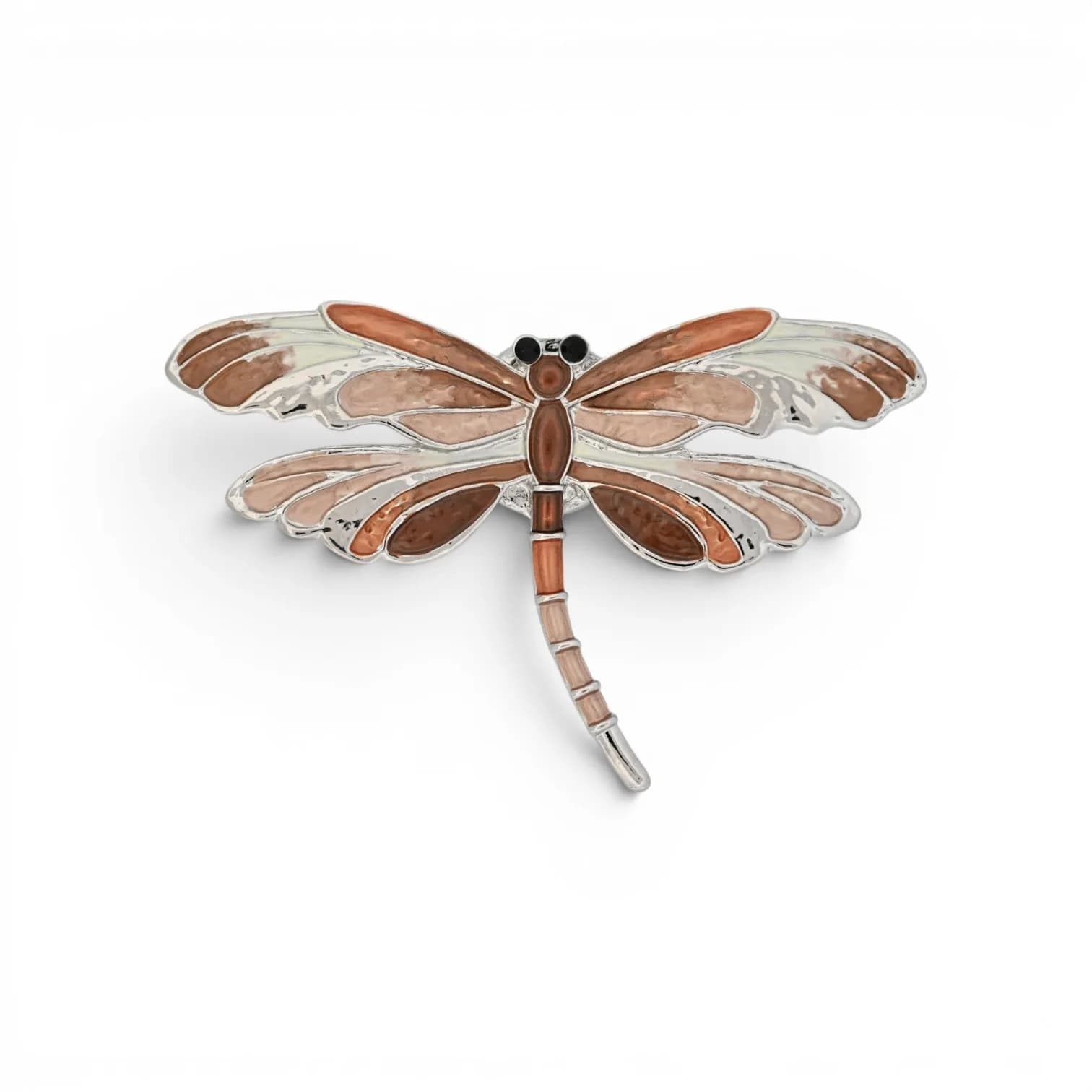
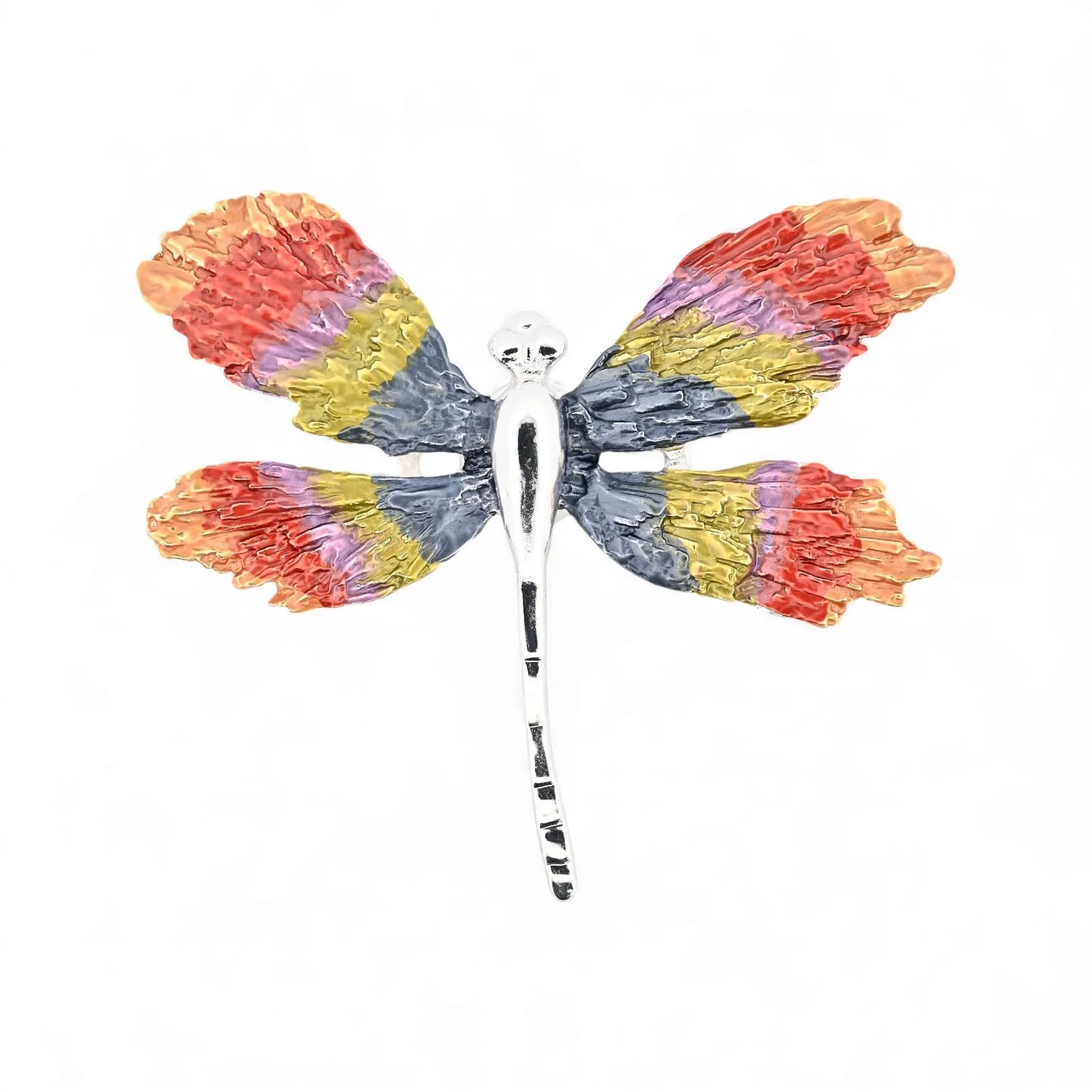
At Ma Broche, our dragonflies are costume jewellery in silver-tone steel, with grey and pale blue, copper-coloured or multicoloured wings, and a magnetic fastening: a small plate sits behind the fabric. Worn on a jacket lapel, a coat or a scarf, a dragonfly brings a light, natural touch. Browse the full range in our dragonfly collection. Prefer more colourful wings? Have a look at our butterfly brooches.
In summary
The meaning of a dragonfly changes with the place: victory and luck in Japan, love in Germanic mythology and in Savoy, pure water for the Navajo, fear in Christian Europe, and a hint of stings and snakes in old English and Welsh names. Here are its main faces:
| Place or period | What the dragonfly stands for |
|---|---|
| English and Welsh folk names | “Devil's darning needle”, “horse-stinger”, gwas-y-neidr (“adder's servant”): fear of a sting it doesn't have |
| Japan, Yayoi period | A prayer for a good harvest, on dotaku bells |
| Japan, Chronicles of 720 | Akitsu, the shape of the country; Akitsushima, an ancient name for Japan |
| Japan, samurai | Kachi-mushi, the victorious insect and lucky charm |
| Germanic mythology | Messenger of Freyja, goddess of love |
| Christian Europe | An insect “of the devil”, with menacing nicknames |
| Savoy | “Love butterfly” |
| Navajo | Pure water |
| Art Nouveau, around 1900 | René Lalique's dragonfly pectoral |
| Blue dragonfly | Mainly the colour of adult males; the sources cited here give it no traditional spiritual meaning |
Frequently asked questions
Do dragonflies sting?▾
No. Dragonflies don't sting and are harmless to people. Old names such as “devil's darning needle” or “horse-stinger” come from a false belief: people credited them with a sting they simply don't have.
What is the difference between a dragonfly and a damselfly?▾
They are the two main groups of the order Odonata. Damselflies (Zygoptera) have four wings of equal length, folded together at rest. True dragonflies (Anisoptera) have fore and hind wings of different shapes, held out flat at rest.
Is it a good sign to see dragonflies around a pond?▾
Dragonflies are good bioindicators of the health of freshwater habitats. Depending on the species, their larvae live underwater for anywhere from two months to five years, far longer than they spend as flying adults. Seeing them is a good clue about the pond, though not proof of its water quality on its own.
What is “Aka-tombo”?▾
“Aka-tombo”, “The Red Dragonfly”, is a Japanese children's song written in 1921. It is still sung today.
Why is the dragonfly called “libellule” in French?▾
It comes from Libellula, the name Linnaeus gave the genus in 1758. Most dictionaries trace it to the Latin libella, a carpenter's level, a nod to the way the insect hovers perfectly level. Littré's dictionary (1872) suggested another origin, a diminutive of the Latin libellus, “little book”, the outspread wings recalling its pages. That remains a hypothesis.