
Tulip meaning: colour, context and what to say
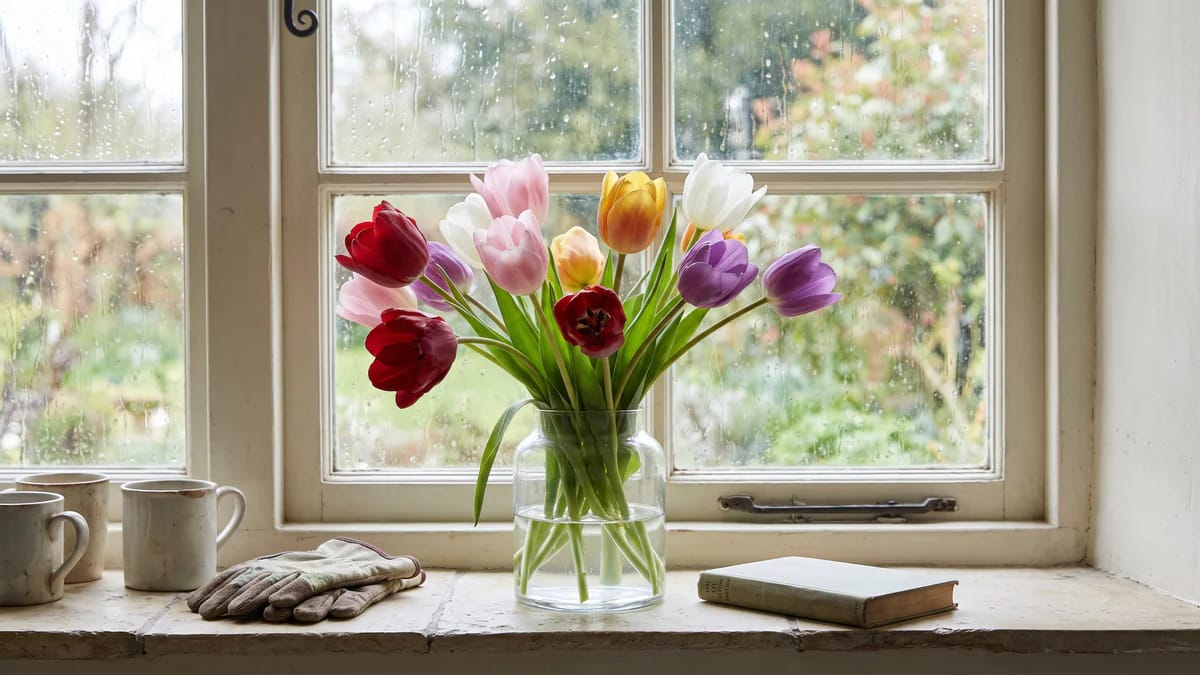
Discover what tulip colours can suggest, how to choose them for an occasion and what to write with a thoughtful bouquet.
Tulips are often chosen because they feel clear and cheerful. A single stem can look elegant; a bunch can feel generous without being overly formal. That apparent simplicity is exactly why people ask what a tulip means. They want to give a flower that feels considered, not just pretty.
The short answer is that a tulip usually suggests affection, spring and a fresh start. The more useful answer is that its meaning changes with the colour, the occasion and the person receiving it. Treat flower symbolism as a prompt, not a rule. It can help you choose and explain a gesture, but it cannot speak more accurately than you can.
What does a tulip mean?
In everyday British English, a tulip is a bulb-grown flower with a large, brightly coloured bloom on a stem, as the Cambridge Dictionary definition of “tulip” puts it. That clean shape has made it easy to read as a sign of spring, welcome and uncomplicated warmth.
There is no official global dictionary of flower meanings. The associations below come from long-running social and floral traditions, so they are best used as gentle cues. Colour is only one part of the message. A yellow bunch for a friend after a difficult week says something different from the same yellow blooms on a kitchen table in March.
If you are choosing tulips for someone, start with the relationship and the moment. Then use colour to make the gesture feel more precise. Your relationship comes first; the shade simply gives it a little direction.
Why tulips are linked with spring and renewal
Tulips belong to the accepted genus Tulipa. Kew records its native range across southern central and eastern Europe, the Mediterranean region and as far as Mongolia, while listing Great Britain among places where the genus has been introduced. You can explore that botanical record in Kew’s Plants of the World Online entry for Tulipa.
For a gift, the botanical facts matter less than the timing people recognise. Tulips arrive when winter is easing, gardens are waking up and daylight is beginning to feel generous again. That is why they work so naturally for a new home, a new job, a birthday near spring or a simple “thinking of you”. They carry the feeling of a new season without making a grand claim.
Red tulip meaning: warm affection and romance
Red tulips are the clearest choice when you want to signal romantic feeling. Compared with red roses, they often feel a little less ceremonial and a little more spontaneous. Choose them for an anniversary, a date, an apology that needs warmth, or a message that says “I still choose you”.
They can also suit a close friendship if the accompanying note makes the context clear. The colour brings warm, direct affection, not a contract or a promise. If romance is not your intention, say so in your card rather than relying on the flowers to do all the work.
Pink tulip meaning: care, encouragement and good wishes
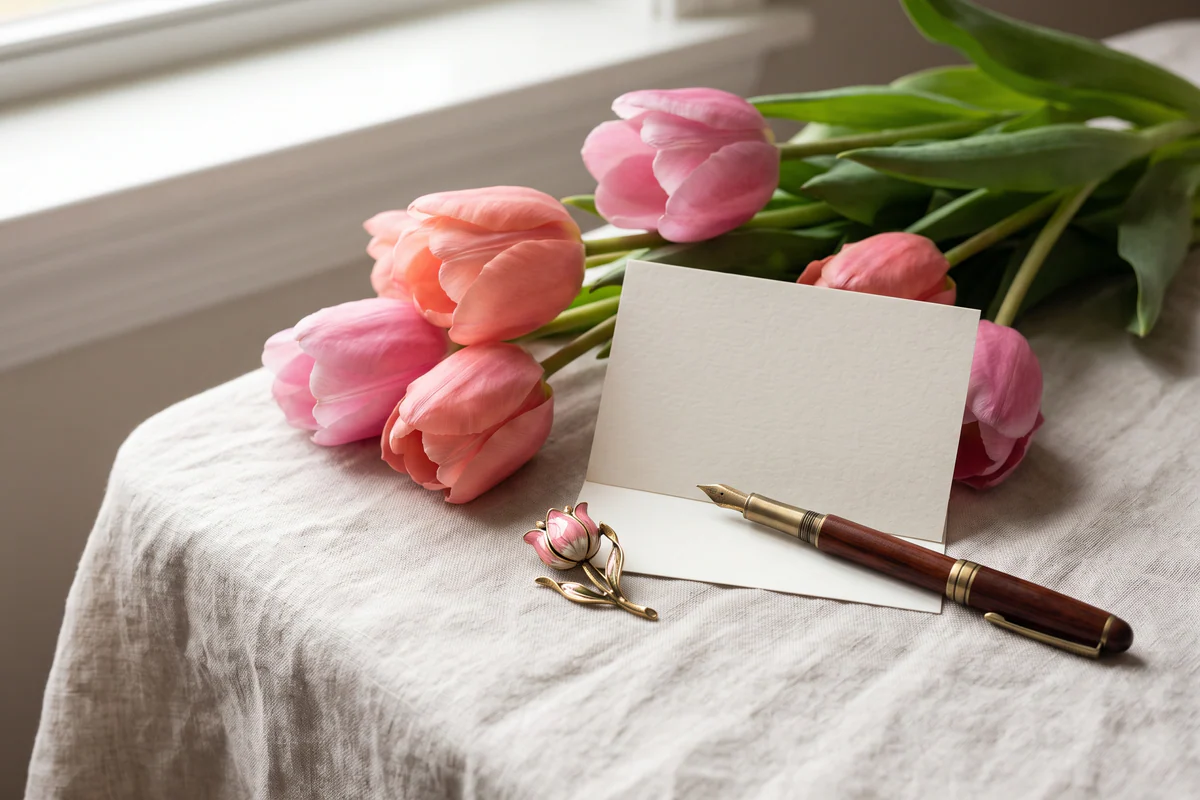
Pink tulips are versatile. They feel softer than red and more personal than yellow, which makes them a natural option for a friend, sibling, parent, colleague or someone you are getting to know. They are especially useful when the occasion is happy but not romantic: a birthday, a thank-you, a new baby or a recovery message.
The familiar reading is care, encouragement and good wishes. A pale pink arrangement can feel tender and quiet; a brighter pink one is livelier. Either way, write the reason for your gift plainly. “I’m proud of you” or “I hope this week is kinder” gives the colour a human voice.
White tulip meaning: sincerity, respect and a calm gesture
White tulips are often chosen when a message needs gentleness. They can express sympathy, remembrance, a wish to make peace or respectful congratulations. Their restraint makes them suitable for a difficult occasion, but they are not limited to sombre moments. A white-and-green bunch can also be beautiful for a wedding, a housewarming or a thoughtful host gift.
Use white when you want a calm, considerate tone. Because the colour can be read in several ways, the card is particularly important here. A few direct words prevent a gesture of congratulations from being mistaken for condolence, or the other way round.
Purple tulip meaning: admiration and a sense of occasion
Purple has long been associated with richness, ceremony and distinction in European visual culture. With tulips, it can suggest admiration, confidence or a moment worth marking. Deep purple works well in a birthday bouquet for someone who enjoys dramatic colour, or in an arrangement that needs to feel celebratory without being romantic.
Think of purple tulips as a way to underline celebration, admiration and confidence. They are effective in mixed bunches too, where a few dark blooms give the whole arrangement more depth. The message remains personal: tell the recipient what you admire about them.
Yellow tulip meaning: optimism, friendship and bright beginnings
Yellow tulips are the easy choice for a lift in mood. They are cheerful, open and distinctly spring-like, so they suit friendship, congratulations, a get-well wish or a desk that needs some colour. There are older, contradictory flower-dictionary meanings for yellow, which is a good reminder not to treat symbolism as fixed.
Today, most people will read a yellow tulip through its sunny appearance: optimism, friendship and bright beginnings. Give them when you want to say “I’m thinking of you” without suggesting romance. A mixed yellow-and-white bunch can feel fresh and uncomplicated; yellow with pink feels warmer and more playful.
Orange, peach and mixed tulips: appreciation without overthinking it
Orange and peach shades bring energy. They can signal enthusiasm, gratitude and an appetite for celebration, which makes them useful for a colleague’s achievement, a host, a teacher or a friend who has reached a milestone. They are also a good answer when you want something more vibrant than a neutral bouquet.
Mixed tulips have their own advantage: they let you express several feelings at once. Red, pink and yellow together can look affectionate, friendly and joyful without forcing you to choose a single meaning. The safest reading is simple appreciation. If the person loves colour, that may be the best reason of all.
How to choose the right tulip colour for the occasion
Use this quick guide as a starting point, then adapt it to the person in front of you.
- For a partner: choose red for clear romantic warmth, or pink for a gentler everyday gesture.
- For a friend: choose yellow, pink or a bright mixed bunch for encouragement and shared joy.
- For a thank-you: choose orange, peach or purple, then name the kindness you noticed.
- For sympathy: choose white or a restrained white-and-pastel arrangement, with a short sincere note.
- For a new start: choose yellow, purple or a spring mix for a hopeful, forward-looking feeling.
If you are uncertain, ask yourself one practical question: what do I want the person to feel when they see this? Relieved, celebrated, remembered, encouraged or loved? The answer is more reliable than any colour chart.
A quick tulip colour guide
| Colour | Useful cue | A natural occasion |
|---|---|---|
| Red | Romantic warmth | Anniversary or date |
| Pink | Care and encouragement | Birthday or thank-you |
| White | Respect and gentleness | Sympathy or a calm celebration |
| Purple | Admiration and occasion | Achievement or milestone |
| Yellow | Friendship and optimism | Get-well wish or spring visit |
What to write with tulips
A flower meaning becomes meaningful when you put it into your own words. No colour can replace plain words, especially for apologies, sympathy or declarations of love. You do not need a long message. One honest sentence is enough.
- “A little bit of spring for your week.”
- “Thank you for being there when it mattered.”
- “I’m so proud of this new chapter for you.”
- “Thinking of you and sending some colour.”
- “I saw these and thought of you straight away.”
For a romantic gift, add a specific memory rather than a grand slogan. For a friend, mention the thing they have handled well. One sincere sentence is enough, because it turns a familiar flower into a message only that person could receive.
From a tulip bouquet to a flower-inspired detail
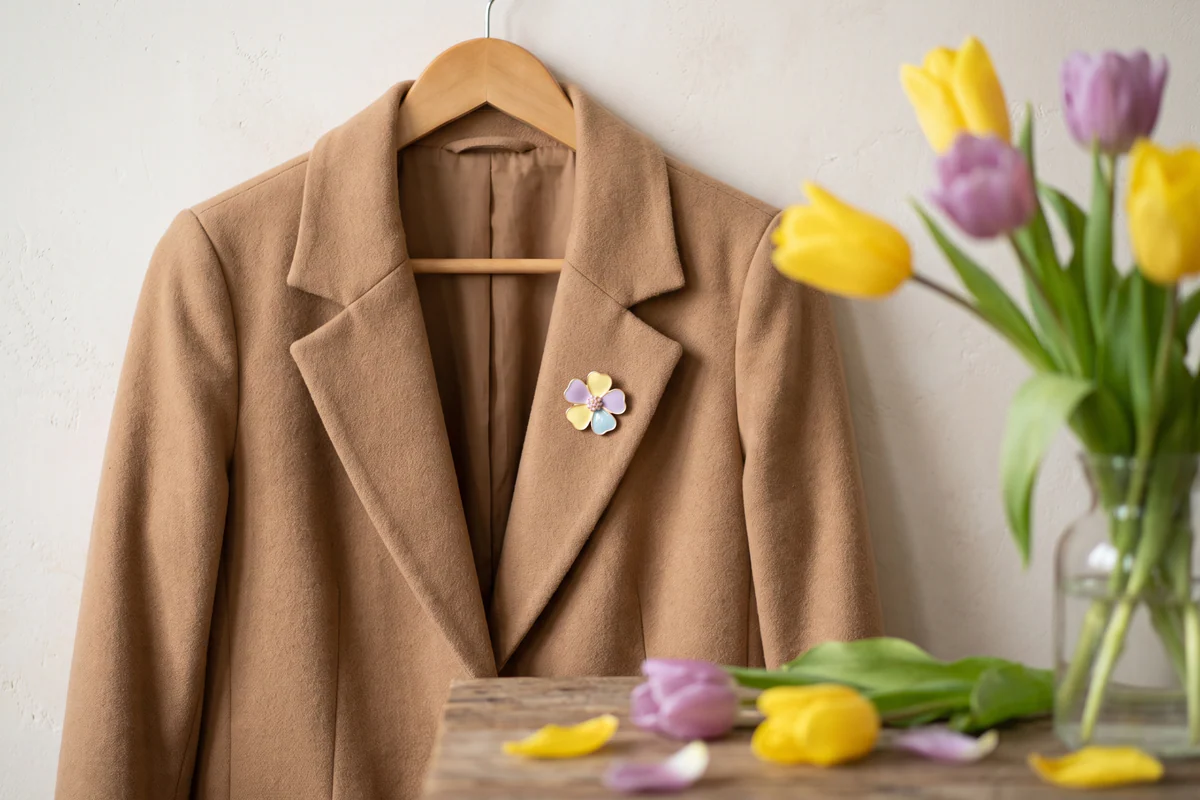
Tulips disappear after their season, but the feeling they create can stay with you in another form. A floral motif on a coat, scarf or bag can be a small reminder of brightness when the weather is grey. If you enjoy that idea, browse our brooches inspired by flowers for colourful motifs, or look at pin-free floral accessories when you prefer an easy magnetic fastening.
A flower brooch does not need to imitate a real tulip to echo the same mood. Choose a shade that you naturally wear and a shape that suits your coat or knitwear. The best choice is a small detail with a clear message: colour, optimism and a touch of personality. You can also explore the wider brooch collection when you want to compare floral, animal and more graphic designs.
FAQ about tulip meaning
Do tulips always mean love?
No. Red tulips are commonly used for romance, but tulips can also suggest friendship, congratulations, sympathy or a new beginning. The colour and your note make the intention clearer.
Which tulip colour is best for a friend?
Yellow and pink are usually easy, friendly choices. A mixed bunch is just as good if it reflects the person’s taste and the message you want to send.
Are white tulips only for funerals?
No. They can be appropriate for sympathy, but also for respectful congratulations, weddings and calm, elegant arrangements. Add a note so the occasion is unmistakable.
What is the safest tulip gift when I do not know the symbolism?
Choose the recipient’s favourite colour, or a cheerful mixed bunch, and include a direct message. Thoughtfulness matters more than following a strict flower code.